Muriel Vayssier-Taussat, Sara Moutailler, Lorraine Michelet, Elodie Devillers, Sarah Bonnet, Justine Cheval, Charles Hébert, Marc Eloit
{"title":"Next generation sequencing uncovers unexpected bacterial pathogens in ticks in western Europe.","authors":"Muriel Vayssier-Taussat, Sara Moutailler, Lorraine Michelet, Elodie Devillers, Sarah Bonnet, Justine Cheval, Charles Hébert, Marc Eloit","doi":"10.1371/journal.pone.0081439","DOIUrl":null,"url":null,"abstract":"<p><strong>Background and aims: </strong>Ticks are highly susceptible to global environmental and socio-economical changes. Several tick-borne pathogens have been reported in new geographical regions while new species, strains or genetic variants of tick-borne microorganisms are continually being detected. However, tick-borne pathogens are still poorly understood, and it is estimated that half of all human tick-borne disease has an unknown origin. Therefore in order to prevent these diseases, more effort is required to identify unknown or unexpected tick-borne pathogens. Ixodes ricinus is the vector for a broad range of bacterial pathogens and the most prevalent tick in Europe. The aim of the present study was to evaluate the capability of Next Generation Sequencing (NGS) to extend the inventory of pathogenic bacteria carried by this species of tick in France.</p><p><strong>Methods: </strong>RNA and DNA were extracted from 1450 I. ricinus questing nymphs collected by flagging in Alsace, France. RNA was pooled and used for NGS. Following de novo assembly, bacterial contigs were assigned to the closest known taxonomy. DNA was used for real time PCR to confirm taxonomic species assignment of NGS-derived contigs for the doubtful cases, and for determination of prevalence.</p><p><strong>Results: </strong>We have generated a global in-depth picture of tick-borne bacteria. We identified RNA from the main pathogenic bacterial species known to be transmitted by I. ricinus. In addition we also identified unanticipated bacterial species for which we have estimated the prevalence within those ticks inhabiting the studied areas.</p><p><strong>Conclusions: </strong>The data obtained from this study has proven that NGS has an enormous potential to detect the unexpected and provides the means to monitor pathogen occurrence.</p>","PeriodicalId":20189,"journal":{"name":"PLoS ONE","volume":" ","pages":"e81439"},"PeriodicalIF":2.6000,"publicationDate":"2013-11-27","publicationTypes":"Journal Article","fieldsOfStudy":null,"isOpenAccess":false,"openAccessPdf":"https://sci-hub-pdf.com/10.1371/journal.pone.0081439","citationCount":"123","resultStr":null,"platform":"Semanticscholar","paperid":null,"PeriodicalName":"PLoS ONE","FirstCategoryId":"103","ListUrlMain":"https://doi.org/10.1371/journal.pone.0081439","RegionNum":3,"RegionCategory":"综合性期刊","ArticlePicture":[],"TitleCN":null,"AbstractTextCN":null,"PMCID":null,"EPubDate":"2013/1/1 0:00:00","PubModel":"eCollection","JCR":"Q1","JCRName":"MULTIDISCIPLINARY SCIENCES","Score":null,"Total":0}
引用次数: 123
Abstract
Background and aims: Ticks are highly susceptible to global environmental and socio-economical changes. Several tick-borne pathogens have been reported in new geographical regions while new species, strains or genetic variants of tick-borne microorganisms are continually being detected. However, tick-borne pathogens are still poorly understood, and it is estimated that half of all human tick-borne disease has an unknown origin. Therefore in order to prevent these diseases, more effort is required to identify unknown or unexpected tick-borne pathogens. Ixodes ricinus is the vector for a broad range of bacterial pathogens and the most prevalent tick in Europe. The aim of the present study was to evaluate the capability of Next Generation Sequencing (NGS) to extend the inventory of pathogenic bacteria carried by this species of tick in France.
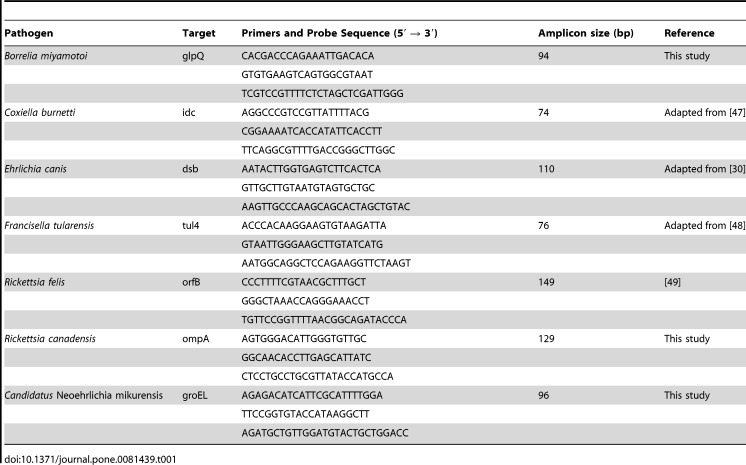
Methods: RNA and DNA were extracted from 1450 I. ricinus questing nymphs collected by flagging in Alsace, France. RNA was pooled and used for NGS. Following de novo assembly, bacterial contigs were assigned to the closest known taxonomy. DNA was used for real time PCR to confirm taxonomic species assignment of NGS-derived contigs for the doubtful cases, and for determination of prevalence.
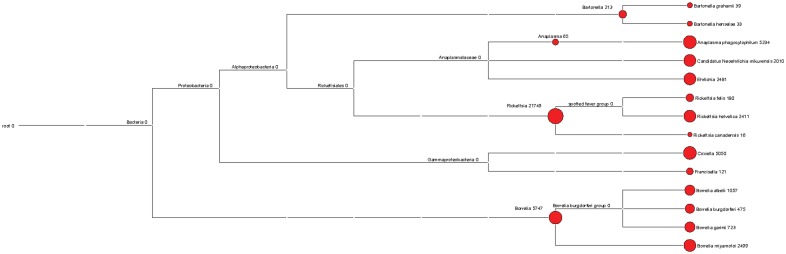
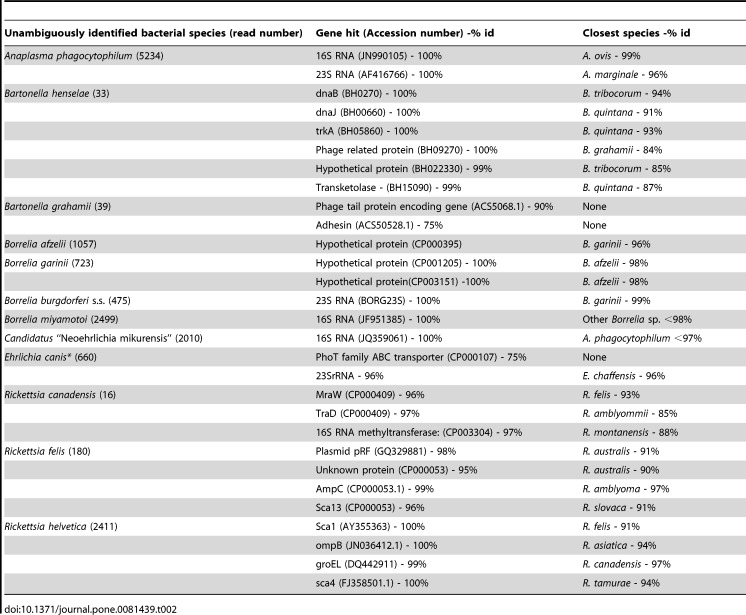
Results: We have generated a global in-depth picture of tick-borne bacteria. We identified RNA from the main pathogenic bacterial species known to be transmitted by I. ricinus. In addition we also identified unanticipated bacterial species for which we have estimated the prevalence within those ticks inhabiting the studied areas.
Conclusions: The data obtained from this study has proven that NGS has an enormous potential to detect the unexpected and provides the means to monitor pathogen occurrence.
期刊介绍:
PLOS ONE is an international, peer-reviewed, open-access, online publication. PLOS ONE welcomes reports on primary research from any scientific discipline. It provides:
* Open-access—freely accessible online, authors retain copyright
* Fast publication times
* Peer review by expert, practicing researchers
* Post-publication tools to indicate quality and impact
* Community-based dialogue on articles
* Worldwide media coverage




 京公网安备 11010802042870号
京ICP备2023020795号-1
京公网安备 11010802042870号
京ICP备2023020795号-1

 分享
分享
 求助内容:
求助内容: 应助结果提醒方式:
 扫码关注我们
