{"title":"Responses of seed germination, seedling growth, and seed yield traits to seed pretreatment in maize (Zea mays L.).","authors":"Yu Tian, Bo Guan, Daowei Zhou, Junbao Yu, Guangdi Li, Yujie Lou","doi":"10.1155/2014/834630","DOIUrl":null,"url":null,"abstract":"<p><p>A series of seed priming experiments were conducted to test the effects of different pretreatment methods to seed germination, seedling growth, and seed yield traits in maize (Zea mays L.). Results indicated that the seeds primed by gibberellins (GA), NaCl, and polyethylene glycol (PEG) reagents showed a higher imbibitions rate compared to those primed with water. The final germination percentage and germination rate varied with different reagents significantly (P < 0.05). The recommended prime reagents were GA at 10 mg/L, NaCl at 50 mM, and PEG at 15% on account of germination experiment. 15% PEG priming reagent increased shoot and root biomass of maize seedling. The shoot biomass of seedlings after presoaking the seeds with NaCl reagent was significantly higher than the seedlings without priming treatment. No significant differences of plant height, leaf number, and hundred-grain weight were observed between control group and priming treatments. Presoaking with water, NaCl (50 mM), or PEG (15%) significantly increased the hundred-grain weight of maize. Therefore, seed pretreatment is proved to be an effective technique to improve the germination performance, seedling growth, and seed yield of maize. However, when compared with the two methods, if immediate sowing is possible, presoaking is recommended to harvest better benefits compared to priming method. </p>","PeriodicalId":22985,"journal":{"name":"The Scientific World Journal","volume":" ","pages":"834630"},"PeriodicalIF":0.0000,"publicationDate":"2014-01-01","publicationTypes":"Journal Article","fieldsOfStudy":null,"isOpenAccess":false,"openAccessPdf":"https://sci-hub-pdf.com/10.1155/2014/834630","citationCount":"93","resultStr":null,"platform":"Semanticscholar","paperid":null,"PeriodicalName":"The Scientific World Journal","FirstCategoryId":"1085","ListUrlMain":"https://doi.org/10.1155/2014/834630","RegionNum":0,"RegionCategory":null,"ArticlePicture":[],"TitleCN":null,"AbstractTextCN":null,"PMCID":null,"EPubDate":"2014/6/26 0:00:00","PubModel":"Epub","JCR":"Q2","JCRName":"Environmental Science","Score":null,"Total":0}
引用次数: 93
Abstract
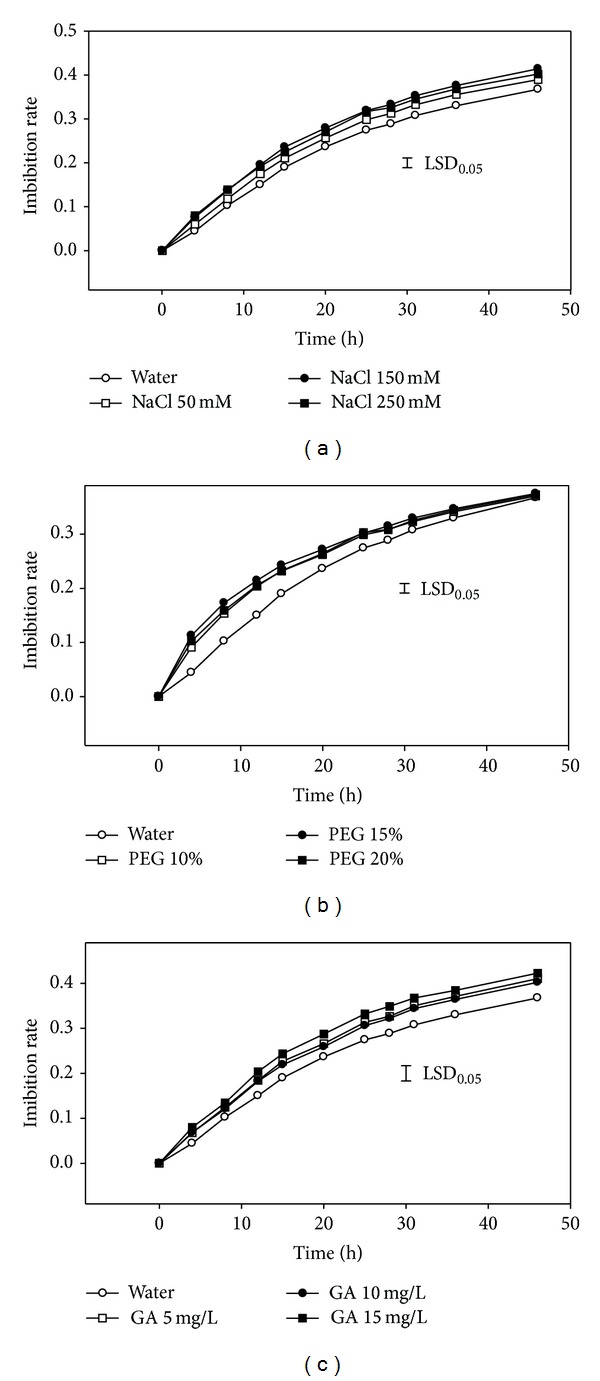
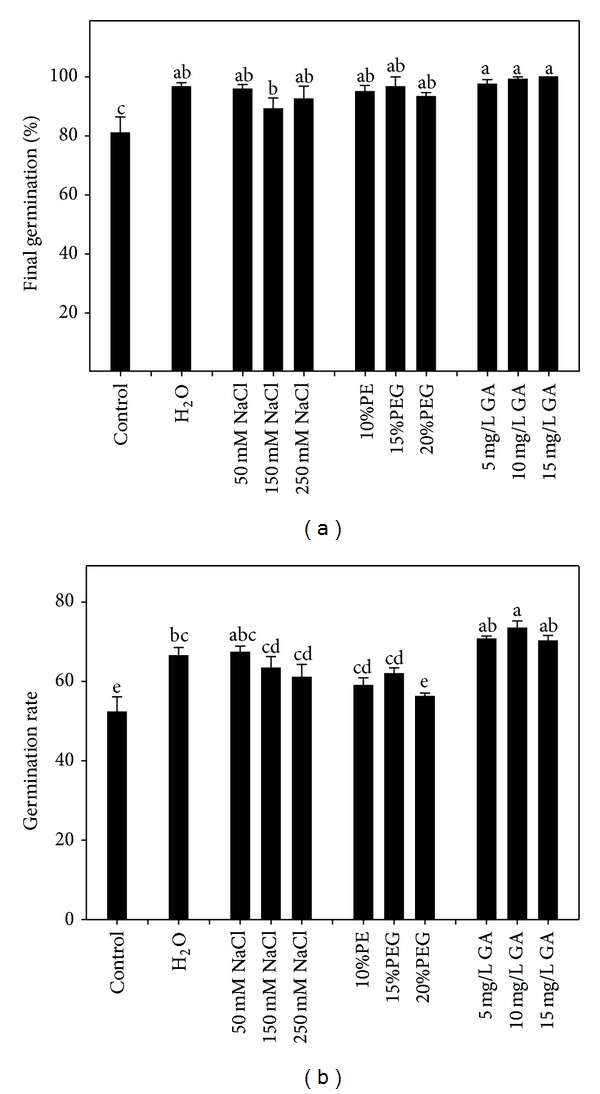
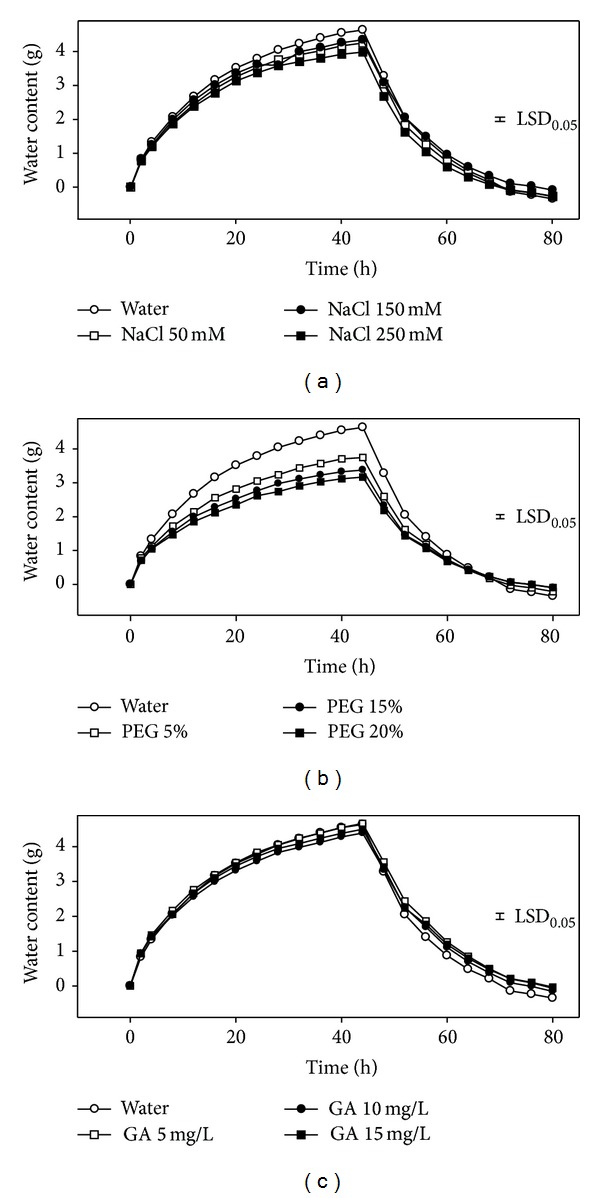
A series of seed priming experiments were conducted to test the effects of different pretreatment methods to seed germination, seedling growth, and seed yield traits in maize (Zea mays L.). Results indicated that the seeds primed by gibberellins (GA), NaCl, and polyethylene glycol (PEG) reagents showed a higher imbibitions rate compared to those primed with water. The final germination percentage and germination rate varied with different reagents significantly (P < 0.05). The recommended prime reagents were GA at 10 mg/L, NaCl at 50 mM, and PEG at 15% on account of germination experiment. 15% PEG priming reagent increased shoot and root biomass of maize seedling. The shoot biomass of seedlings after presoaking the seeds with NaCl reagent was significantly higher than the seedlings without priming treatment. No significant differences of plant height, leaf number, and hundred-grain weight were observed between control group and priming treatments. Presoaking with water, NaCl (50 mM), or PEG (15%) significantly increased the hundred-grain weight of maize. Therefore, seed pretreatment is proved to be an effective technique to improve the germination performance, seedling growth, and seed yield of maize. However, when compared with the two methods, if immediate sowing is possible, presoaking is recommended to harvest better benefits compared to priming method.
期刊介绍:
The Scientific World Journal is a peer-reviewed, Open Access journal that publishes original research, reviews, and clinical studies covering a wide range of subjects in science, technology, and medicine. The journal is divided into 81 subject areas.



 京公网安备 11010802042870号
京ICP备2023020795号-1
京公网安备 11010802042870号
京ICP备2023020795号-1

 分享
分享
 求助内容:
求助内容: 应助结果提醒方式:
 扫码关注我们
