Epidemiology of viral-associated acute lower respiratory tract infection among children <5 years of age in a high HIV prevalence setting, South Africa, 2009-2012.
Cheryl Cohen, Sibongile Walaza, Jocelyn Moyes, Michelle Groome, Stefano Tempia, Marthi Pretorius, Orienka Hellferscee, Halima Dawood, Meera Chhagan, Fathima Naby, Summaya Haffejee, Ebrahim Variava, Kathleen Kahn, Susan Nzenze, Akhona Tshangela, Anne von Gottberg, Nicole Wolter, Adam L Cohen, Babatyi Kgokong, Marietjie Venter, Shabir A Madhi
{"title":"Epidemiology of viral-associated acute lower respiratory tract infection among children <5 years of age in a high HIV prevalence setting, South Africa, 2009-2012.","authors":"Cheryl Cohen, Sibongile Walaza, Jocelyn Moyes, Michelle Groome, Stefano Tempia, Marthi Pretorius, Orienka Hellferscee, Halima Dawood, Meera Chhagan, Fathima Naby, Summaya Haffejee, Ebrahim Variava, Kathleen Kahn, Susan Nzenze, Akhona Tshangela, Anne von Gottberg, Nicole Wolter, Adam L Cohen, Babatyi Kgokong, Marietjie Venter, Shabir A Madhi","doi":"10.1097/INF.0000000000000478","DOIUrl":null,"url":null,"abstract":"<p><strong>Background: </strong>Data on the epidemiology of viral-associated acute lower respiratory tract infection (LRTI) from high HIV prevalence settings are limited. We aimed to describe LRTI hospitalizations among South African children aged <5 years.</p><p><strong>Methods: </strong>We prospectively enrolled hospitalized children with physician-diagnosed LRTI from 5 sites in 4 provinces from 2009 to 2012. Using polymerase chain reaction (PCR), nasopharyngeal aspirates were tested for 10 viruses and blood for pneumococcal DNA. Incidence was estimated at 1 site with available population denominators.</p><p><strong>Results: </strong>We enrolled 8723 children aged <5 years with LRTI, including 64% <12 months. The case-fatality ratio was 2% (150/8512). HIV prevalence among tested children was 12% (705/5964). The overall prevalence of respiratory viruses identified was 78% (6517/8393), including 37% rhinovirus, 26% respiratory syncytial virus (RSV), 7% influenza and 5% human metapneumovirus. Four percent (253/6612) tested positive for pneumococcus. The annual incidence of LRTI hospitalization ranged from 2530 to 3173/100,000 population and was highest in infants (8446-10532/100,000). LRTI incidence was 1.1 to 3.0-fold greater in HIV-infected than HIV-uninfected children. In multivariable analysis, compared to HIV-uninfected children, HIV-infected children were more likely to require supplemental-oxygen [odds ratio (OR): 1.3, 95% confidence interval (CI): 1.1-1.7)], be hospitalized >7 days (OR: 3.8, 95% CI: 2.8-5.0) and had a higher case-fatality ratio (OR: 4.2, 95% CI: 2.6-6.8). In multivariable analysis, HIV-infection (OR: 3.7, 95% CI: 2.2-6.1), pneumococcal coinfection (OR: 2.4, 95% CI: 1.1-5.6), mechanical ventilation (OR: 6.9, 95% CI: 2.7-17.6) and receipt of supplemental-oxygen (OR: 27.3, 95% CI: 13.2-55.9) were associated with death.</p><p><strong>Conclusions: </strong>HIV-infection was associated with an increased risk of LRTI hospitalization and death. A viral pathogen, commonly RSV, was identified in a high proportion of LRTI cases.</p>","PeriodicalId":19858,"journal":{"name":"Pediatric Infectious Disease Journal","volume":"34 1","pages":"66-72"},"PeriodicalIF":2.2000,"publicationDate":"2015-01-01","publicationTypes":"Journal Article","fieldsOfStudy":null,"isOpenAccess":false,"openAccessPdf":"https://sci-hub-pdf.com/10.1097/INF.0000000000000478","citationCount":"65","resultStr":null,"platform":"Semanticscholar","paperid":null,"PeriodicalName":"Pediatric Infectious Disease Journal","FirstCategoryId":"3","ListUrlMain":"https://doi.org/10.1097/INF.0000000000000478","RegionNum":4,"RegionCategory":"医学","ArticlePicture":[],"TitleCN":null,"AbstractTextCN":null,"PMCID":null,"EPubDate":"","PubModel":"","JCR":"Q3","JCRName":"IMMUNOLOGY","Score":null,"Total":0}
引用次数: 65
Abstract
Background: Data on the epidemiology of viral-associated acute lower respiratory tract infection (LRTI) from high HIV prevalence settings are limited. We aimed to describe LRTI hospitalizations among South African children aged <5 years.
Methods: We prospectively enrolled hospitalized children with physician-diagnosed LRTI from 5 sites in 4 provinces from 2009 to 2012. Using polymerase chain reaction (PCR), nasopharyngeal aspirates were tested for 10 viruses and blood for pneumococcal DNA. Incidence was estimated at 1 site with available population denominators.
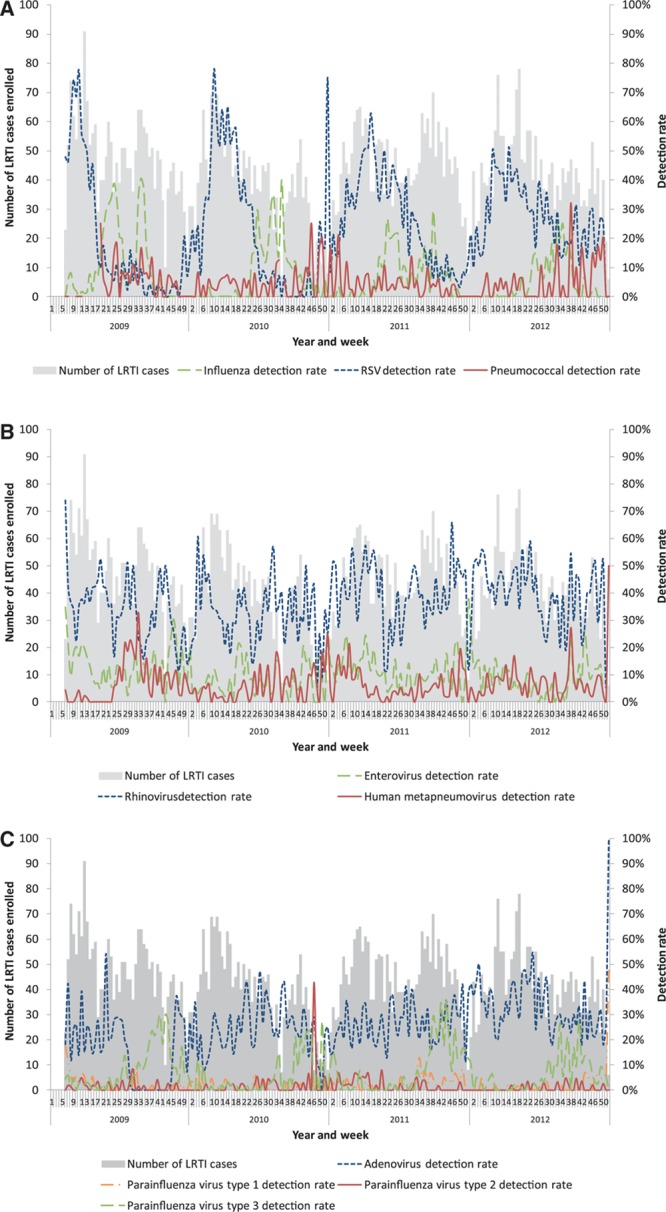
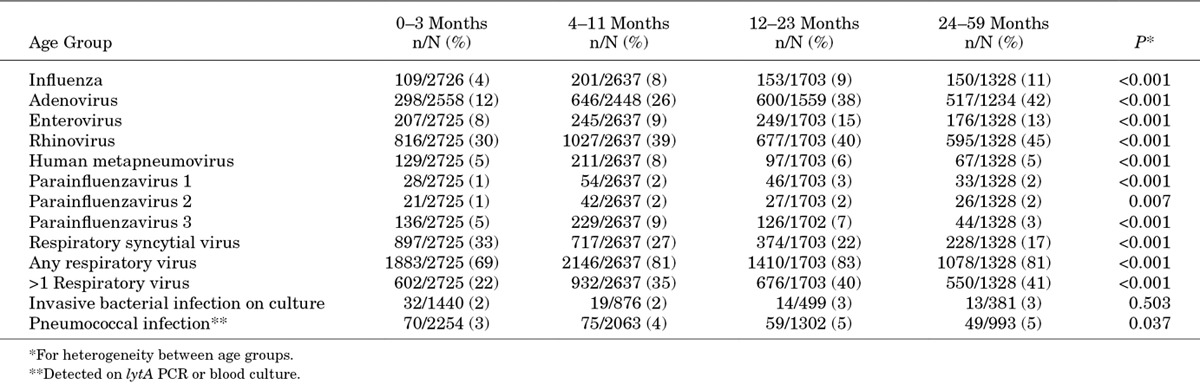
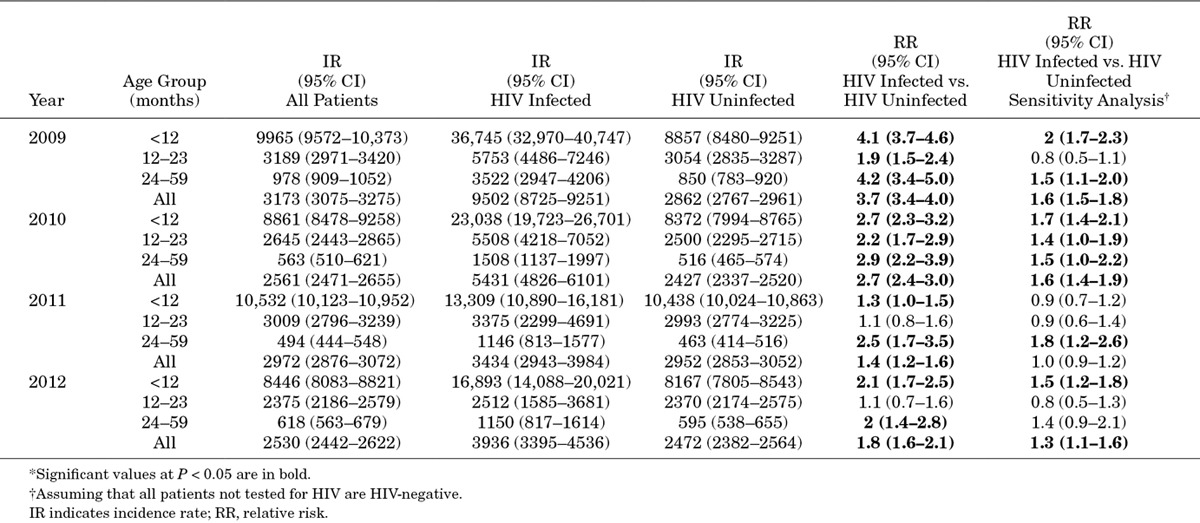
Results: We enrolled 8723 children aged <5 years with LRTI, including 64% <12 months. The case-fatality ratio was 2% (150/8512). HIV prevalence among tested children was 12% (705/5964). The overall prevalence of respiratory viruses identified was 78% (6517/8393), including 37% rhinovirus, 26% respiratory syncytial virus (RSV), 7% influenza and 5% human metapneumovirus. Four percent (253/6612) tested positive for pneumococcus. The annual incidence of LRTI hospitalization ranged from 2530 to 3173/100,000 population and was highest in infants (8446-10532/100,000). LRTI incidence was 1.1 to 3.0-fold greater in HIV-infected than HIV-uninfected children. In multivariable analysis, compared to HIV-uninfected children, HIV-infected children were more likely to require supplemental-oxygen [odds ratio (OR): 1.3, 95% confidence interval (CI): 1.1-1.7)], be hospitalized >7 days (OR: 3.8, 95% CI: 2.8-5.0) and had a higher case-fatality ratio (OR: 4.2, 95% CI: 2.6-6.8). In multivariable analysis, HIV-infection (OR: 3.7, 95% CI: 2.2-6.1), pneumococcal coinfection (OR: 2.4, 95% CI: 1.1-5.6), mechanical ventilation (OR: 6.9, 95% CI: 2.7-17.6) and receipt of supplemental-oxygen (OR: 27.3, 95% CI: 13.2-55.9) were associated with death.
Conclusions: HIV-infection was associated with an increased risk of LRTI hospitalization and death. A viral pathogen, commonly RSV, was identified in a high proportion of LRTI cases.
期刊介绍:
The Pediatric Infectious Disease Journal® (PIDJ) is a complete, up-to-the-minute resource on infectious diseases in children. Through a mix of original studies, informative review articles, and unique case reports, PIDJ delivers the latest insights on combating disease in children — from state-of-the-art diagnostic techniques to the most effective drug therapies and other treatment protocols. It is a resource that can improve patient care and stimulate your personal research.



 京公网安备 11010802042870号
京ICP备2023020795号-1
京公网安备 11010802042870号
京ICP备2023020795号-1

 分享
分享
 求助内容:
求助内容: 应助结果提醒方式:
 扫码关注我们
