{"title":"The human gut resistome.","authors":"Willem van Schaik","doi":"10.1098/rstb.2014.0087","DOIUrl":null,"url":null,"abstract":"<p><p>In recent decades, the emergence and spread of antibiotic resistance among bacterial pathogens has become a major threat to public health. Bacteria can acquire antibiotic resistance genes by the mobilization and transfer of resistance genes from a donor strain. The human gut contains a densely populated microbial ecosystem, termed the gut microbiota, which offers ample opportunities for the horizontal transfer of genetic material, including antibiotic resistance genes. Recent technological advances allow microbiota-wide studies into the diversity and dynamics of the antibiotic resistance genes that are harboured by the gut microbiota ('the gut resistome'). Genes conferring resistance to antibiotics are ubiquitously present among the gut microbiota of humans and most resistance genes are harboured by strictly anaerobic gut commensals. The horizontal transfer of genetic material, including antibiotic resistance genes, through conjugation and transduction is a frequent event in the gut microbiota, but mostly involves non-pathogenic gut commensals as these dominate the microbiota of healthy individuals. Resistance gene transfer from commensals to gut-dwelling opportunistic pathogens appears to be a relatively rare event but may contribute to the emergence of multi-drug resistant strains, as is illustrated by the vancomycin resistance determinants that are shared by anaerobic gut commensals and the nosocomial pathogen Enterococcus faecium. </p>","PeriodicalId":19872,"journal":{"name":"Philosophical Transactions of the Royal Society B: Biological Sciences","volume":"370 1670","pages":"20140087"},"PeriodicalIF":4.7000,"publicationDate":"2015-06-05","publicationTypes":"Journal Article","fieldsOfStudy":null,"isOpenAccess":false,"openAccessPdf":"https://sci-hub-pdf.com/10.1098/rstb.2014.0087","citationCount":"135","resultStr":null,"platform":"Semanticscholar","paperid":null,"PeriodicalName":"Philosophical Transactions of the Royal Society B: Biological Sciences","FirstCategoryId":"99","ListUrlMain":"https://doi.org/10.1098/rstb.2014.0087","RegionNum":2,"RegionCategory":"生物学","ArticlePicture":[],"TitleCN":null,"AbstractTextCN":null,"PMCID":null,"EPubDate":"","PubModel":"","JCR":"Q1","JCRName":"BIOLOGY","Score":null,"Total":0}
引用次数: 135
Abstract
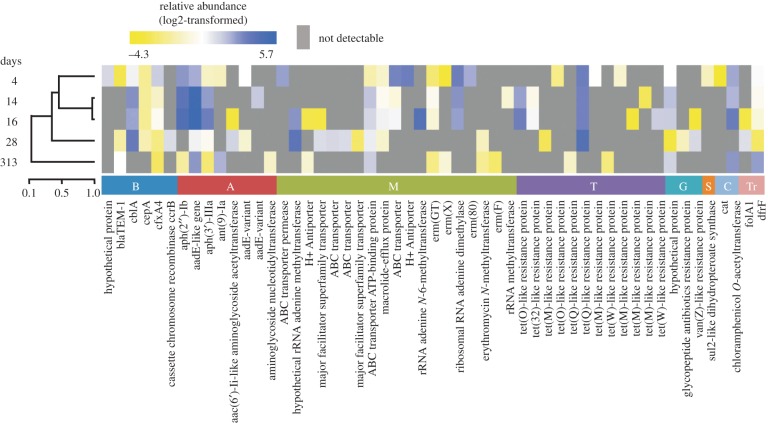
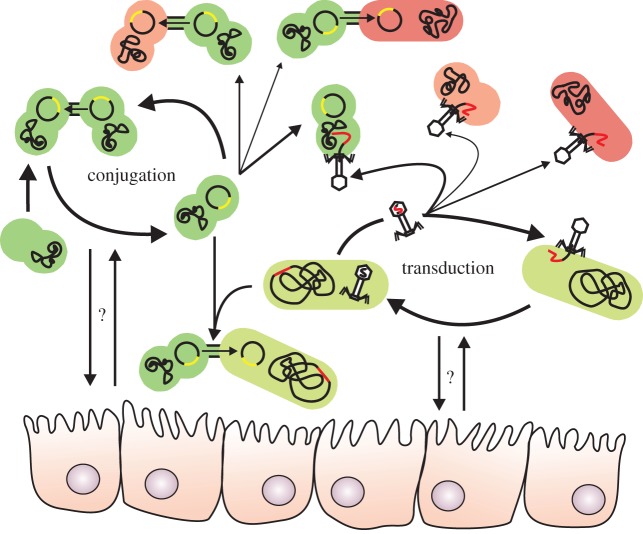
In recent decades, the emergence and spread of antibiotic resistance among bacterial pathogens has become a major threat to public health. Bacteria can acquire antibiotic resistance genes by the mobilization and transfer of resistance genes from a donor strain. The human gut contains a densely populated microbial ecosystem, termed the gut microbiota, which offers ample opportunities for the horizontal transfer of genetic material, including antibiotic resistance genes. Recent technological advances allow microbiota-wide studies into the diversity and dynamics of the antibiotic resistance genes that are harboured by the gut microbiota ('the gut resistome'). Genes conferring resistance to antibiotics are ubiquitously present among the gut microbiota of humans and most resistance genes are harboured by strictly anaerobic gut commensals. The horizontal transfer of genetic material, including antibiotic resistance genes, through conjugation and transduction is a frequent event in the gut microbiota, but mostly involves non-pathogenic gut commensals as these dominate the microbiota of healthy individuals. Resistance gene transfer from commensals to gut-dwelling opportunistic pathogens appears to be a relatively rare event but may contribute to the emergence of multi-drug resistant strains, as is illustrated by the vancomycin resistance determinants that are shared by anaerobic gut commensals and the nosocomial pathogen Enterococcus faecium.
期刊介绍:
The journal publishes topics across the life sciences. As long as the core subject lies within the biological sciences, some issues may also include content crossing into other areas such as the physical sciences, social sciences, biophysics, policy, economics etc. Issues generally sit within four broad areas (although many issues sit across these areas):
Organismal, environmental and evolutionary biology
Neuroscience and cognition
Cellular, molecular and developmental biology
Health and disease.



 京公网安备 11010802042870号
京ICP备2023020795号-1
京公网安备 11010802042870号
京ICP备2023020795号-1

 分享
分享
 求助内容:
求助内容: 应助结果提醒方式:
 扫码关注我们
