Vahideh Shahnazi, Mina Zaree, Mohammad Nouri, Mahzad Mehrzad-Sadaghiani, Shabnam Fayezi, Maryam Darabi, Sajjad Khani, Masoud Darabi
{"title":"Influence of ω-3 fatty acid eicosapentaenoic acid on IGF-1 and COX-2 gene expression in granulosa cells of PCOS women.","authors":"Vahideh Shahnazi, Mina Zaree, Mohammad Nouri, Mahzad Mehrzad-Sadaghiani, Shabnam Fayezi, Maryam Darabi, Sajjad Khani, Masoud Darabi","doi":"","DOIUrl":null,"url":null,"abstract":"<p><strong>Background: </strong>The omega-3 (ω-3) fatty acid eicosapentaenoic acid (EPA) is currently used in the clinic as a nutritional supplement to improve infertility, particularly in women with polycystic ovarian syndrome (PCOS).</p><p><strong>Objective: </strong>The present study was designed to investigate the effect of EPA on insulin-like growth factor 1 (IGF-1) and cyclooxygenase 2 (COX-2) gene expression in primary cultured granulosa cells from patients undergoing in vitro fertilization (IVF), and also to compare this effect with those in granulosa cells of PCOS patients.</p><p><strong>Materials and methods: </strong>In this experimental study, human granulosa cells were isolated from follicular fluid of normal and PCOS women undergoing IVF by hyaluronidase digestions, followed by Percoll gradient centrifugation. Cells were cultured in vitro, exposed to a range of concentrations of the EPA (25-100 µM) for 24 hr, and investigated with respect to COX-2 and IGF-1 gene expression by real time-PCR.</p><p><strong>Results: </strong>In both groups, all doses of the EPA significantly induced IGF-1 mRNA gene expression compared to the untreated control. High doses of EPA in the presence of recombinant (r) FSH produced a stimulatory effect on IGF-1 and a suppressive effect (p=0.01) on the COX-2 gene expression, which were more pronounced in granulosa cells from PCOS patients.</p><p><strong>Conclusion: </strong>EPA affect diversely the gene expression of IGF-1 and COX-2 in granulosa cells, which were more pronounced in PCOS compared to control. These findings represent the possible underlying molecular mechanisms for the positive impact of the ω-3 fatty acids on reproduction, especially in patients with PCOS.</p>","PeriodicalId":14673,"journal":{"name":"Iranian Journal of Reproductive Medicine","volume":"13 2","pages":"71-8"},"PeriodicalIF":0.0000,"publicationDate":"2015-02-01","publicationTypes":"Journal Article","fieldsOfStudy":null,"isOpenAccess":false,"openAccessPdf":"https://www.ncbi.nlm.nih.gov/pmc/articles/PMC4426143/pdf/","citationCount":"0","resultStr":null,"platform":"Semanticscholar","paperid":null,"PeriodicalName":"Iranian Journal of Reproductive Medicine","FirstCategoryId":"1085","ListUrlMain":"","RegionNum":0,"RegionCategory":null,"ArticlePicture":[],"TitleCN":null,"AbstractTextCN":null,"PMCID":null,"EPubDate":"","PubModel":"","JCR":"","JCRName":"","Score":null,"Total":0}
引用次数: 0
Abstract
Background: The omega-3 (ω-3) fatty acid eicosapentaenoic acid (EPA) is currently used in the clinic as a nutritional supplement to improve infertility, particularly in women with polycystic ovarian syndrome (PCOS).
Objective: The present study was designed to investigate the effect of EPA on insulin-like growth factor 1 (IGF-1) and cyclooxygenase 2 (COX-2) gene expression in primary cultured granulosa cells from patients undergoing in vitro fertilization (IVF), and also to compare this effect with those in granulosa cells of PCOS patients.
Materials and methods: In this experimental study, human granulosa cells were isolated from follicular fluid of normal and PCOS women undergoing IVF by hyaluronidase digestions, followed by Percoll gradient centrifugation. Cells were cultured in vitro, exposed to a range of concentrations of the EPA (25-100 µM) for 24 hr, and investigated with respect to COX-2 and IGF-1 gene expression by real time-PCR.
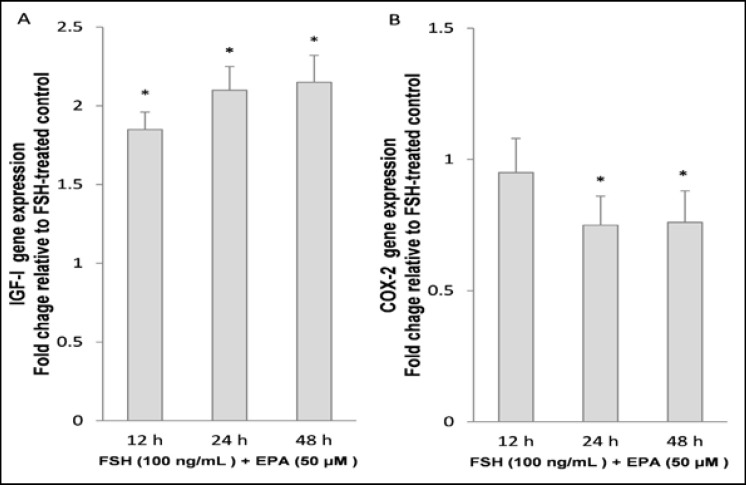
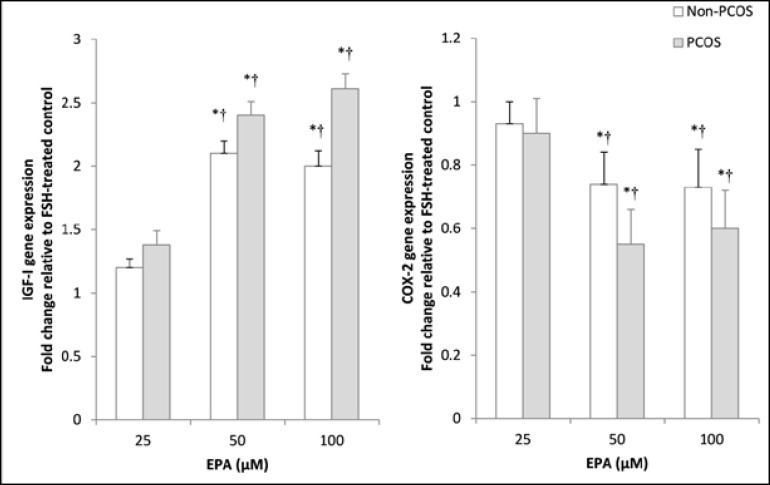
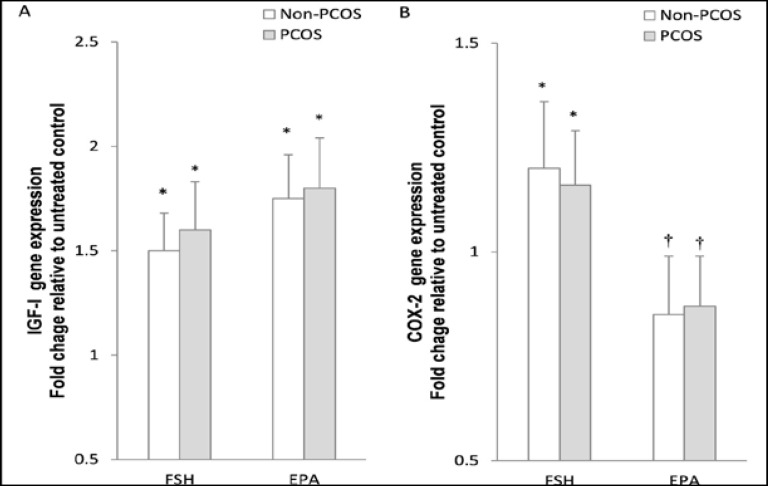
Results: In both groups, all doses of the EPA significantly induced IGF-1 mRNA gene expression compared to the untreated control. High doses of EPA in the presence of recombinant (r) FSH produced a stimulatory effect on IGF-1 and a suppressive effect (p=0.01) on the COX-2 gene expression, which were more pronounced in granulosa cells from PCOS patients.
Conclusion: EPA affect diversely the gene expression of IGF-1 and COX-2 in granulosa cells, which were more pronounced in PCOS compared to control. These findings represent the possible underlying molecular mechanisms for the positive impact of the ω-3 fatty acids on reproduction, especially in patients with PCOS.
 分享
分享



 京公网安备 11010802042870号
京ICP备2023020795号-1
京公网安备 11010802042870号
京ICP备2023020795号-1


 求助内容:
求助内容: 应助结果提醒方式:
 扫码关注我们
