Influence of cardiovascular risk factors on infarct size and interaction with mechanical ischaemic postconditioning in ST-elevation myocardial infarction.
{"title":"Influence of cardiovascular risk factors on infarct size and interaction with mechanical ischaemic postconditioning in ST-elevation myocardial infarction.","authors":"Sophie Pichot, Nathan Mewton, Theodora Bejan-Angoulvant, Francois Roubille, Gilles Rioufol, Céline Giraud, Inesse Boussaha, Olivier Lairez, Meyer Elbaz, Christophe Piot, Denis Angoulvant, Michel Ovize","doi":"10.1136/openhrt-2014-000175","DOIUrl":null,"url":null,"abstract":"<p><strong>Objective: </strong>Previous studies have shown that mechanical postconditioning (PostC) significantly reduces infarct size (IS) in patients with acute myocardial infarction. Our objective was to assess the influence of traditional cardiovascular (CV) risk factors on IS and their interaction with ischaemic PostC in patients with acute ST-elevation myocardial infarction (STEMI).</p><p><strong>Methods: </strong>The study population was constituted from the clinical database pooling of four previously published PostC prospective, multicentre, randomised, open-label controlled trials with identical inclusion criteria. Patients with STEMI, presenting within 12 h of symptoms onset referred for percutaneous coronary intervention, were included. Mechanical ischaemic PostC was performed by four repeated cycles of inflation-deflation of the angioplasty balloon within 1 min of reflow, while the control group underwent no intervention. IS was assessed by measuring total creatine kinase release over 72 h.</p><p><strong>Results: </strong>173 patients, aged 58±12 years, 76% males, 48% anterior infarct were included (82 in the PostC group, 91 in the control group). IS was significantly reduced in the PostC compared to the control group (71.7±41.6 vs 88.2±54.5×10(3) arbitrary units; p=0.027). After adjustment for abnormally contracting segments, older patients had smaller IS and smokers had larger IS. Gender, diabetes, hypertension, dyslipidemia and obesity did not have any significant effect on IS. Multivariate regression analysis showed that none of the traditional risk factors had a significant impact on the cardioprotective effect of mechanical ischaemic PostC.</p><p><strong>Conclusions: </strong>The present analysis suggests that the cardioprotective effect of mechanical PostC is not influenced by traditional CV risk factors that are prevalent in patients with STEMI.</p>","PeriodicalId":19505,"journal":{"name":"Open Heart","volume":"2 1","pages":"e000175"},"PeriodicalIF":2.8000,"publicationDate":"2015-08-06","publicationTypes":"Journal Article","fieldsOfStudy":null,"isOpenAccess":false,"openAccessPdf":"https://sci-hub-pdf.com/10.1136/openhrt-2014-000175","citationCount":"8","resultStr":null,"platform":"Semanticscholar","paperid":null,"PeriodicalName":"Open Heart","FirstCategoryId":"1085","ListUrlMain":"https://doi.org/10.1136/openhrt-2014-000175","RegionNum":0,"RegionCategory":null,"ArticlePicture":[],"TitleCN":null,"AbstractTextCN":null,"PMCID":null,"EPubDate":"2015/1/1 0:00:00","PubModel":"eCollection","JCR":"Q2","JCRName":"CARDIAC & CARDIOVASCULAR SYSTEMS","Score":null,"Total":0}
引用次数: 8
Abstract
Objective: Previous studies have shown that mechanical postconditioning (PostC) significantly reduces infarct size (IS) in patients with acute myocardial infarction. Our objective was to assess the influence of traditional cardiovascular (CV) risk factors on IS and their interaction with ischaemic PostC in patients with acute ST-elevation myocardial infarction (STEMI).
Methods: The study population was constituted from the clinical database pooling of four previously published PostC prospective, multicentre, randomised, open-label controlled trials with identical inclusion criteria. Patients with STEMI, presenting within 12 h of symptoms onset referred for percutaneous coronary intervention, were included. Mechanical ischaemic PostC was performed by four repeated cycles of inflation-deflation of the angioplasty balloon within 1 min of reflow, while the control group underwent no intervention. IS was assessed by measuring total creatine kinase release over 72 h.
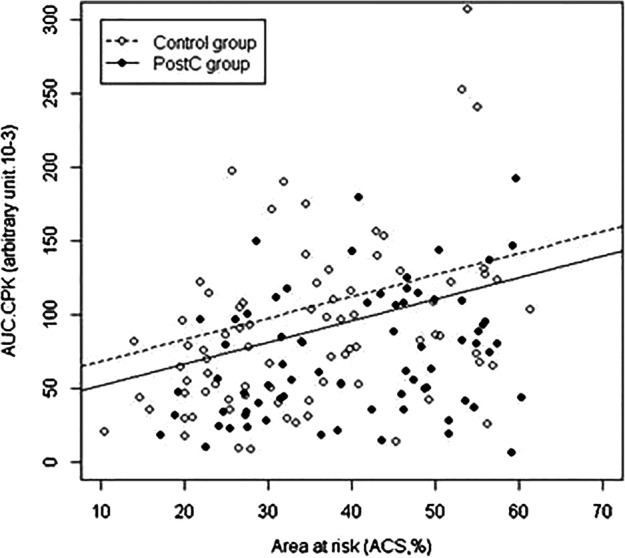
Results: 173 patients, aged 58±12 years, 76% males, 48% anterior infarct were included (82 in the PostC group, 91 in the control group). IS was significantly reduced in the PostC compared to the control group (71.7±41.6 vs 88.2±54.5×10(3) arbitrary units; p=0.027). After adjustment for abnormally contracting segments, older patients had smaller IS and smokers had larger IS. Gender, diabetes, hypertension, dyslipidemia and obesity did not have any significant effect on IS. Multivariate regression analysis showed that none of the traditional risk factors had a significant impact on the cardioprotective effect of mechanical ischaemic PostC.
Conclusions: The present analysis suggests that the cardioprotective effect of mechanical PostC is not influenced by traditional CV risk factors that are prevalent in patients with STEMI.
期刊介绍:
Open Heart is an online-only, open access cardiology journal that aims to be “open” in many ways: open access (free access for all readers), open peer review (unblinded peer review) and open data (data sharing is encouraged). The goal is to ensure maximum transparency and maximum impact on research progress and patient care. The journal is dedicated to publishing high quality, peer reviewed medical research in all disciplines and therapeutic areas of cardiovascular medicine. Research is published across all study phases and designs, from study protocols to phase I trials to meta-analyses, including small or specialist studies. Opinionated discussions on controversial topics are welcomed. Open Heart aims to operate a fast submission and review process with continuous publication online, to ensure timely, up-to-date research is available worldwide. The journal adheres to a rigorous and transparent peer review process, and all articles go through a statistical assessment to ensure robustness of the analyses. Open Heart is an official journal of the British Cardiovascular Society.





 京公网安备 11010802042870号
京ICP备2023020795号-1
京公网安备 11010802042870号
京ICP备2023020795号-1

 分享
分享
 求助内容:
求助内容: 应助结果提醒方式:
 扫码关注我们
