A Cuprous Oxide Thin Film Non-Enzymatic Glucose Sensor Using Differential Pulse Voltammetry and Other Voltammetry Methods and a Comparison to Different Thin Film Electrodes on the Detection of Glucose in an Alkaline Solution.
Yifan Dai, Alireza Molazemhosseini, Kevin Abbasi, Chung Chiun Liu
{"title":"A Cuprous Oxide Thin Film Non-Enzymatic Glucose Sensor Using Differential Pulse Voltammetry and Other Voltammetry Methods and a Comparison to Different Thin Film Electrodes on the Detection of Glucose in an Alkaline Solution.","authors":"Yifan Dai, Alireza Molazemhosseini, Kevin Abbasi, Chung Chiun Liu","doi":"10.3390/bios8010004","DOIUrl":null,"url":null,"abstract":"<p><p>A cuprous oxide (Cu₂O) thin layer served as the base for a non-enzymatic glucose sensor in an alkaline medium, 0.1 NaOH solution, with a linear range of 50-200 mg/dL using differential pulse voltammetry (DPV) measurement. An X-ray photoelectron spectroscopy (XPS) study confirmed the formation of the cuprous oxide layer on the thin gold film sensor prototype. Quantitative detection of glucose in both phosphate-buffered saline (PBS) and undiluted human serum was carried out. Neither ascorbic acid nor uric acid, even at a relatively high concentration level (100 mg/dL in serum), interfered with the glucose detection, demonstrating the excellent selectivity of this non-enzymatic cuprous oxide thin layer-based glucose sensor. Chronoamperometry and single potential amperometric voltammetry were used to verify the measurements obtained by DPV, and the positive results validated that the detection of glucose in a 0.1 M NaOH alkaline medium by DPV measurement was effective. Nickel, platinum, and copper are commonly used metals for non-enzymatic glucose detection. The performance of these metal-based sensors for glucose detection using DPV were also evaluated. The cuprous oxide (Cu₂O) thin layer-based sensor showed the best sensitivity for glucose detection among the sensors evaluated.</p>","PeriodicalId":48608,"journal":{"name":"Biosensors-Basel","volume":"8 1","pages":""},"PeriodicalIF":5.6000,"publicationDate":"2018-01-06","publicationTypes":"Journal Article","fieldsOfStudy":null,"isOpenAccess":false,"openAccessPdf":"https://sci-hub-pdf.com/10.3390/bios8010004","citationCount":"26","resultStr":null,"platform":"Semanticscholar","paperid":null,"PeriodicalName":"Biosensors-Basel","FirstCategoryId":"5","ListUrlMain":"https://doi.org/10.3390/bios8010004","RegionNum":3,"RegionCategory":"工程技术","ArticlePicture":[],"TitleCN":null,"AbstractTextCN":null,"PMCID":null,"EPubDate":"","PubModel":"","JCR":"Q1","JCRName":"CHEMISTRY, ANALYTICAL","Score":null,"Total":0}
引用次数: 26
Abstract
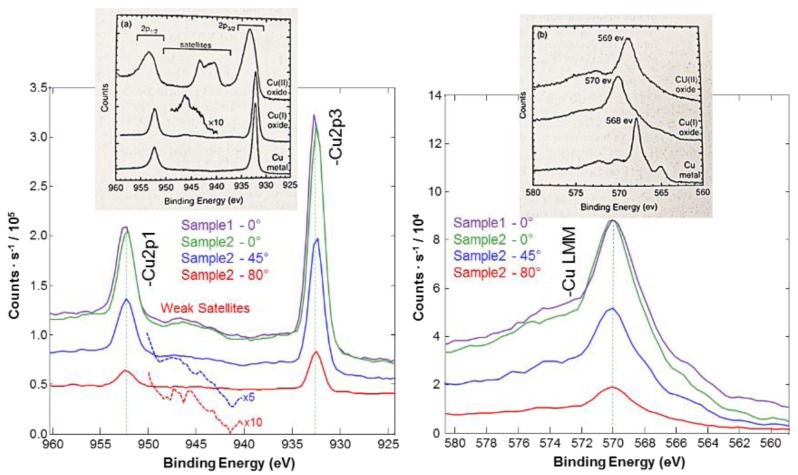
A cuprous oxide (Cu₂O) thin layer served as the base for a non-enzymatic glucose sensor in an alkaline medium, 0.1 NaOH solution, with a linear range of 50-200 mg/dL using differential pulse voltammetry (DPV) measurement. An X-ray photoelectron spectroscopy (XPS) study confirmed the formation of the cuprous oxide layer on the thin gold film sensor prototype. Quantitative detection of glucose in both phosphate-buffered saline (PBS) and undiluted human serum was carried out. Neither ascorbic acid nor uric acid, even at a relatively high concentration level (100 mg/dL in serum), interfered with the glucose detection, demonstrating the excellent selectivity of this non-enzymatic cuprous oxide thin layer-based glucose sensor. Chronoamperometry and single potential amperometric voltammetry were used to verify the measurements obtained by DPV, and the positive results validated that the detection of glucose in a 0.1 M NaOH alkaline medium by DPV measurement was effective. Nickel, platinum, and copper are commonly used metals for non-enzymatic glucose detection. The performance of these metal-based sensors for glucose detection using DPV were also evaluated. The cuprous oxide (Cu₂O) thin layer-based sensor showed the best sensitivity for glucose detection among the sensors evaluated.
Biosensors-BaselBiochemistry, Genetics and Molecular Biology-Clinical Biochemistry
CiteScore
6.60
自引率
14.80%
发文量
983
审稿时长
11 weeks
期刊介绍:
Biosensors (ISSN 2079-6374) provides an advanced forum for studies related to the science and technology of biosensors and biosensing. It publishes original research papers, comprehensive reviews and communications. Our aim is to encourage scientists to publish their experimental and theoretical results in as much detail as possible. There is no restriction on the length of the papers. The full experimental details must be provided so that the results can be reproduced. Electronic files and software regarding the full details of the calculation or experimental procedure, if unable to be published in a normal way, can be deposited as supplementary electronic material.





 京公网安备 11010802042870号
京ICP备2023020795号-1
京公网安备 11010802042870号
京ICP备2023020795号-1

 分享
分享
 求助内容:
求助内容: 应助结果提醒方式:
 扫码关注我们
