Eun Young Ko, Samooel Jung, Hyun Kyu Jeong, Jeong Hee Han, Jung Ho Son
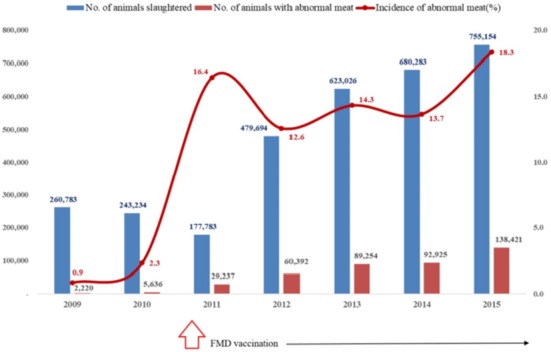
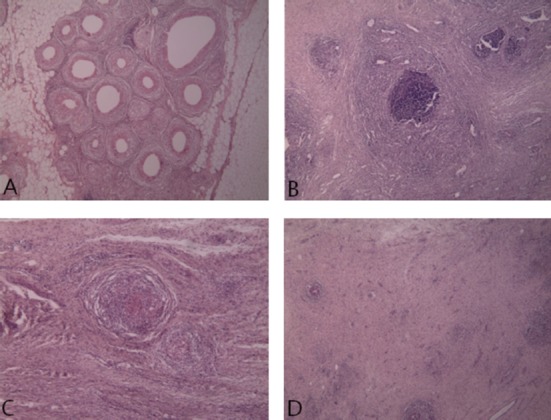
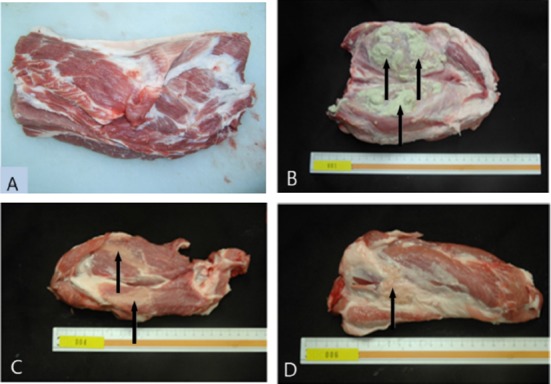
{"title":"Effects of Foot-and-mouth Disease Vaccination Location and Injection Device on the Incidence of Site Lesions in Pork.","authors":"Eun Young Ko, Samooel Jung, Hyun Kyu Jeong, Jeong Hee Han, Jung Ho Son","doi":"10.5851/kosfa.2018.38.3.498","DOIUrl":null,"url":null,"abstract":"<p><p>This study was aimed to investigate the effects of the type O foot-and-mouse disease vaccine (FMDV) on the incidence of abnormal meat such as granuloma or abscess formation at the injection site in pork and its associated economic losses. At 56 d of age, piglets were inoculated with FMDV by one of three administration routes: N-Neck (a conventional needle-syringe injection into the neck), N-Ham (a conventional needle-syringe injection into the ham), and Non-Neck (injection with a needle-free device into the neck). The injection sites were visually examined for the presence of a granuloma or abscess, and the incidence rate of abnormal meat was calculated. The gross weight of the portion of the pork carcasses condemned because of granuloma or abscess formation was measured and multiplied by the weekly sales price to calculate the total economic losses. After implementation of FMDV, the economic losses were approximately six times higher than before implementation. Granuloma or abscess formation was significantly higher in the N-Neck and Non-Neck groups, in which the vaccine was inoculated into the neck area, than in the N-Ham group (N-Neck and N-Ham vs Non-Neck, <i>p</i><0.05). These results suggest that the incidence of lesions could be reduced if the ham route was used for vaccination.</p>","PeriodicalId":17915,"journal":{"name":"Korean Journal for Food Science of Animal Resources","volume":"38 3","pages":"498-505"},"PeriodicalIF":0.0000,"publicationDate":"2018-07-01","publicationTypes":"Journal Article","fieldsOfStudy":null,"isOpenAccess":false,"openAccessPdf":"https://sci-hub-pdf.com/10.5851/kosfa.2018.38.3.498","citationCount":"20","resultStr":null,"platform":"Semanticscholar","paperid":null,"PeriodicalName":"Korean Journal for Food Science of Animal Resources","FirstCategoryId":"1085","ListUrlMain":"https://doi.org/10.5851/kosfa.2018.38.3.498","RegionNum":0,"RegionCategory":null,"ArticlePicture":[],"TitleCN":null,"AbstractTextCN":null,"PMCID":null,"EPubDate":"2018/7/31 0:00:00","PubModel":"Epub","JCR":"Q2","JCRName":"Agricultural and Biological Sciences","Score":null,"Total":0}
引用次数: 20
Abstract
This study was aimed to investigate the effects of the type O foot-and-mouse disease vaccine (FMDV) on the incidence of abnormal meat such as granuloma or abscess formation at the injection site in pork and its associated economic losses. At 56 d of age, piglets were inoculated with FMDV by one of three administration routes: N-Neck (a conventional needle-syringe injection into the neck), N-Ham (a conventional needle-syringe injection into the ham), and Non-Neck (injection with a needle-free device into the neck). The injection sites were visually examined for the presence of a granuloma or abscess, and the incidence rate of abnormal meat was calculated. The gross weight of the portion of the pork carcasses condemned because of granuloma or abscess formation was measured and multiplied by the weekly sales price to calculate the total economic losses. After implementation of FMDV, the economic losses were approximately six times higher than before implementation. Granuloma or abscess formation was significantly higher in the N-Neck and Non-Neck groups, in which the vaccine was inoculated into the neck area, than in the N-Ham group (N-Neck and N-Ham vs Non-Neck, p<0.05). These results suggest that the incidence of lesions could be reduced if the ham route was used for vaccination.
本研究旨在探讨O型鼠足病疫苗(FMDV)对猪肉注射部位肉芽肿或脓肿形成等异常肉的发生率及其相关经济损失的影响。在56日龄时,仔猪通过三种给药途径之一接种FMDV: N-Neck(传统针头注射器注射到颈部),N-Ham(传统针头注射器注射到火腿)和Non-Neck(使用无针装置注射到颈部)。肉眼检查注射部位是否有肉芽肿或脓肿,并计算异常肉的发生率。测量因肉芽肿或脓肿形成而被谴责的猪肉胴体的毛重,并乘以每周的销售价格来计算总经济损失。实施FMDV后,经济损失大约是实施前的六倍。在颈部接种疫苗的N-Neck组和Non-Neck组中,肉芽肿或脓肿的形成明显高于N-Ham组(N-Neck和N-Ham vs Non-Neck, p



 京公网安备 11010802042870号
京ICP备2023020795号-1
京公网安备 11010802042870号
京ICP备2023020795号-1

 分享
分享
 求助内容:
求助内容: 应助结果提醒方式:
 扫码关注我们
