{"title":"Enhanced Adsorption of Bisphenol A from Aqueous Solution with 2-Vinylpyridine Functionalized Magnetic Nanoparticles.","authors":"Qiang Li, Fei Pan, Wentao Li, Dongya Li, Haiming Xu, Dongsheng Xia, Aimin Li","doi":"10.3390/polym10101136","DOIUrl":null,"url":null,"abstract":"<p><p>In this study, a novel 2-vinylpyridine functionalized magnetic nanoparticle (Mag-PVP) was successfully prepared. The prepared Mag-PVP was characterized by transmission electronic microscopy (TEM), Fourier transform infrared spectrophotometry (FT-IR), vibrating sample magnetometry (VSM) and thermogravimetric analysis (TGA), and was used for the adsorption of bisphenol A (BPA) from aqueous solutions. Mag-PVP, which is composed of Fe₃O₄ nanoparticles and poly divinylbenzene-2-vinylpyridine (with a thickness of 10 nm), exhibited magnetic properties (<i>M</i><sub>s</sub> = 44.6 emu/g) and thermal stability. The maximum adsorption capacity (<i>Q<sub>m</sub></i>) of Mag-PVP for BPA obtained from the Langmuir isotherm was 115.87 mg/g at 20 °C, which was more than that of Fe₃O₄ nanospheres. In the presence of NaCl, the improved adsorption capacity of Mag-PVP was probably attributed to the screening effect of Mag-PVP surface charge and salting-out effect. In the presence of CaCl₂ and humic acid (HA), the adsorption capacity of BPA decreased due to competitive adsorption. The adsorption of BPA by Mag-PVP increased slightly with the increase in pH from 3.0 to 5.0 and obtained the largest adsorption amount at pH 5.0, which was probably attributed to hydrogen bonding interactions. Moreover, in actual water, Mag-PVP still showed excellent adsorption performance in removing BPA. The high adsorption capacity and excellent reusability performance in this work indicated that Mag-PVP was an effective adsorbent for removing BPA from aqueous solutions.</p>","PeriodicalId":20416,"journal":{"name":"Polymers","volume":"10 10","pages":""},"PeriodicalIF":4.9000,"publicationDate":"2018-10-12","publicationTypes":"Journal Article","fieldsOfStudy":null,"isOpenAccess":false,"openAccessPdf":"https://sci-hub-pdf.com/10.3390/polym10101136","citationCount":"36","resultStr":null,"platform":"Semanticscholar","paperid":null,"PeriodicalName":"Polymers","FirstCategoryId":"5","ListUrlMain":"https://doi.org/10.3390/polym10101136","RegionNum":3,"RegionCategory":"工程技术","ArticlePicture":[],"TitleCN":null,"AbstractTextCN":null,"PMCID":null,"EPubDate":"","PubModel":"","JCR":"Q1","JCRName":"POLYMER SCIENCE","Score":null,"Total":0}
引用次数: 36
Abstract
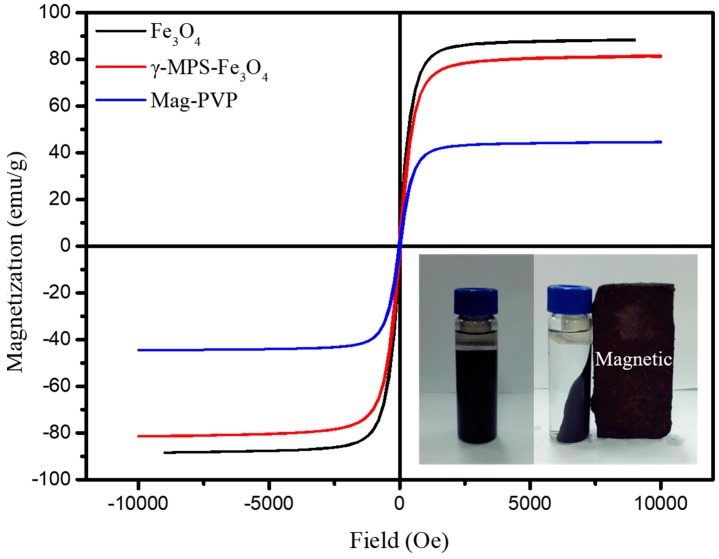
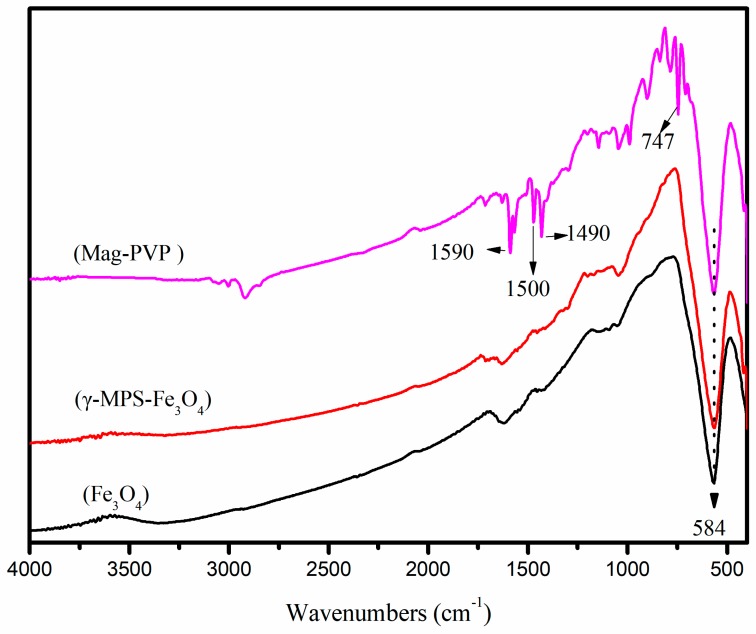
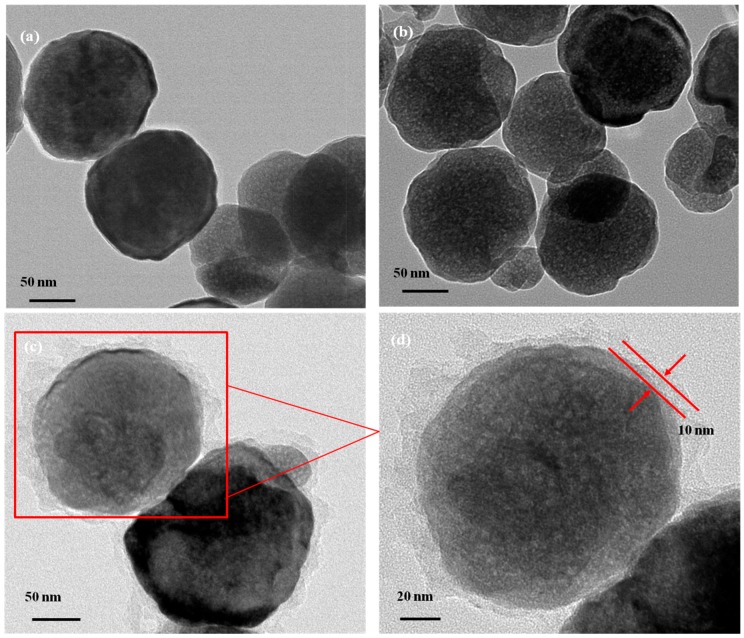
In this study, a novel 2-vinylpyridine functionalized magnetic nanoparticle (Mag-PVP) was successfully prepared. The prepared Mag-PVP was characterized by transmission electronic microscopy (TEM), Fourier transform infrared spectrophotometry (FT-IR), vibrating sample magnetometry (VSM) and thermogravimetric analysis (TGA), and was used for the adsorption of bisphenol A (BPA) from aqueous solutions. Mag-PVP, which is composed of Fe₃O₄ nanoparticles and poly divinylbenzene-2-vinylpyridine (with a thickness of 10 nm), exhibited magnetic properties (Ms = 44.6 emu/g) and thermal stability. The maximum adsorption capacity (Qm) of Mag-PVP for BPA obtained from the Langmuir isotherm was 115.87 mg/g at 20 °C, which was more than that of Fe₃O₄ nanospheres. In the presence of NaCl, the improved adsorption capacity of Mag-PVP was probably attributed to the screening effect of Mag-PVP surface charge and salting-out effect. In the presence of CaCl₂ and humic acid (HA), the adsorption capacity of BPA decreased due to competitive adsorption. The adsorption of BPA by Mag-PVP increased slightly with the increase in pH from 3.0 to 5.0 and obtained the largest adsorption amount at pH 5.0, which was probably attributed to hydrogen bonding interactions. Moreover, in actual water, Mag-PVP still showed excellent adsorption performance in removing BPA. The high adsorption capacity and excellent reusability performance in this work indicated that Mag-PVP was an effective adsorbent for removing BPA from aqueous solutions.
期刊介绍:
Polymers (ISSN 2073-4360) is an international, open access journal of polymer science. It publishes research papers, short communications and review papers. Our aim is to encourage scientists to publish their experimental and theoretical results in as much detail as possible. Therefore, there is no restriction on the length of the papers. The full experimental details must be provided so that the results can be reproduced. Polymers provides an interdisciplinary forum for publishing papers which advance the fields of (i) polymerization methods, (ii) theory, simulation, and modeling, (iii) understanding of new physical phenomena, (iv) advances in characterization techniques, and (v) harnessing of self-assembly and biological strategies for producing complex multifunctional structures.



 京公网安备 11010802042870号
京ICP备2023020795号-1
京公网安备 11010802042870号
京ICP备2023020795号-1

 分享
分享
 求助内容:
求助内容: 应助结果提醒方式:
 扫码关注我们
