Daniela R. Crișan, Jorge N. Tendeiro, Rob B.K. Wanders, Don van Ravenzwaaij, Rob R. Meijer, Catharina A. Hartman
{"title":"Practical consequences of model misfit when using rating scales to assess the severity of attention problems in children","authors":"Daniela R. Crișan, Jorge N. Tendeiro, Rob B.K. Wanders, Don van Ravenzwaaij, Rob R. Meijer, Catharina A. Hartman","doi":"10.1002/mpr.1795","DOIUrl":null,"url":null,"abstract":"<div>\n \n \n <section>\n \n <h3> Objectives</h3>\n \n <p>In this study, we examined the consequences of ignoring violations of assumptions underlying the use of sum scores in assessing attention problems (AP) and if psychometrically more refined models improve predictions of relevant outcomes in adulthood.</p>\n </section>\n \n <section>\n \n <h3> Methods</h3>\n \n <p>Tracking Adolescents' Individual Lives data were used. AP symptom properties were examined using the AP scale of the Child Behavior Checklist at age 11. Consequences of model violations were evaluated in relation to psychopathology, educational attainment, financial status, and ability to form relationships in adulthood.</p>\n </section>\n \n <section>\n \n <h3> Results</h3>\n \n <p>Results showed that symptoms differed with respect to information and difficulty. Moreover, evidence of multidimensionality was found, with two groups of items measuring sluggish cognitive tempo and attention deficit hyperactivity disorder symptoms. Item response theory analyses indicated that a bifactor model fitted these data better than other competing models. In terms of accuracy of predicting functional outcomes, sum scores were robust against violations of assumptions in some situations. Nevertheless, AP scores derived from the bifactor model showed some superiority over sum scores.</p>\n </section>\n \n <section>\n \n <h3> Conclusion</h3>\n \n <p>These findings show that more accurate predictions of later-life difficulties can be made if one uses a more suitable psychometric model to assess AP severity in children. This has important implications for research and clinical practice.</p>\n </section>\n </div>","PeriodicalId":50310,"journal":{"name":"International Journal of Methods in Psychiatric Research","volume":"28 4","pages":""},"PeriodicalIF":2.5000,"publicationDate":"2019-07-01","publicationTypes":"Journal Article","fieldsOfStudy":null,"isOpenAccess":false,"openAccessPdf":"https://sci-hub-pdf.com/10.1002/mpr.1795","citationCount":"3","resultStr":null,"platform":"Semanticscholar","paperid":null,"PeriodicalName":"International Journal of Methods in Psychiatric Research","FirstCategoryId":"3","ListUrlMain":"https://onlinelibrary.wiley.com/doi/10.1002/mpr.1795","RegionNum":3,"RegionCategory":"医学","ArticlePicture":[],"TitleCN":null,"AbstractTextCN":null,"PMCID":null,"EPubDate":"","PubModel":"","JCR":"Q2","JCRName":"PSYCHIATRY","Score":null,"Total":0}
引用次数: 3
Abstract
Objectives
In this study, we examined the consequences of ignoring violations of assumptions underlying the use of sum scores in assessing attention problems (AP) and if psychometrically more refined models improve predictions of relevant outcomes in adulthood.
Methods
Tracking Adolescents' Individual Lives data were used. AP symptom properties were examined using the AP scale of the Child Behavior Checklist at age 11. Consequences of model violations were evaluated in relation to psychopathology, educational attainment, financial status, and ability to form relationships in adulthood.
Results
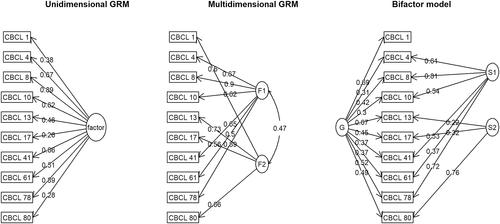
Results showed that symptoms differed with respect to information and difficulty. Moreover, evidence of multidimensionality was found, with two groups of items measuring sluggish cognitive tempo and attention deficit hyperactivity disorder symptoms. Item response theory analyses indicated that a bifactor model fitted these data better than other competing models. In terms of accuracy of predicting functional outcomes, sum scores were robust against violations of assumptions in some situations. Nevertheless, AP scores derived from the bifactor model showed some superiority over sum scores.
Conclusion
These findings show that more accurate predictions of later-life difficulties can be made if one uses a more suitable psychometric model to assess AP severity in children. This has important implications for research and clinical practice.
期刊介绍:
The International Journal of Methods in Psychiatric Research (MPR) publishes high-standard original research of a technical, methodological, experimental and clinical nature, contributing to the theory, methodology, practice and evaluation of mental and behavioural disorders. The journal targets in particular detailed methodological and design papers from major national and international multicentre studies. There is a close working relationship with the US National Institute of Mental Health, the World Health Organisation (WHO) Diagnostic Instruments Committees, as well as several other European and international organisations.
MPR aims to publish rapidly articles of highest methodological quality in such areas as epidemiology, biostatistics, generics, psychopharmacology, psychology and the neurosciences. Articles informing about innovative and critical methodological, statistical and clinical issues, including nosology, can be submitted as regular papers and brief reports. Reviews are only occasionally accepted.
MPR seeks to monitor, discuss, influence and improve the standards of mental health and behavioral neuroscience research by providing a platform for rapid publication of outstanding contributions. As a quarterly journal MPR is a major source of information and ideas and is an important medium for students, clinicians and researchers in psychiatry, clinical psychology, epidemiology and the allied disciplines in the mental health field.



 京公网安备 11010802042870号
京ICP备2023020795号-1
京公网安备 11010802042870号
京ICP备2023020795号-1

 分享
分享
 求助内容:
求助内容: 应助结果提醒方式:
 扫码关注我们
