Li-Guang Yang, Ming-Zheng Cao, Jie Zhang, Xiao-Yan Li, Qin-Li Sun
{"title":"LncRNA XIST modulates HIF-1A/AXL signaling pathway by inhibiting miR-93-5p in colorectal cancer.","authors":"Li-Guang Yang, Ming-Zheng Cao, Jie Zhang, Xiao-Yan Li, Qin-Li Sun","doi":"10.1002/mgg3.1112","DOIUrl":null,"url":null,"abstract":"<p><strong>Background: </strong>Long noncoding RNA (LncRNA) XIST is one of the genes that exists in different types of cancers. Earlier researches showed that XIST can advance the progression of colorectal cancer. Nevertheless, the potential molecular mechanism of XIST in combination with miR-93-5p has not been explored in colorectal cancer.</p><p><strong>Methods: </strong>We performed qRT-PCR to explore the level of XIST. And a serious experiments in vitro and in vivo were performed to explore the function of XIST. The relationship between XIST/HIF-1A and miR-93-5p was confirmed by RIP and dual-luciferase assays.</p><p><strong>Results: </strong>In the present research, our team demonstrated the upregulation of XIST expression, which was related to tumor progression, and the downregulation of miR-93-5p in cells and tissues of colorectal cancer. XIST is the competitive endogenous RNA of miR-93-5p to promote HIF-1A, and then the upregulated AXL level facilitates the EMT process, migration, and proliferation of colorectal cancer. At last, we proved that XIST enhanced the in vivo and in vitro activities of colorectal cancer by regulating AXL signaling.</p><p><strong>Conclusion: </strong>In summary, the above results indicate that XIST promotes colorectal cancer tumorigenesis by regulating miR-93-5p/HIF-1A/AXL signaling pathway, which will supply a novel perspective to diagnose and treat colorectal cancer disease.</p>","PeriodicalId":18852,"journal":{"name":"Molecular Genetics & Genomic Medicine","volume":" ","pages":"e1112"},"PeriodicalIF":1.6000,"publicationDate":"2020-04-01","publicationTypes":"Journal Article","fieldsOfStudy":null,"isOpenAccess":false,"openAccessPdf":"https://sci-hub-pdf.com/10.1002/mgg3.1112","citationCount":"32","resultStr":null,"platform":"Semanticscholar","paperid":null,"PeriodicalName":"Molecular Genetics & Genomic Medicine","FirstCategoryId":"3","ListUrlMain":"https://doi.org/10.1002/mgg3.1112","RegionNum":4,"RegionCategory":"医学","ArticlePicture":[],"TitleCN":null,"AbstractTextCN":null,"PMCID":null,"EPubDate":"2020/2/15 0:00:00","PubModel":"Epub","JCR":"Q4","JCRName":"GENETICS & HEREDITY","Score":null,"Total":0}
引用次数: 32
Abstract
Background: Long noncoding RNA (LncRNA) XIST is one of the genes that exists in different types of cancers. Earlier researches showed that XIST can advance the progression of colorectal cancer. Nevertheless, the potential molecular mechanism of XIST in combination with miR-93-5p has not been explored in colorectal cancer.
Methods: We performed qRT-PCR to explore the level of XIST. And a serious experiments in vitro and in vivo were performed to explore the function of XIST. The relationship between XIST/HIF-1A and miR-93-5p was confirmed by RIP and dual-luciferase assays.
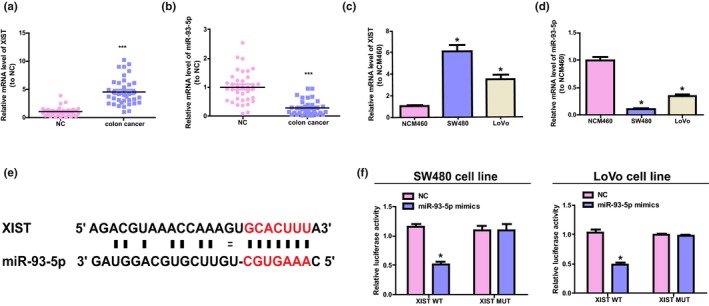
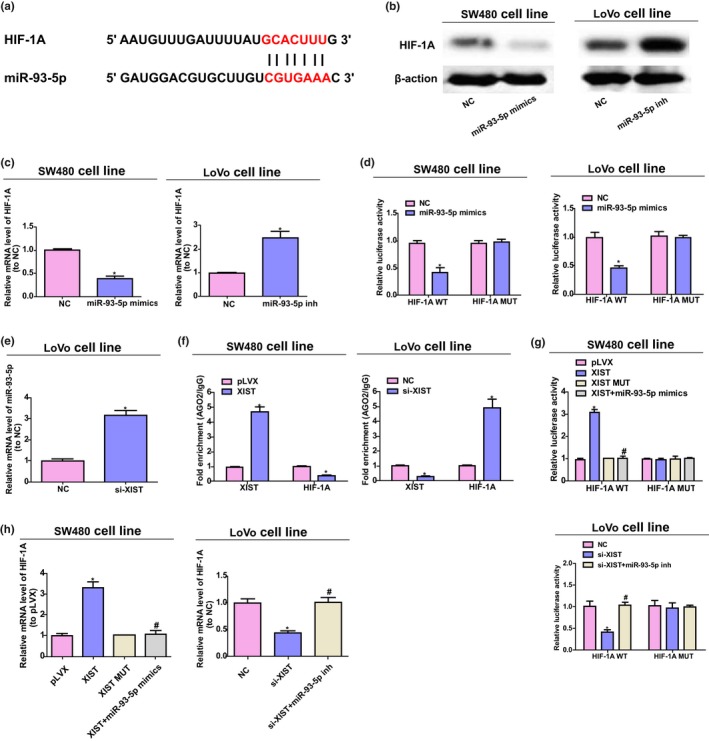
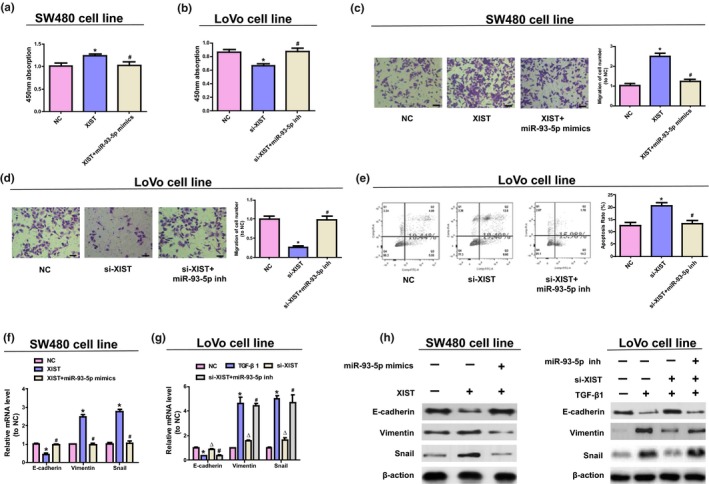
Results: In the present research, our team demonstrated the upregulation of XIST expression, which was related to tumor progression, and the downregulation of miR-93-5p in cells and tissues of colorectal cancer. XIST is the competitive endogenous RNA of miR-93-5p to promote HIF-1A, and then the upregulated AXL level facilitates the EMT process, migration, and proliferation of colorectal cancer. At last, we proved that XIST enhanced the in vivo and in vitro activities of colorectal cancer by regulating AXL signaling.
Conclusion: In summary, the above results indicate that XIST promotes colorectal cancer tumorigenesis by regulating miR-93-5p/HIF-1A/AXL signaling pathway, which will supply a novel perspective to diagnose and treat colorectal cancer disease.
期刊介绍:
Molecular Genetics & Genomic Medicine is a peer-reviewed journal for rapid dissemination of quality research related to the dynamically developing areas of human, molecular and medical genetics. The journal publishes original research articles covering findings in phenotypic, molecular, biological, and genomic aspects of genomic variation, inherited disorders and birth defects. The broad publishing spectrum of Molecular Genetics & Genomic Medicine includes rare and common disorders from diagnosis to treatment. Examples of appropriate articles include reports of novel disease genes, functional studies of genetic variants, in-depth genotype-phenotype studies, genomic analysis of inherited disorders, molecular diagnostic methods, medical bioinformatics, ethical, legal, and social implications (ELSI), and approaches to clinical diagnosis. Molecular Genetics & Genomic Medicine provides a scientific home for next generation sequencing studies of rare and common disorders, which will make research in this fascinating area easily and rapidly accessible to the scientific community. This will serve as the basis for translating next generation sequencing studies into individualized diagnostics and therapeutics, for day-to-day medical care.
Molecular Genetics & Genomic Medicine publishes original research articles, reviews, and research methods papers, along with invited editorials and commentaries. Original research papers must report well-conducted research with conclusions supported by the data presented.



 京公网安备 11010802042870号
京ICP备2023020795号-1
京公网安备 11010802042870号
京ICP备2023020795号-1

 分享
分享
 求助内容:
求助内容: 应助结果提醒方式:
 扫码关注我们
