Application of Ficus carica L. and Solanum incanum L. Extracts in Coagulation of Milk: The Case of Traditional Practice in Ab'ala Area, Afar Regional State, Ethiopia.
Welday Desta, Mohammed Shumbahri, Sibhatu Gebrehiwot
{"title":"Application of <i>Ficus carica</i> L. and <i>Solanum incanum</i> L. Extracts in Coagulation of Milk: The Case of Traditional Practice in Ab'ala Area, Afar Regional State, Ethiopia.","authors":"Welday Desta, Mohammed Shumbahri, Sibhatu Gebrehiwot","doi":"10.1155/2020/9874949","DOIUrl":null,"url":null,"abstract":"<p><p>People living in and around Ab'ala area of the Afar Regional State, Ethiopia, have a traditional practice of applying <i>Ficus carica</i> leaf and <i>Solanum incanum</i> fruit extracts to milk in order to coagulate it as soon as possible. Thus, to investigate the role of the extracts in the coagulation of milk and their health threats, the milk-clotting activity, phytochemical screening tests, antimicrobial activities by the agar well diffusion method, and heavy metal content by ICP-OES technique were determined. Accordingly, both <i>Ficus carica</i> and <i>Solanum incanum</i> were found to possess phenolics, saponins, and tannins. Likewise, positive tests for flavonoid in <i>Ficus carica</i> and alkaloid in <i>Solanum incanum</i> were observed. However, no terpenoids, glycosides, and oxalates were detected in the plants. Moreover, the crude and concentrated enzyme extracts of the plants exhibited clotting activity. In this regard, the enzyme extracts of <i>Ficus carica</i> were superior with the highest clotting activity of 1.20 U. On the other hand, ethanol and chloroform extracts of the samples showed inhibition zones against all tested microorganisms except their chloroform extract which did not exhibit inhibition against <i>Escherichia coli</i> and <i>Aspergillus niger</i>. Likewise, the metals Cr, Cd, Mn, Cu, and Fe were detected in the plant samples, with the Mn content of 3.67 ± 0.10 mg per kg of dry weight of the plant in <i>Ficus carica</i> being the highest. Indeed, the level of the heavy metal contents is considerably lower than those maximum permissible limits set by international standards. On the other hand, no Pb and Zn were detected in the plant samples. Therefore, the higher clotting activity of the enzyme extracts was an indicator that enzymes, rather than other phytochemicals, are the most probable agents responsible for the milk-clotting ability of the plants, resulting in the formation of cheese. Furthermore, the growth inhibition to most of the test microbes is a manifestation that bacterial fermentation is not a means of clotting the milk as bacteria introduced to the milk would be killed by the sample extracts. Moreover, the use of the plants in the coagulation process would not pose health threats as far as oxalate and metal toxicity is concerned.</p>","PeriodicalId":8826,"journal":{"name":"Biochemistry Research International","volume":"2020 ","pages":"9874949"},"PeriodicalIF":3.4000,"publicationDate":"2020-04-07","publicationTypes":"Journal Article","fieldsOfStudy":null,"isOpenAccess":false,"openAccessPdf":"https://sci-hub-pdf.com/10.1155/2020/9874949","citationCount":"7","resultStr":null,"platform":"Semanticscholar","paperid":null,"PeriodicalName":"Biochemistry Research International","FirstCategoryId":"1085","ListUrlMain":"https://doi.org/10.1155/2020/9874949","RegionNum":0,"RegionCategory":null,"ArticlePicture":[],"TitleCN":null,"AbstractTextCN":null,"PMCID":null,"EPubDate":"2020/1/1 0:00:00","PubModel":"eCollection","JCR":"Q2","JCRName":"BIOCHEMICAL RESEARCH METHODS","Score":null,"Total":0}
引用次数: 7
Abstract
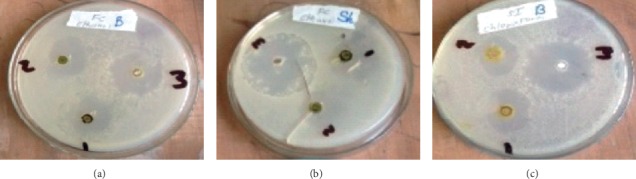
People living in and around Ab'ala area of the Afar Regional State, Ethiopia, have a traditional practice of applying Ficus carica leaf and Solanum incanum fruit extracts to milk in order to coagulate it as soon as possible. Thus, to investigate the role of the extracts in the coagulation of milk and their health threats, the milk-clotting activity, phytochemical screening tests, antimicrobial activities by the agar well diffusion method, and heavy metal content by ICP-OES technique were determined. Accordingly, both Ficus carica and Solanum incanum were found to possess phenolics, saponins, and tannins. Likewise, positive tests for flavonoid in Ficus carica and alkaloid in Solanum incanum were observed. However, no terpenoids, glycosides, and oxalates were detected in the plants. Moreover, the crude and concentrated enzyme extracts of the plants exhibited clotting activity. In this regard, the enzyme extracts of Ficus carica were superior with the highest clotting activity of 1.20 U. On the other hand, ethanol and chloroform extracts of the samples showed inhibition zones against all tested microorganisms except their chloroform extract which did not exhibit inhibition against Escherichia coli and Aspergillus niger. Likewise, the metals Cr, Cd, Mn, Cu, and Fe were detected in the plant samples, with the Mn content of 3.67 ± 0.10 mg per kg of dry weight of the plant in Ficus carica being the highest. Indeed, the level of the heavy metal contents is considerably lower than those maximum permissible limits set by international standards. On the other hand, no Pb and Zn were detected in the plant samples. Therefore, the higher clotting activity of the enzyme extracts was an indicator that enzymes, rather than other phytochemicals, are the most probable agents responsible for the milk-clotting ability of the plants, resulting in the formation of cheese. Furthermore, the growth inhibition to most of the test microbes is a manifestation that bacterial fermentation is not a means of clotting the milk as bacteria introduced to the milk would be killed by the sample extracts. Moreover, the use of the plants in the coagulation process would not pose health threats as far as oxalate and metal toxicity is concerned.




 京公网安备 11010802042870号
京ICP备2023020795号-1
京公网安备 11010802042870号
京ICP备2023020795号-1

 分享
分享
 求助内容:
求助内容: 应助结果提醒方式:
 扫码关注我们
