{"title":"Clinical Utilization of Blood and Urine Cultures and Incidences of Bacteremia and Bacteriuria in a Hospital in Thailand.","authors":"Veeravan Lekskulchai","doi":"10.12659/MSMBR.924204","DOIUrl":null,"url":null,"abstract":"<p><p>BACKGROUND To effectively treat sepsis and urinary tract infection (UTI), blood and urine cultures should be used appropriately and relative to incidences of bacteremia and bacteriuria. This study aimed to investigate the use of blood and urine cultures and incidences of bacteremia and bacteriuria in a hospital in Thailand. MATERIAL AND METHODS Medical records of patients admitted from 2016 to 2018 were randomly selected and data in the records were anonymously extracted for investigation. RESULTS From 12 000 records, data on blood and urine cultures were extracted from 9% and 4% of them, respectively. The negative rate of blood culture was 87.48%. Bacteremia was detected in 10.22%. The positive rate of urine culture was 27.38% and the contamination rate was 31.26%. Escherichia coli was the most common cause of community-onset bacteremia and bacteriuria. Methicillin-resistant coagulase-negative staphylococci and Acinetobacter baumannii were the most common cause of hospital-acquired bacteremia while yeasts were the most common cause of hospital-acquired UTI. CONCLUSIONS A high negative rate of blood culture may result not only from its low sensitivity but also from liberal test use to identify sepsis in some conditions. Improper urine collection is the main problem with use of urine culture.</p>","PeriodicalId":18491,"journal":{"name":"Medical Science Monitor Basic Research","volume":"26 ","pages":"e924204"},"PeriodicalIF":2.0000,"publicationDate":"2020-06-29","publicationTypes":"Journal Article","fieldsOfStudy":null,"isOpenAccess":false,"openAccessPdf":"https://ftp.ncbi.nlm.nih.gov/pub/pmc/oa_pdf/ce/4d/medscimonitbasicres-26-e924204.PMC7346747.pdf","citationCount":"0","resultStr":null,"platform":"Semanticscholar","paperid":null,"PeriodicalName":"Medical Science Monitor Basic Research","FirstCategoryId":"1085","ListUrlMain":"https://doi.org/10.12659/MSMBR.924204","RegionNum":0,"RegionCategory":null,"ArticlePicture":[],"TitleCN":null,"AbstractTextCN":null,"PMCID":null,"EPubDate":"","PubModel":"","JCR":"Q3","JCRName":"MEDICINE, RESEARCH & EXPERIMENTAL","Score":null,"Total":0}
引用次数: 0
Abstract
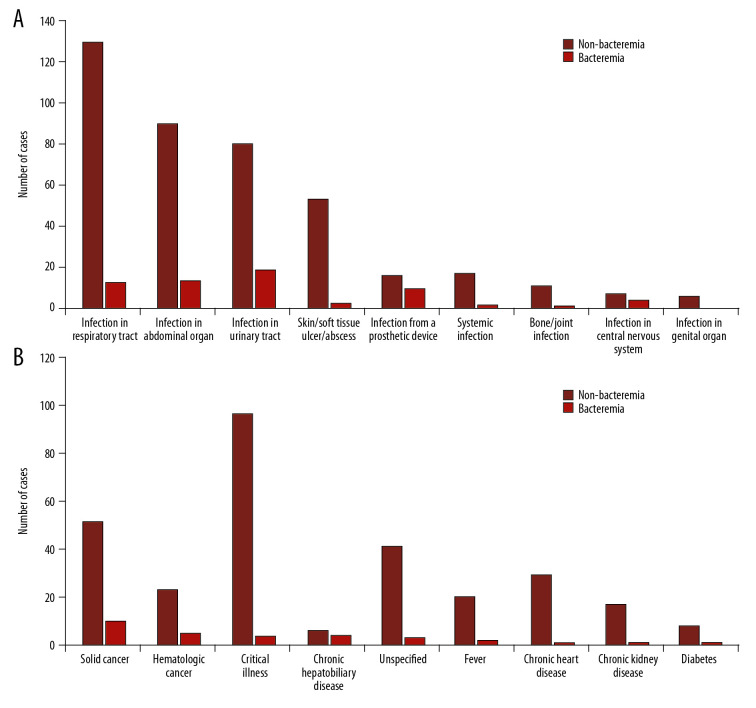
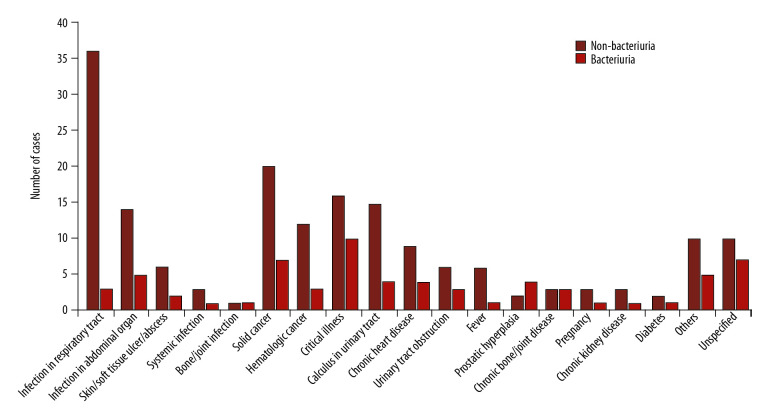
BACKGROUND To effectively treat sepsis and urinary tract infection (UTI), blood and urine cultures should be used appropriately and relative to incidences of bacteremia and bacteriuria. This study aimed to investigate the use of blood and urine cultures and incidences of bacteremia and bacteriuria in a hospital in Thailand. MATERIAL AND METHODS Medical records of patients admitted from 2016 to 2018 were randomly selected and data in the records were anonymously extracted for investigation. RESULTS From 12 000 records, data on blood and urine cultures were extracted from 9% and 4% of them, respectively. The negative rate of blood culture was 87.48%. Bacteremia was detected in 10.22%. The positive rate of urine culture was 27.38% and the contamination rate was 31.26%. Escherichia coli was the most common cause of community-onset bacteremia and bacteriuria. Methicillin-resistant coagulase-negative staphylococci and Acinetobacter baumannii were the most common cause of hospital-acquired bacteremia while yeasts were the most common cause of hospital-acquired UTI. CONCLUSIONS A high negative rate of blood culture may result not only from its low sensitivity but also from liberal test use to identify sepsis in some conditions. Improper urine collection is the main problem with use of urine culture.




 京公网安备 11010802042870号
京ICP备2023020795号-1
京公网安备 11010802042870号
京ICP备2023020795号-1

 分享
分享
 求助内容:
求助内容: 应助结果提醒方式:
 扫码关注我们
