{"title":"Analysis of human satellite cell dynamics on cultured adult skeletal muscle myofibers.","authors":"Peter Feige, Eve C Tsai, Michael A Rudnicki","doi":"10.1186/s13395-020-00256-z","DOIUrl":null,"url":null,"abstract":"<p><strong>Background: </strong>Maintaining stem cells in physiologically relevant states is necessary to understand cell and context-specific signalling paradigms and to understand complex interfaces between cells in situ. Understanding human stem cell function is largely based on tissue biopsies, cell culture, and transplantation into model organisms.</p><p><strong>Methods: </strong>Here, we describe a method to isolate post-mortem intact human muscle myofibers and culture muscle stem cells within the niche microenvironment to assay cellular dynamics, stem cell identity, stem cell hierarchy, and differentiation potential.</p><p><strong>Results: </strong>We show human myofiber culture maintains complex cell-cell contacts and extracellular niche composition during culture. Human satellite cells can be cultured at least 8 days, which represents a timepoint of activation, differentiation, and de novo human myofiber formation. We demonstrate that adult human muscle stem cells undergo apicobasal and planar cell divisions and express polarized dystrophin and EGFR. Furthermore, we validate that stimulation of the EGFR pathway stimulates the generation of myogenic progenitors and myogenic differentiation.</p><p><strong>Conclusions: </strong>This method provides proof of principle evidence for the use of human muscle to evaluate satellite cell dynamics and has applications in pre-clinical evaluation of therapeutics targeting muscle repair.</p>","PeriodicalId":5,"journal":{"name":"ACS Applied Materials & Interfaces","volume":" ","pages":"1"},"PeriodicalIF":8.2000,"publicationDate":"2021-01-04","publicationTypes":"Journal Article","fieldsOfStudy":null,"isOpenAccess":false,"openAccessPdf":"https://www.ncbi.nlm.nih.gov/pmc/articles/PMC7780694/pdf/","citationCount":"0","resultStr":null,"platform":"Semanticscholar","paperid":null,"PeriodicalName":"ACS Applied Materials & Interfaces","FirstCategoryId":"3","ListUrlMain":"https://doi.org/10.1186/s13395-020-00256-z","RegionNum":2,"RegionCategory":"材料科学","ArticlePicture":[],"TitleCN":null,"AbstractTextCN":null,"PMCID":null,"EPubDate":"","PubModel":"","JCR":"Q1","JCRName":"MATERIALS SCIENCE, MULTIDISCIPLINARY","Score":null,"Total":0}
引用次数: 0
Abstract
Background: Maintaining stem cells in physiologically relevant states is necessary to understand cell and context-specific signalling paradigms and to understand complex interfaces between cells in situ. Understanding human stem cell function is largely based on tissue biopsies, cell culture, and transplantation into model organisms.
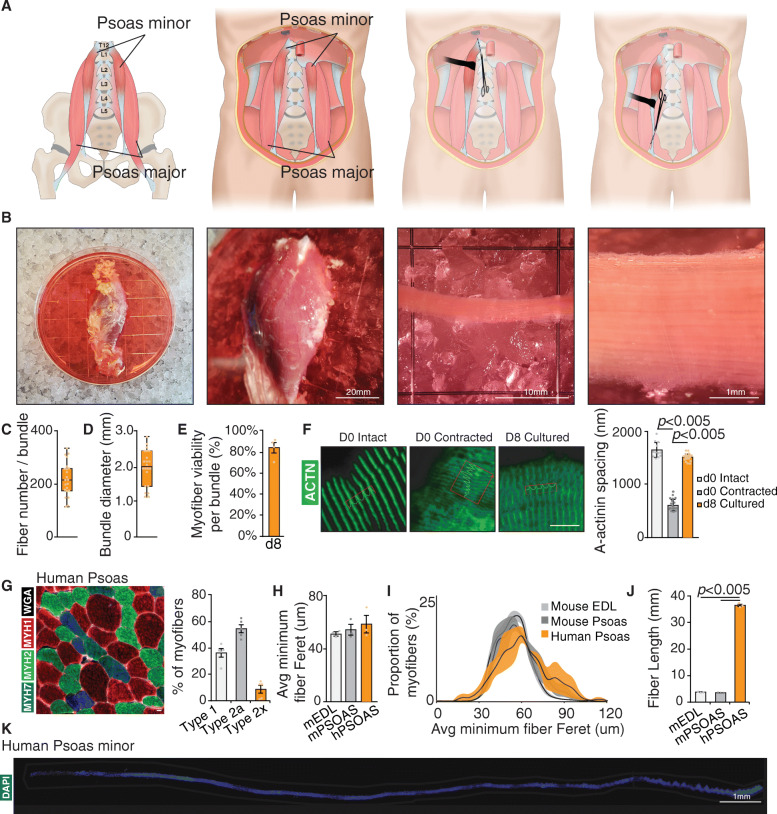
Methods: Here, we describe a method to isolate post-mortem intact human muscle myofibers and culture muscle stem cells within the niche microenvironment to assay cellular dynamics, stem cell identity, stem cell hierarchy, and differentiation potential.
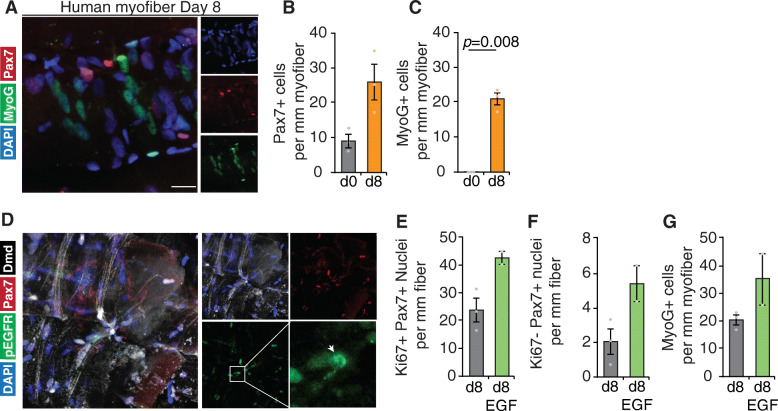
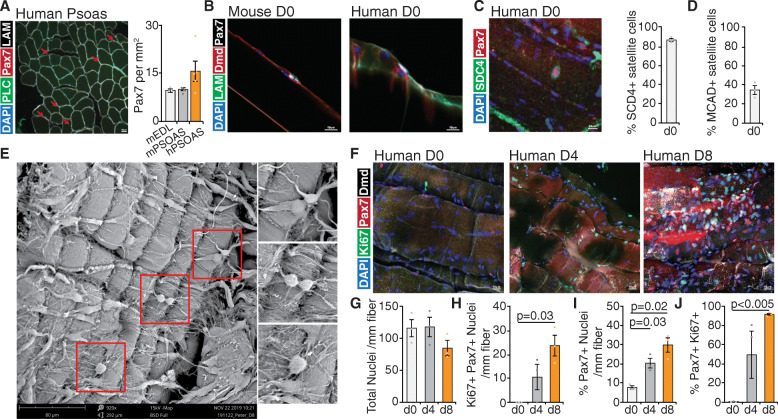
Results: We show human myofiber culture maintains complex cell-cell contacts and extracellular niche composition during culture. Human satellite cells can be cultured at least 8 days, which represents a timepoint of activation, differentiation, and de novo human myofiber formation. We demonstrate that adult human muscle stem cells undergo apicobasal and planar cell divisions and express polarized dystrophin and EGFR. Furthermore, we validate that stimulation of the EGFR pathway stimulates the generation of myogenic progenitors and myogenic differentiation.
Conclusions: This method provides proof of principle evidence for the use of human muscle to evaluate satellite cell dynamics and has applications in pre-clinical evaluation of therapeutics targeting muscle repair.
期刊介绍:
ACS Applied Materials & Interfaces is a leading interdisciplinary journal that brings together chemists, engineers, physicists, and biologists to explore the development and utilization of newly-discovered materials and interfacial processes for specific applications. Our journal has experienced remarkable growth since its establishment in 2009, both in terms of the number of articles published and the impact of the research showcased. We are proud to foster a truly global community, with the majority of published articles originating from outside the United States, reflecting the rapid growth of applied research worldwide.




 京公网安备 11010802042870号
京ICP备2023020795号-1
京公网安备 11010802042870号
京ICP备2023020795号-1

 分享
分享
 求助内容:
求助内容: 应助结果提醒方式:
 扫码关注我们
