James Newman, Isabel Preeshagul, Nina Kohn, Craig Devoe, Nagashree Seetharamu
{"title":"Simple parameters to solve a complex issue: predicting response to checkpoint inhibitor therapy in lung cancer.","authors":"James Newman, Isabel Preeshagul, Nina Kohn, Craig Devoe, Nagashree Seetharamu","doi":"10.2217/lmt-2020-0024","DOIUrl":null,"url":null,"abstract":"<p><strong>Background: </strong>Noninvasive biomarkers predicting immune checkpoint inhibitor (ICI) response are urgently needed. We evaluated the predictive value of pretreatment neutrophil-to-lymphocyte ratio (NLR), smoking history, smoking intensity, BMI and programmed death ligand 1 (PD-L1) expression in non-small-cell lung cancer (NSCLC) patients treated with ICIs.</p><p><strong>Materials & methods: </strong>Single-center retrospective study included 137 patients from July 2015 to February 2018. Outcomes included 3-month disease control rate, progression-free survival, and overall survival. Predictive value of biomarkers was assessed independently and in a multivariable model.</p><p><strong>Results: </strong>NLR was associated with all outcomes. Smoking history was predictive of progression-free survival and smoking intensity was predictive of disease control rate. BMI and PD-L1 were not associated with any outcome. High BMI was associated with low NLR.</p><p><strong>Conclusion: </strong>Simple clinical biomarkers can predict response to ICIs. A score incorporating both clinical factors and established tissue/serum biomarkers may be useful in identifying NSCLC patients who would benefit from ICIs.</p>","PeriodicalId":43551,"journal":{"name":"Lung Cancer Management","volume":"10 2","pages":"LMT44"},"PeriodicalIF":0.7000,"publicationDate":"2020-11-23","publicationTypes":"Journal Article","fieldsOfStudy":null,"isOpenAccess":false,"openAccessPdf":"https://ftp.ncbi.nlm.nih.gov/pub/pmc/oa_pdf/b2/ee/lmt-10-44.PMC8162145.pdf","citationCount":"3","resultStr":null,"platform":"Semanticscholar","paperid":null,"PeriodicalName":"Lung Cancer Management","FirstCategoryId":"1085","ListUrlMain":"https://doi.org/10.2217/lmt-2020-0024","RegionNum":0,"RegionCategory":null,"ArticlePicture":[],"TitleCN":null,"AbstractTextCN":null,"PMCID":null,"EPubDate":"","PubModel":"","JCR":"Q4","JCRName":"RESPIRATORY SYSTEM","Score":null,"Total":0}
引用次数: 3
Abstract
Background: Noninvasive biomarkers predicting immune checkpoint inhibitor (ICI) response are urgently needed. We evaluated the predictive value of pretreatment neutrophil-to-lymphocyte ratio (NLR), smoking history, smoking intensity, BMI and programmed death ligand 1 (PD-L1) expression in non-small-cell lung cancer (NSCLC) patients treated with ICIs.
Materials & methods: Single-center retrospective study included 137 patients from July 2015 to February 2018. Outcomes included 3-month disease control rate, progression-free survival, and overall survival. Predictive value of biomarkers was assessed independently and in a multivariable model.
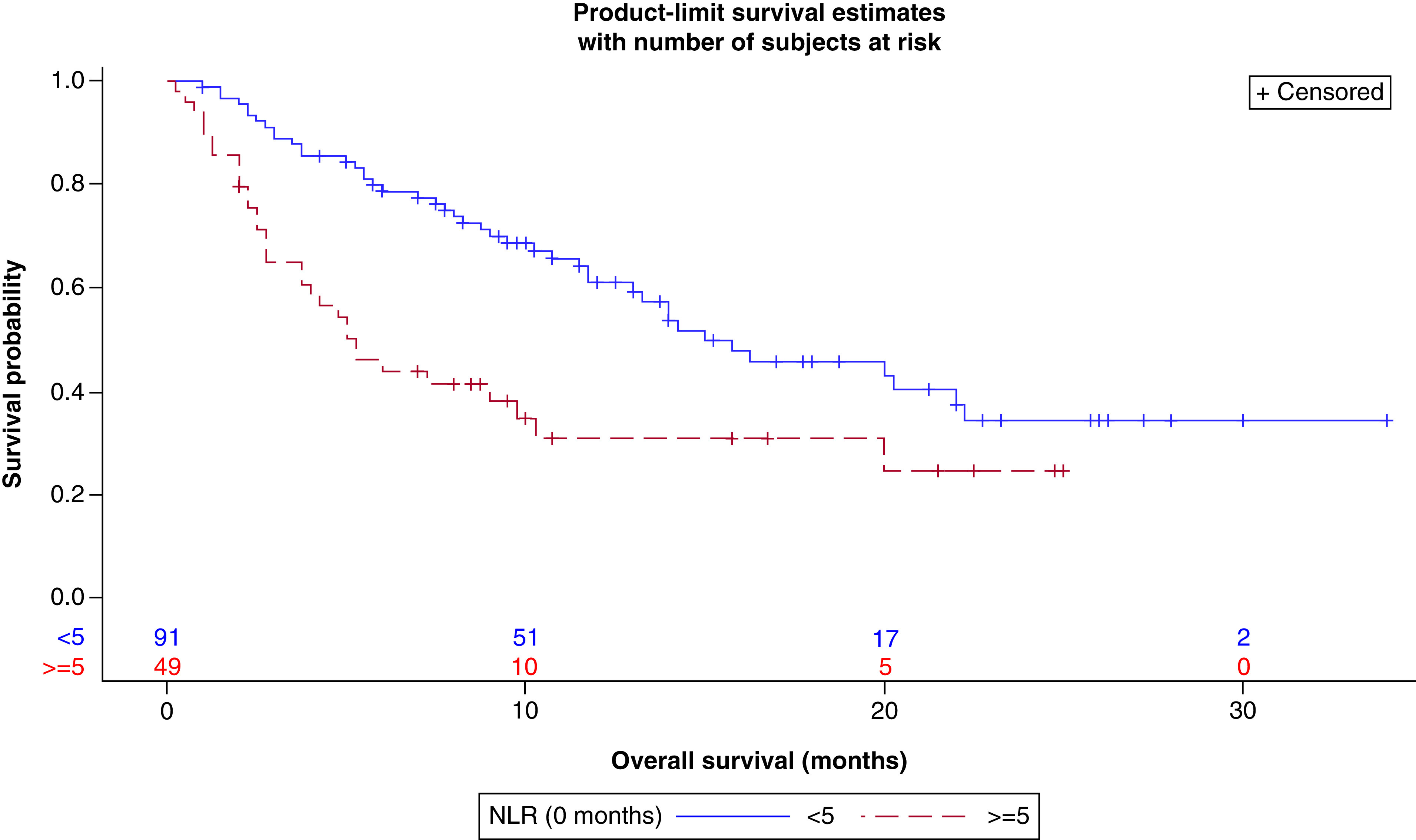
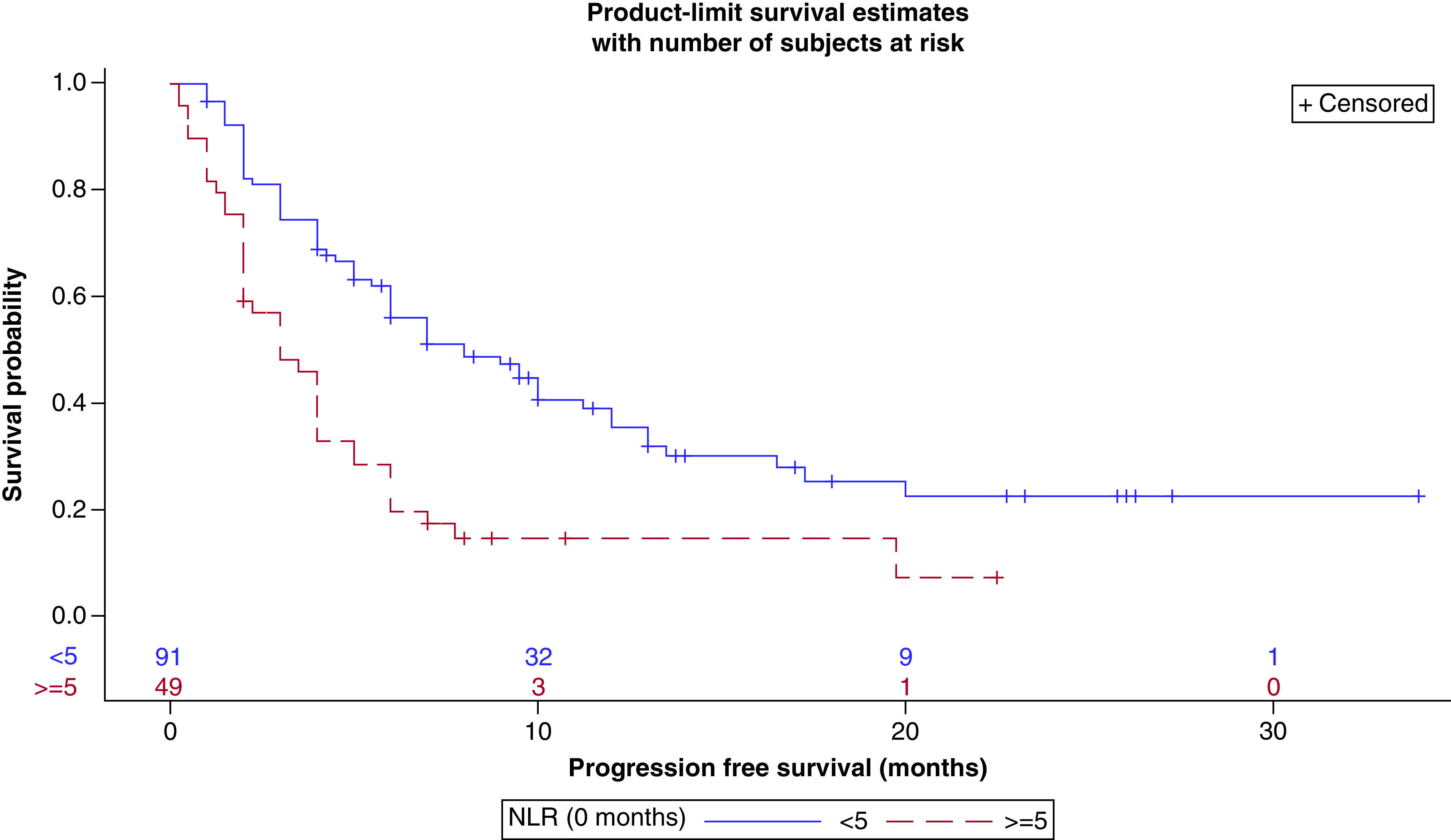
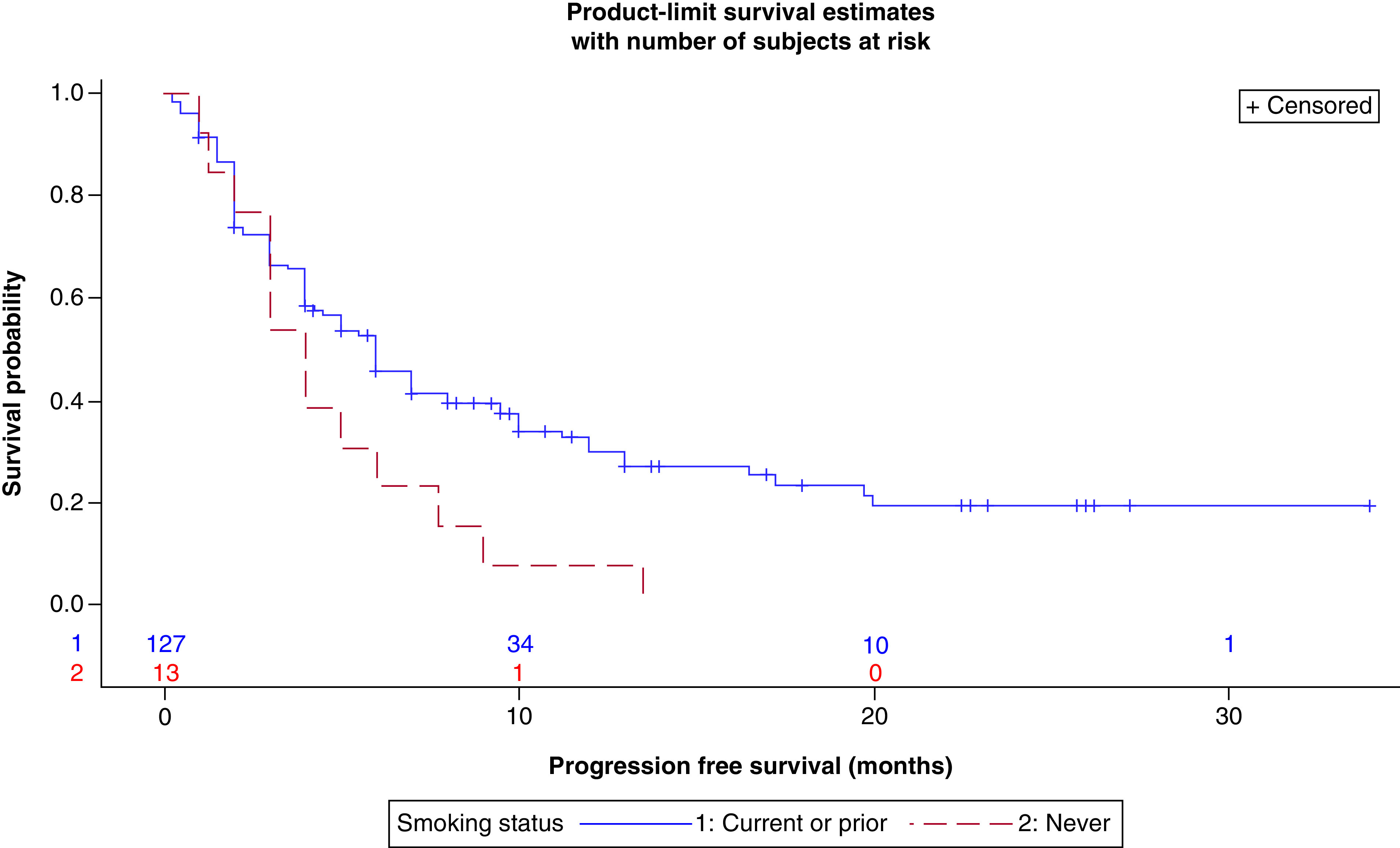
Results: NLR was associated with all outcomes. Smoking history was predictive of progression-free survival and smoking intensity was predictive of disease control rate. BMI and PD-L1 were not associated with any outcome. High BMI was associated with low NLR.
Conclusion: Simple clinical biomarkers can predict response to ICIs. A score incorporating both clinical factors and established tissue/serum biomarkers may be useful in identifying NSCLC patients who would benefit from ICIs.




 京公网安备 11010802042870号
京ICP备2023020795号-1
京公网安备 11010802042870号
京ICP备2023020795号-1

 分享
分享
 求助内容:
求助内容: 应助结果提醒方式:
 扫码关注我们
