Determining the sex-specific distributions of average daily alcohol consumption using cluster analysis: is there a separate distribution for people with alcohol dependence?
Huan Jiang, Shannon Lange, Alexander Tran, Sameer Imtiaz, Jürgen Rehm
{"title":"Determining the sex-specific distributions of average daily alcohol consumption using cluster analysis: is there a separate distribution for people with alcohol dependence?","authors":"Huan Jiang, Shannon Lange, Alexander Tran, Sameer Imtiaz, Jürgen Rehm","doi":"10.1186/s12963-021-00261-4","DOIUrl":null,"url":null,"abstract":"<p><strong>Background: </strong>It remains unclear whether alcohol use disorders (AUDs) can be characterized by specific levels of average daily alcohol consumption. The aim of the current study was to model the distributions of average daily alcohol consumption among those who consume alcohol and those with alcohol dependence, the most severe AUD, using various clustering techniques.</p><p><strong>Methods: </strong>Data from Wave 1 and Wave 2 of the National Epidemiologic Survey on Alcohol and Related Conditions were used in the current analyses. Clustering algorithms were applied in order to group a set of data points that represent the average daily amount of alcohol consumed. Gaussian Mixture Models (GMMs) were then used to estimate the likelihood of a data point belonging to one of the mixture distributions. Individuals were assigned to the clusters which had the highest posterior probabilities from the GMMs, and their treatment utilization rate was examined for each of the clusters.</p><p><strong>Results: </strong>Modeling alcohol consumption via clustering techniques was feasible. The clusters identified did not point to alcohol dependence as a separate cluster characterized by a higher level of alcohol consumption. Among both females and males with alcohol dependence, daily alcohol consumption was relatively low.</p><p><strong>Conclusions: </strong>Overall, we found little evidence for clusters of people with the same drinking distribution, which could be characterized as clinically relevant for people with alcohol use disorders as currently defined.</p>","PeriodicalId":3,"journal":{"name":"ACS Applied Electronic Materials","volume":" ","pages":"28"},"PeriodicalIF":4.7000,"publicationDate":"2021-06-07","publicationTypes":"Journal Article","fieldsOfStudy":null,"isOpenAccess":false,"openAccessPdf":"https://sci-hub-pdf.com/10.1186/s12963-021-00261-4","citationCount":"3","resultStr":null,"platform":"Semanticscholar","paperid":null,"PeriodicalName":"ACS Applied Electronic Materials","FirstCategoryId":"3","ListUrlMain":"https://doi.org/10.1186/s12963-021-00261-4","RegionNum":3,"RegionCategory":"材料科学","ArticlePicture":[],"TitleCN":null,"AbstractTextCN":null,"PMCID":null,"EPubDate":"","PubModel":"","JCR":"Q1","JCRName":"ENGINEERING, ELECTRICAL & ELECTRONIC","Score":null,"Total":0}
引用次数: 3
Abstract
Background: It remains unclear whether alcohol use disorders (AUDs) can be characterized by specific levels of average daily alcohol consumption. The aim of the current study was to model the distributions of average daily alcohol consumption among those who consume alcohol and those with alcohol dependence, the most severe AUD, using various clustering techniques.
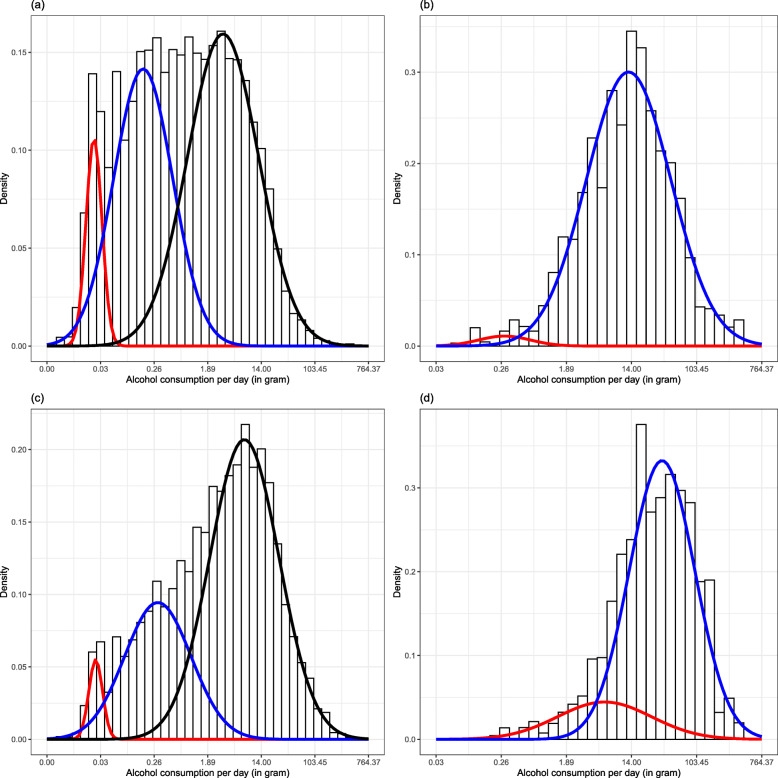
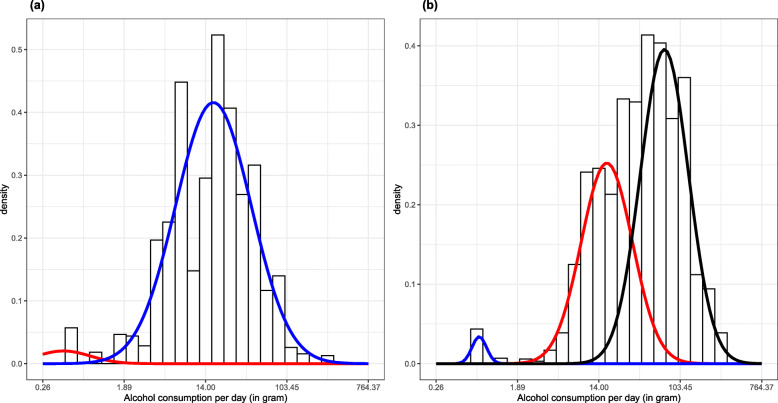
Methods: Data from Wave 1 and Wave 2 of the National Epidemiologic Survey on Alcohol and Related Conditions were used in the current analyses. Clustering algorithms were applied in order to group a set of data points that represent the average daily amount of alcohol consumed. Gaussian Mixture Models (GMMs) were then used to estimate the likelihood of a data point belonging to one of the mixture distributions. Individuals were assigned to the clusters which had the highest posterior probabilities from the GMMs, and their treatment utilization rate was examined for each of the clusters.
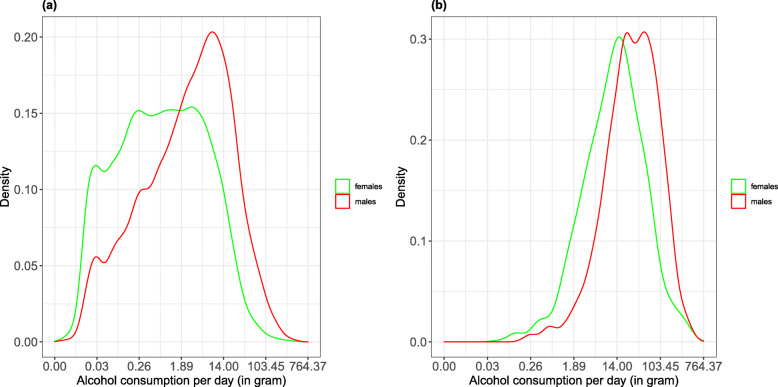
Results: Modeling alcohol consumption via clustering techniques was feasible. The clusters identified did not point to alcohol dependence as a separate cluster characterized by a higher level of alcohol consumption. Among both females and males with alcohol dependence, daily alcohol consumption was relatively low.
Conclusions: Overall, we found little evidence for clusters of people with the same drinking distribution, which could be characterized as clinically relevant for people with alcohol use disorders as currently defined.
期刊介绍:
ACS Applied Electronic Materials is an interdisciplinary journal publishing original research covering all aspects of electronic materials. The journal is devoted to reports of new and original experimental and theoretical research of an applied nature that integrate knowledge in the areas of materials science, engineering, optics, physics, and chemistry into important applications of electronic materials. Sample research topics that span the journal's scope are inorganic, organic, ionic and polymeric materials with properties that include conducting, semiconducting, superconducting, insulating, dielectric, magnetic, optoelectronic, piezoelectric, ferroelectric and thermoelectric.
Indexed/Abstracted:
Web of Science SCIE
Scopus
CAS
INSPEC
Portico




 京公网安备 11010802042870号
京ICP备2023020795号-1
京公网安备 11010802042870号
京ICP备2023020795号-1

 分享
分享
 求助内容:
求助内容: 应助结果提醒方式:
 扫码关注我们
