{"title":"Crime and COVID-19: effect of changes in routine activities in Mexico City.","authors":"Patricio R Estévez-Soto","doi":"10.1186/s40163-021-00151-y","DOIUrl":null,"url":null,"abstract":"<p><strong>Background: </strong>This study aimed to determine whether crime patterns in Mexico City changed due to the COVID-19 pandemic, and to test whether any changes observed were associated with the disruption of routine activities, as measured by changes in public transport passenger numbers.</p><p><strong>Method: </strong>The first objective was assessed by comparing the observed incidence of crime after the COVID-19 pandemic was detected in the country with that expected based on ARIMA forecasts based on the pre-pandemic trends. The second objective was assessed by examining the association between crime incidence and the number of passengers on public transport using regressions with ARIMA errors.</p><p><strong>Results: </strong>Results indicated that most crime categories decreased significantly after the pandemic was detected in the country or after a national lockdown was instituted. Furthermore, the study found that some of the declines observed were associated with the reductions seen in public transport passenger numbers. However, the findings suggested that the changes in mobility explain part of the declines observed, with important variations per crime type.</p><p><strong>Conclusion: </strong>The findings contribute to the global evaluation of the effects of COVID-19 on crime and propose a robust method to explicitly test whether the changes observed are associated with changes in routine activities.</p>","PeriodicalId":3,"journal":{"name":"ACS Applied Electronic Materials","volume":" ","pages":"15"},"PeriodicalIF":4.7000,"publicationDate":"2021-01-01","publicationTypes":"Journal Article","fieldsOfStudy":null,"isOpenAccess":false,"openAccessPdf":"https://www.ncbi.nlm.nih.gov/pmc/articles/PMC8243075/pdf/","citationCount":"0","resultStr":null,"platform":"Semanticscholar","paperid":null,"PeriodicalName":"ACS Applied Electronic Materials","FirstCategoryId":"1085","ListUrlMain":"https://doi.org/10.1186/s40163-021-00151-y","RegionNum":3,"RegionCategory":"材料科学","ArticlePicture":[],"TitleCN":null,"AbstractTextCN":null,"PMCID":null,"EPubDate":"2021/6/30 0:00:00","PubModel":"Epub","JCR":"Q1","JCRName":"ENGINEERING, ELECTRICAL & ELECTRONIC","Score":null,"Total":0}
引用次数: 0
Abstract
Background: This study aimed to determine whether crime patterns in Mexico City changed due to the COVID-19 pandemic, and to test whether any changes observed were associated with the disruption of routine activities, as measured by changes in public transport passenger numbers.
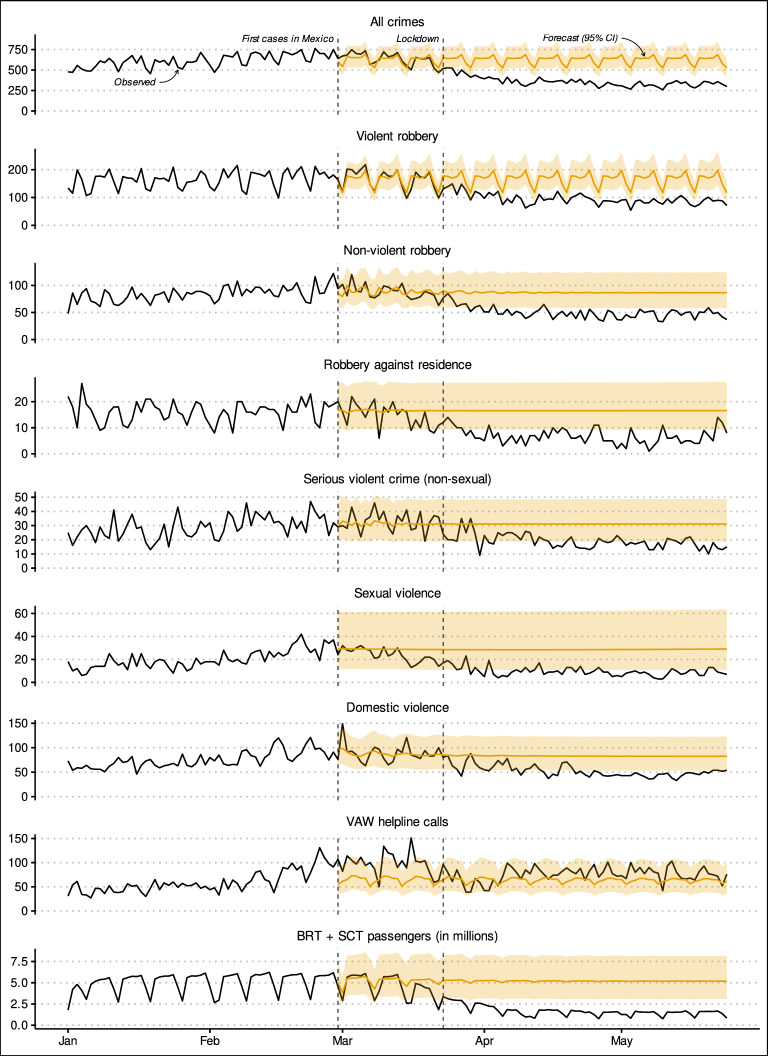
Method: The first objective was assessed by comparing the observed incidence of crime after the COVID-19 pandemic was detected in the country with that expected based on ARIMA forecasts based on the pre-pandemic trends. The second objective was assessed by examining the association between crime incidence and the number of passengers on public transport using regressions with ARIMA errors.
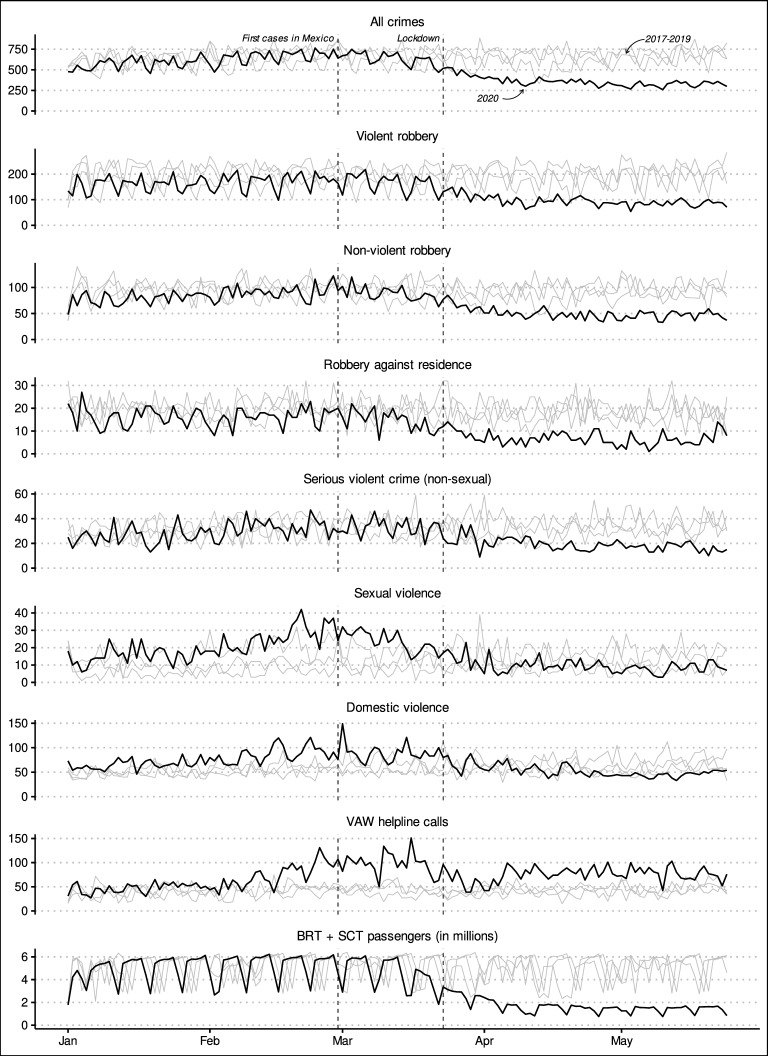
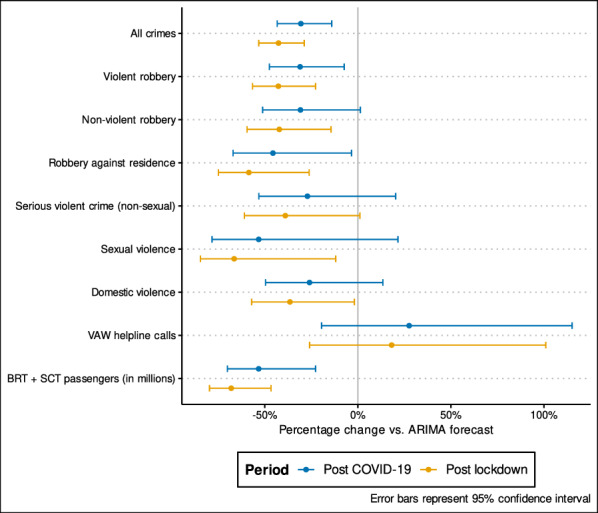
Results: Results indicated that most crime categories decreased significantly after the pandemic was detected in the country or after a national lockdown was instituted. Furthermore, the study found that some of the declines observed were associated with the reductions seen in public transport passenger numbers. However, the findings suggested that the changes in mobility explain part of the declines observed, with important variations per crime type.
Conclusion: The findings contribute to the global evaluation of the effects of COVID-19 on crime and propose a robust method to explicitly test whether the changes observed are associated with changes in routine activities.
期刊介绍:
ACS Applied Electronic Materials is an interdisciplinary journal publishing original research covering all aspects of electronic materials. The journal is devoted to reports of new and original experimental and theoretical research of an applied nature that integrate knowledge in the areas of materials science, engineering, optics, physics, and chemistry into important applications of electronic materials. Sample research topics that span the journal's scope are inorganic, organic, ionic and polymeric materials with properties that include conducting, semiconducting, superconducting, insulating, dielectric, magnetic, optoelectronic, piezoelectric, ferroelectric and thermoelectric.
Indexed/Abstracted:
Web of Science SCIE
Scopus
CAS
INSPEC
Portico




 京公网安备 11010802042870号
京ICP备2023020795号-1
京公网安备 11010802042870号
京ICP备2023020795号-1

 分享
分享
 求助内容:
求助内容: 应助结果提醒方式:
 扫码关注我们
