Deborah J Wessels, Claude Pujol, Nikash Pradhan, Daniel F Lusche, Luis Gonzalez, Sydney E Kelly, Elizabeth M Martin, Edward R Voss, Yang-Nim Park, Michael Dailey, Sonia L Sugg, Sneha Phadke, Amani Bashir, David R Soll
{"title":"Directed movement toward, translocation along, penetration into and exit from vascular networks by breast cancer cells in 3D.","authors":"Deborah J Wessels, Claude Pujol, Nikash Pradhan, Daniel F Lusche, Luis Gonzalez, Sydney E Kelly, Elizabeth M Martin, Edward R Voss, Yang-Nim Park, Michael Dailey, Sonia L Sugg, Sneha Phadke, Amani Bashir, David R Soll","doi":"10.1080/19336918.2021.1957527","DOIUrl":null,"url":null,"abstract":"<p><p>We developed a computer-assisted platform using laser scanning confocal microscopy to 3D reconstruct in real-time interactions between metastatic breast cancer cells and human umbilical vein endothelial cells (HUVECs). We demonstrate that MB-231 cancer cells migrate toward HUVEC networks, facilitated by filopodia, migrate along the network surfaces, penetrate into and migrate within the HUVEC networks, exit and continue migrating along network surfaces. The system is highly amenable to 3D reconstruction and computational analyses, and assessments of the effects of potential anti-metastasis monoclonal antibodies and other drugs. We demonstrate that an anti-RHAMM antibody blocks filopodium formation and all of the behaviors that we found take place between MB-231 cells and HUVEC networks.</p>","PeriodicalId":9680,"journal":{"name":"Cell Adhesion & Migration","volume":"15 1","pages":"224-248"},"PeriodicalIF":3.5000,"publicationDate":"2021-12-01","publicationTypes":"Journal Article","fieldsOfStudy":null,"isOpenAccess":false,"openAccessPdf":"https://sci-hub-pdf.com/10.1080/19336918.2021.1957527","citationCount":"1","resultStr":null,"platform":"Semanticscholar","paperid":null,"PeriodicalName":"Cell Adhesion & Migration","FirstCategoryId":"99","ListUrlMain":"https://doi.org/10.1080/19336918.2021.1957527","RegionNum":3,"RegionCategory":"生物学","ArticlePicture":[],"TitleCN":null,"AbstractTextCN":null,"PMCID":null,"EPubDate":"","PubModel":"","JCR":"Q3","JCRName":"CELL BIOLOGY","Score":null,"Total":0}
引用次数: 1
Abstract
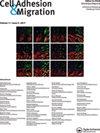
We developed a computer-assisted platform using laser scanning confocal microscopy to 3D reconstruct in real-time interactions between metastatic breast cancer cells and human umbilical vein endothelial cells (HUVECs). We demonstrate that MB-231 cancer cells migrate toward HUVEC networks, facilitated by filopodia, migrate along the network surfaces, penetrate into and migrate within the HUVEC networks, exit and continue migrating along network surfaces. The system is highly amenable to 3D reconstruction and computational analyses, and assessments of the effects of potential anti-metastasis monoclonal antibodies and other drugs. We demonstrate that an anti-RHAMM antibody blocks filopodium formation and all of the behaviors that we found take place between MB-231 cells and HUVEC networks.
期刊介绍:
Cell Adhesion & Migration is a multi-disciplinary, peer reviewed open access journal that focuses on the biological or pathological implications of cell-cell and cell-microenvironment interactions. The main focus of this journal is fundamental science. The journal strives to serve a broad readership by regularly publishing review articles covering specific disciplines within the field, and by publishing focused issues that provide an overview on specific topics of interest within the field.
Cell Adhesion & Migration publishes relevant and timely original research, as well as authoritative overviews, commentaries, and perspectives, providing context for the work presented in Cell Adhesion & Migration and for key results published elsewhere. Original research papers may cover all topics important in the field of cell-cell and cell-matrix interactions. Cell Adhesion & Migration also publishes articles related to cell biomechanics, biomaterial, and development of related imaging technologies.



 京公网安备 11010802042870号
京ICP备2023020795号-1
京公网安备 11010802042870号
京ICP备2023020795号-1

 分享
分享
 求助内容:
求助内容: 应助结果提醒方式:
 扫码关注我们
