Daniela L. Rebolledo , Kenneth E. Lipson , Enrique Brandan
{"title":"Driving fibrosis in neuromuscular diseases: Role and regulation of Connective tissue growth factor (CCN2/CTGF)","authors":"Daniela L. Rebolledo , Kenneth E. Lipson , Enrique Brandan","doi":"10.1016/j.mbplus.2021.100059","DOIUrl":null,"url":null,"abstract":"<div><p>Connective tissue growth factor or cellular communication network 2 (CCN2/CTGF) is a matricellular protein member of the CCN family involved in several crucial biological processes. In skeletal muscle, CCN2/CTGF abundance is elevated in human muscle biopsies and/or animal models for diverse neuromuscular pathologies, including muscular dystrophies, neurodegenerative disorders, muscle denervation, and muscle overuse. In this context, CCN2/CTGF is deeply involved in extracellular matrix (ECM) modulation, acting as a strong pro-fibrotic factor that promotes excessive ECM accumulation. Reducing CCN2/CTGF levels or biological activity in pathological conditions can decrease fibrosis, improve muscle architecture and function. In this work, we summarize information about the role of CCN2/CTGF in fibrosis associated with neuromuscular pathologies and the mechanisms and signaling pathways that regulate their expression in skeletal muscle.</p></div>","PeriodicalId":52317,"journal":{"name":"Matrix Biology Plus","volume":"11 ","pages":"Article 100059"},"PeriodicalIF":0.0000,"publicationDate":"2021-08-01","publicationTypes":"Journal Article","fieldsOfStudy":null,"isOpenAccess":false,"openAccessPdf":"https://sci-hub-pdf.com/10.1016/j.mbplus.2021.100059","citationCount":"16","resultStr":null,"platform":"Semanticscholar","paperid":null,"PeriodicalName":"Matrix Biology Plus","FirstCategoryId":"1085","ListUrlMain":"https://www.sciencedirect.com/science/article/pii/S259002852100003X","RegionNum":0,"RegionCategory":null,"ArticlePicture":[],"TitleCN":null,"AbstractTextCN":null,"PMCID":null,"EPubDate":"","PubModel":"","JCR":"Q1","JCRName":"Medicine","Score":null,"Total":0}
引用次数: 16
Abstract
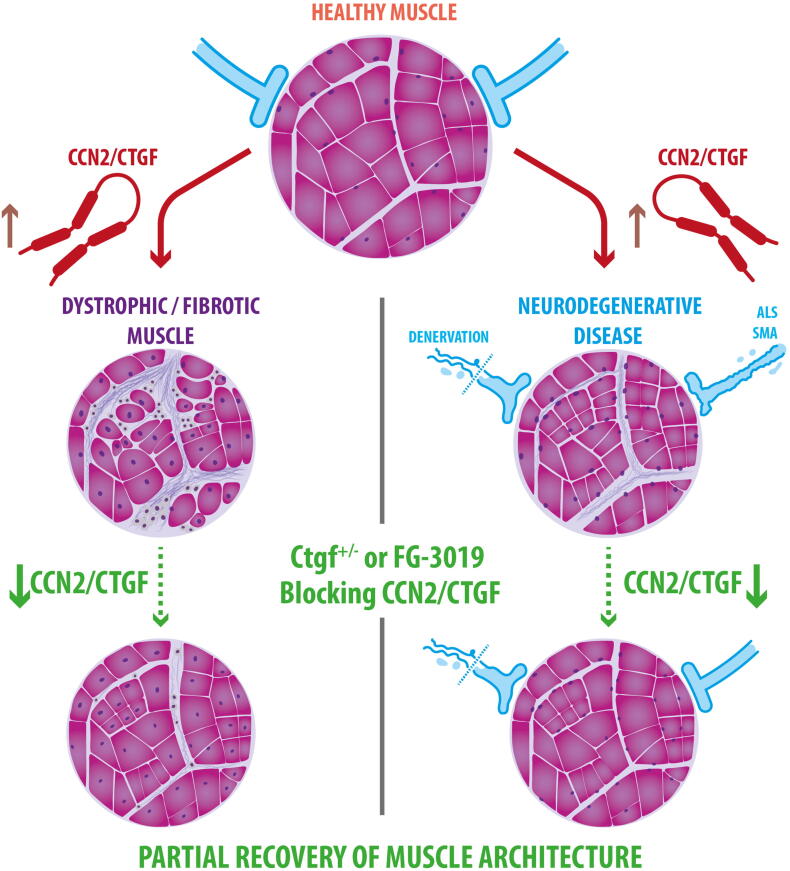
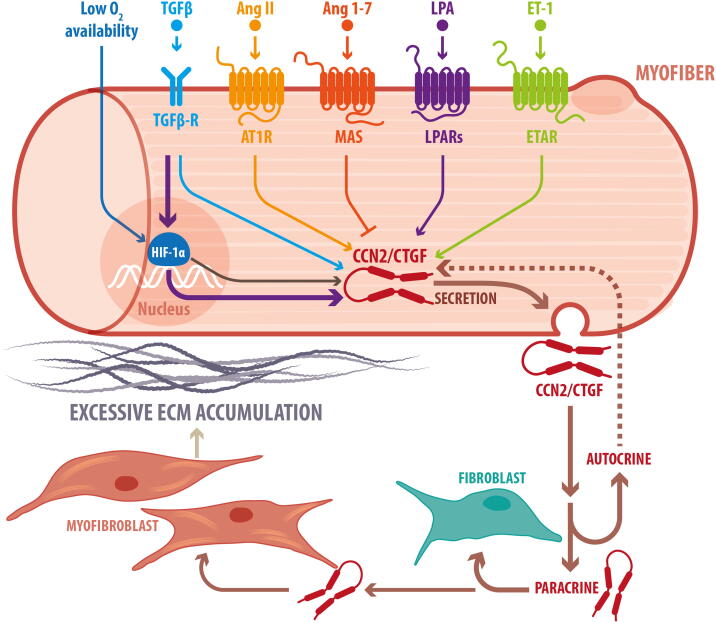
Connective tissue growth factor or cellular communication network 2 (CCN2/CTGF) is a matricellular protein member of the CCN family involved in several crucial biological processes. In skeletal muscle, CCN2/CTGF abundance is elevated in human muscle biopsies and/or animal models for diverse neuromuscular pathologies, including muscular dystrophies, neurodegenerative disorders, muscle denervation, and muscle overuse. In this context, CCN2/CTGF is deeply involved in extracellular matrix (ECM) modulation, acting as a strong pro-fibrotic factor that promotes excessive ECM accumulation. Reducing CCN2/CTGF levels or biological activity in pathological conditions can decrease fibrosis, improve muscle architecture and function. In this work, we summarize information about the role of CCN2/CTGF in fibrosis associated with neuromuscular pathologies and the mechanisms and signaling pathways that regulate their expression in skeletal muscle.




 京公网安备 11010802042870号
京ICP备2023020795号-1
京公网安备 11010802042870号
京ICP备2023020795号-1

 分享
分享
 求助内容:
求助内容: 应助结果提醒方式:
 扫码关注我们
