Laurence Astill Wright, Louise Horstmann, Emily A Holmes, Jonathan I Bisson
{"title":"Consolidation/reconsolidation therapies for the prevention and treatment of PTSD and re-experiencing: a systematic review and meta-analysis.","authors":"Laurence Astill Wright, Louise Horstmann, Emily A Holmes, Jonathan I Bisson","doi":"10.1038/s41398-021-01570-w","DOIUrl":null,"url":null,"abstract":"<p><p>Translational research highlights the potential of novel 'memory consolidation/reconsolidation therapies' to treat re-experiencing symptoms and post-traumatic stress disorder (PTSD). This systematic review and meta-analysis assessed the efficacy of so-called memory consolidation/reconsolidation therapies in randomised controlled trials (RCTs) for prevention and treatment of PTSD and symptoms of re-experiencing in children and adults (PROSPERO: CRD42020171167). RCTs were identified and rated for risk of bias. Available data was pooled to calculate risk ratios (RR) for PTSD prevalence and standardised mean differences (SMD) for PTSD/re-experiencing severity. Twenty-five RCTs met inclusion criteria (16 prevention and nine treatment trials). The methodology of most studies had a significant risk of bias. We found a large effect of reconsolidation interventions in the treatment of PTSD (11 studies, n = 372, SMD: -1.42 (-2.25 to -0.58), and a smaller positive effect of consolidation interventions in the prevention of PTSD (12 studies, n = 2821, RR: 0.67 (0.50 to 0.90). Only three protocols (hydrocortisone for PTSD prevention, Reconsolidation of Traumatic Memories (RTM) for treatment of PTSD symptoms and cognitive task memory interference procedure with memory reactivation (MR) for intrusive memories) were superior to control. There is some emerging evidence of consolidation and reconsolidation therapies in the prevention and treatment of PTSD and intrusive memories specifically. Translational research should strictly adhere to protocols/procedures describing precise reconsolidation conditions (e.g. MR) to both increase the likelihood of positive findings and more confidently interpret negative findings of putative reconsolidation agents.</p>","PeriodicalId":5,"journal":{"name":"ACS Applied Materials & Interfaces","volume":" ","pages":"453"},"PeriodicalIF":8.2000,"publicationDate":"2021-09-03","publicationTypes":"Journal Article","fieldsOfStudy":null,"isOpenAccess":false,"openAccessPdf":"https://www.ncbi.nlm.nih.gov/pmc/articles/PMC8417130/pdf/","citationCount":"0","resultStr":null,"platform":"Semanticscholar","paperid":null,"PeriodicalName":"ACS Applied Materials & Interfaces","FirstCategoryId":"88","ListUrlMain":"https://doi.org/10.1038/s41398-021-01570-w","RegionNum":2,"RegionCategory":"材料科学","ArticlePicture":[],"TitleCN":null,"AbstractTextCN":null,"PMCID":null,"EPubDate":"","PubModel":"","JCR":"Q1","JCRName":"MATERIALS SCIENCE, MULTIDISCIPLINARY","Score":null,"Total":0}
引用次数: 0
Abstract
Translational research highlights the potential of novel 'memory consolidation/reconsolidation therapies' to treat re-experiencing symptoms and post-traumatic stress disorder (PTSD). This systematic review and meta-analysis assessed the efficacy of so-called memory consolidation/reconsolidation therapies in randomised controlled trials (RCTs) for prevention and treatment of PTSD and symptoms of re-experiencing in children and adults (PROSPERO: CRD42020171167). RCTs were identified and rated for risk of bias. Available data was pooled to calculate risk ratios (RR) for PTSD prevalence and standardised mean differences (SMD) for PTSD/re-experiencing severity. Twenty-five RCTs met inclusion criteria (16 prevention and nine treatment trials). The methodology of most studies had a significant risk of bias. We found a large effect of reconsolidation interventions in the treatment of PTSD (11 studies, n = 372, SMD: -1.42 (-2.25 to -0.58), and a smaller positive effect of consolidation interventions in the prevention of PTSD (12 studies, n = 2821, RR: 0.67 (0.50 to 0.90). Only three protocols (hydrocortisone for PTSD prevention, Reconsolidation of Traumatic Memories (RTM) for treatment of PTSD symptoms and cognitive task memory interference procedure with memory reactivation (MR) for intrusive memories) were superior to control. There is some emerging evidence of consolidation and reconsolidation therapies in the prevention and treatment of PTSD and intrusive memories specifically. Translational research should strictly adhere to protocols/procedures describing precise reconsolidation conditions (e.g. MR) to both increase the likelihood of positive findings and more confidently interpret negative findings of putative reconsolidation agents.
期刊介绍:
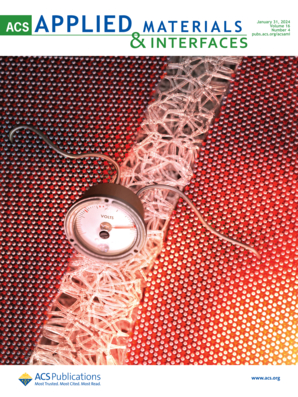
ACS Applied Materials & Interfaces is a leading interdisciplinary journal that brings together chemists, engineers, physicists, and biologists to explore the development and utilization of newly-discovered materials and interfacial processes for specific applications. Our journal has experienced remarkable growth since its establishment in 2009, both in terms of the number of articles published and the impact of the research showcased. We are proud to foster a truly global community, with the majority of published articles originating from outside the United States, reflecting the rapid growth of applied research worldwide.





 京公网安备 11010802042870号
京ICP备2023020795号-1
京公网安备 11010802042870号
京ICP备2023020795号-1

 分享
分享
 求助内容:
求助内容: 应助结果提醒方式:
 扫码关注我们
