{"title":"Gene expression alterations from reversible to irreversible stages during coral metamorphosis.","authors":"Yuu Ishii, Masayuki Hatta, Ryusaku Deguchi, Masakado Kawata, Shinichiro Maruyama","doi":"10.1186/s40851-022-00187-1","DOIUrl":null,"url":null,"abstract":"<p><p>For corals, metamorphosis from planktonic larvae to sedentary polyps is an important life event, as it determines the environment in which they live for a lifetime. Although previous studies on the reef-building coral Acropora have clarified a critical time point during metamorphosis when cells are committed to their fates, as defined by an inability to revert back to their previous states as swimming larvae (here referred to as the \"point of no return\"), the molecular mechanisms of this commitment to a fate remain unclear. To address this issue, we analyzed the transcriptomic changes before and after the point of no return by inducing metamorphosis of Acropora tenuis with Hym-248, a metamorphosis-inducing neuropeptide. Gene Ontology and pathway enrichment analysis of the 5893 differentially expressed genes revealed that G protein-coupled receptors (GPCRs) were enriched, including GABA receptor and Frizzled gene subfamilies, which showed characteristic temporal expression patterns. The GPCRs were then classified by comparison with those of Homo sapiens, Nematostella vectensis and Platynereis dumerilii. Classification of the differentially expressed genes into modules based on expression patterns showed that some modules with large fluctuations after the point of no return were biased toward functions such as protein metabolism and transport. This result suggests that in precommitted larvae, different types of GPCR genes function to ensure a proper environment, whereas in committed larvae, intracellular protein transport and proteolysis may cause a loss of the reversibility of metamorphosis as a result of cell differentiation.</p>","PeriodicalId":54280,"journal":{"name":"Zoological Letters","volume":" ","pages":"4"},"PeriodicalIF":1.7000,"publicationDate":"2022-01-25","publicationTypes":"Journal Article","fieldsOfStudy":null,"isOpenAccess":false,"openAccessPdf":"https://www.ncbi.nlm.nih.gov/pmc/articles/PMC8787945/pdf/","citationCount":"0","resultStr":null,"platform":"Semanticscholar","paperid":null,"PeriodicalName":"Zoological Letters","FirstCategoryId":"99","ListUrlMain":"https://doi.org/10.1186/s40851-022-00187-1","RegionNum":3,"RegionCategory":"生物学","ArticlePicture":[],"TitleCN":null,"AbstractTextCN":null,"PMCID":null,"EPubDate":"","PubModel":"","JCR":"Q2","JCRName":"ZOOLOGY","Score":null,"Total":0}
引用次数: 0
Abstract
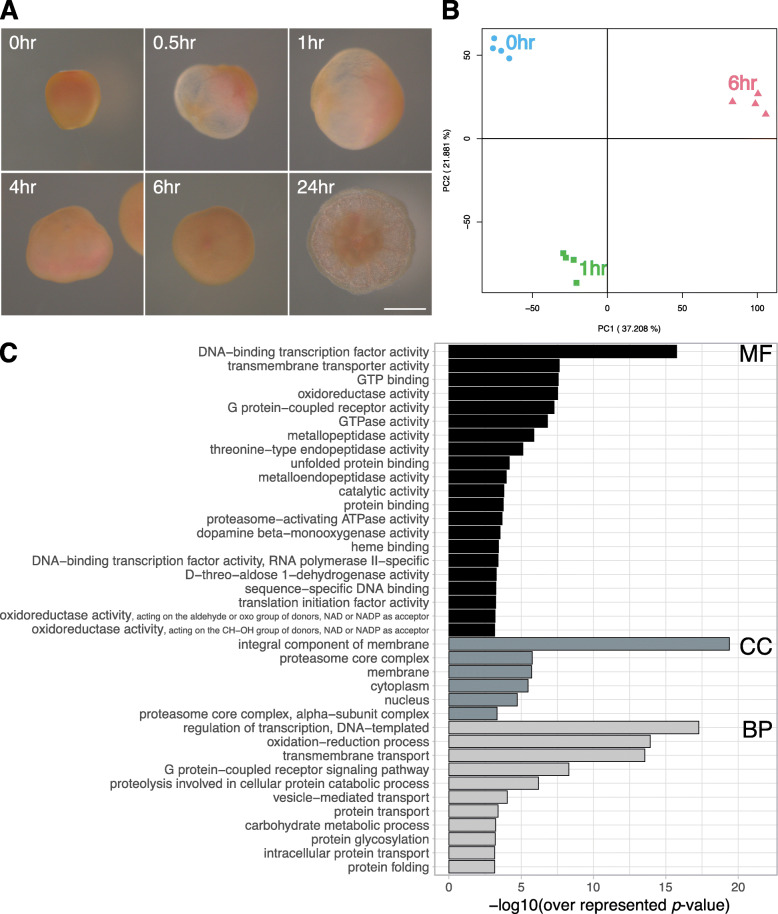
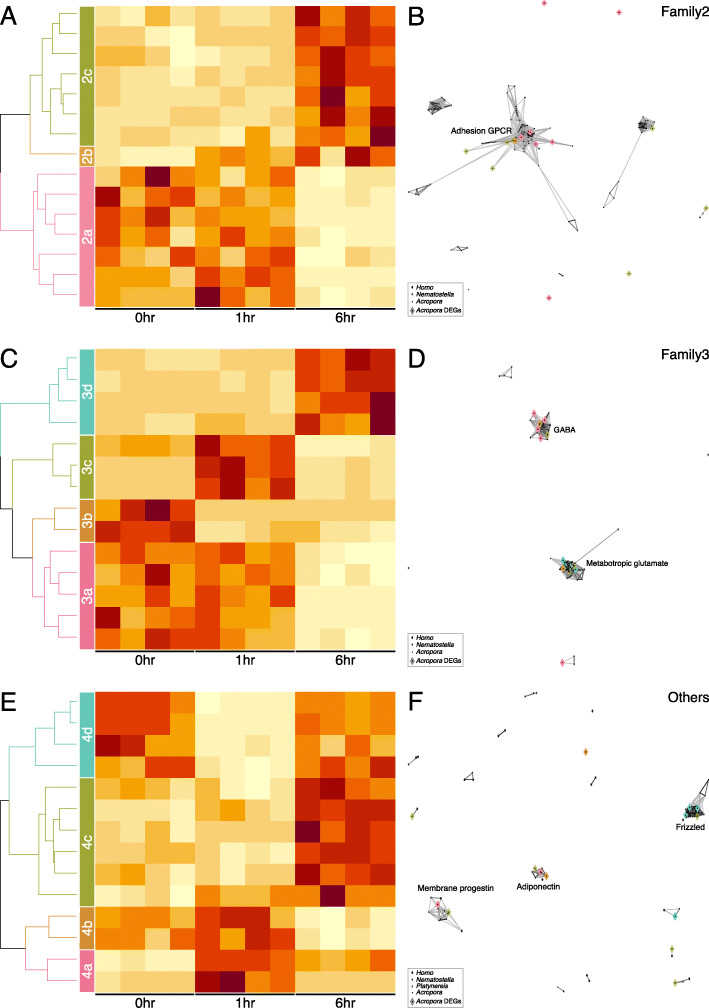
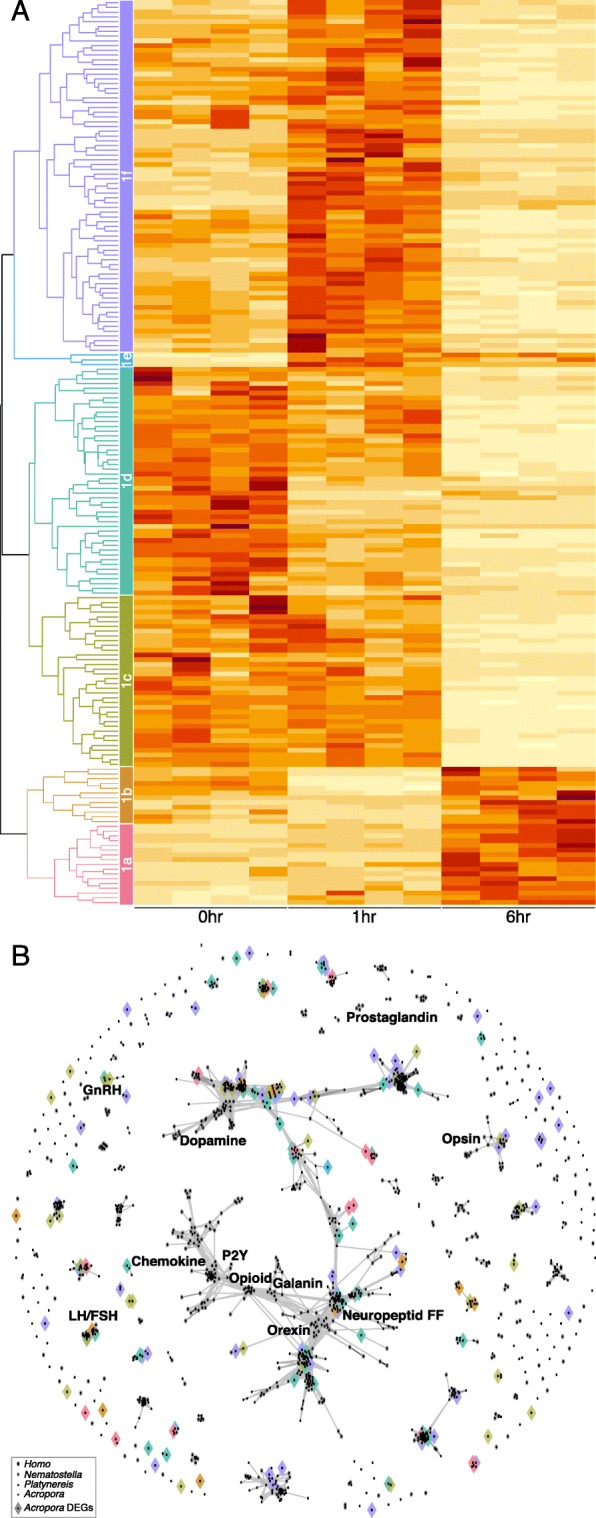
For corals, metamorphosis from planktonic larvae to sedentary polyps is an important life event, as it determines the environment in which they live for a lifetime. Although previous studies on the reef-building coral Acropora have clarified a critical time point during metamorphosis when cells are committed to their fates, as defined by an inability to revert back to their previous states as swimming larvae (here referred to as the "point of no return"), the molecular mechanisms of this commitment to a fate remain unclear. To address this issue, we analyzed the transcriptomic changes before and after the point of no return by inducing metamorphosis of Acropora tenuis with Hym-248, a metamorphosis-inducing neuropeptide. Gene Ontology and pathway enrichment analysis of the 5893 differentially expressed genes revealed that G protein-coupled receptors (GPCRs) were enriched, including GABA receptor and Frizzled gene subfamilies, which showed characteristic temporal expression patterns. The GPCRs were then classified by comparison with those of Homo sapiens, Nematostella vectensis and Platynereis dumerilii. Classification of the differentially expressed genes into modules based on expression patterns showed that some modules with large fluctuations after the point of no return were biased toward functions such as protein metabolism and transport. This result suggests that in precommitted larvae, different types of GPCR genes function to ensure a proper environment, whereas in committed larvae, intracellular protein transport and proteolysis may cause a loss of the reversibility of metamorphosis as a result of cell differentiation.
Zoological LettersAgricultural and Biological Sciences-Animal Science and Zoology
CiteScore
3.60
自引率
0.00%
发文量
12
审稿时长
10 weeks
期刊介绍:
Zoological Letters is an open access journal that publishes new and important findings in the zoological sciences. As a sister journal to Zoological Science, Zoological Letters covers a wide range of basic fields of zoology, from taxonomy to bioinformatics. We also welcome submissions of paleontology reports as part of our effort to contribute to the development of new perspectives in evolutionary zoology. Our goal is to serve as a global publishing forum for fundamental researchers in all fields of zoology.



 京公网安备 11010802042870号
京ICP备2023020795号-1
京公网安备 11010802042870号
京ICP备2023020795号-1

 分享
分享
 求助内容:
求助内容: 应助结果提醒方式:
 扫码关注我们
