{"title":"Evaluating machine learning models for sepsis prediction: A systematic review of methodologies.","authors":"Hong-Fei Deng, Ming-Wei Sun, Yu Wang, Jun Zeng, Ting Yuan, Ting Li, Di-Huan Li, Wei Chen, Ping Zhou, Qi Wang, Hua Jiang","doi":"10.1016/j.isci.2021.103651","DOIUrl":null,"url":null,"abstract":"<p><p>Studies for sepsis prediction using machine learning are developing rapidly in medical science recently. In this review, we propose a set of new evaluation criteria and reporting standards to assess 21 qualified machine learning models for quality analysis based on PRISMA. Our assessment shows that (1.) the definition of sepsis is not consistent among the studies; (2.) data sources and data preprocessing methods, machine learning models, feature engineering, and inclusion types vary widely among the studies; (3.) the closer to the onset of sepsis, the higher the value of AUROC is; (4.) the improvement in AUROC is primarily due to using machine learning as a feature engineering tool; (5.) deep neural networks coupled with Sepsis-3 diagnostic criteria tend to yield better results on the time series data collected from patients with sepsis. The new evaluation criteria and reporting standards will facilitate the development of improved machine learning models for clinical applications.</p>","PeriodicalId":342,"journal":{"name":"iScience","volume":"25 1","pages":"103651"},"PeriodicalIF":4.1000,"publicationDate":"2021-12-20","publicationTypes":"Journal Article","fieldsOfStudy":null,"isOpenAccess":false,"openAccessPdf":"https://ftp.ncbi.nlm.nih.gov/pub/pmc/oa_pdf/7b/c5/main.PMC8741489.pdf","citationCount":"18","resultStr":null,"platform":"Semanticscholar","paperid":null,"PeriodicalName":"iScience","FirstCategoryId":"103","ListUrlMain":"https://doi.org/10.1016/j.isci.2021.103651","RegionNum":2,"RegionCategory":"综合性期刊","ArticlePicture":[],"TitleCN":null,"AbstractTextCN":null,"PMCID":null,"EPubDate":"2022/1/21 0:00:00","PubModel":"eCollection","JCR":"Q1","JCRName":"MULTIDISCIPLINARY SCIENCES","Score":null,"Total":0}
引用次数: 18
Abstract
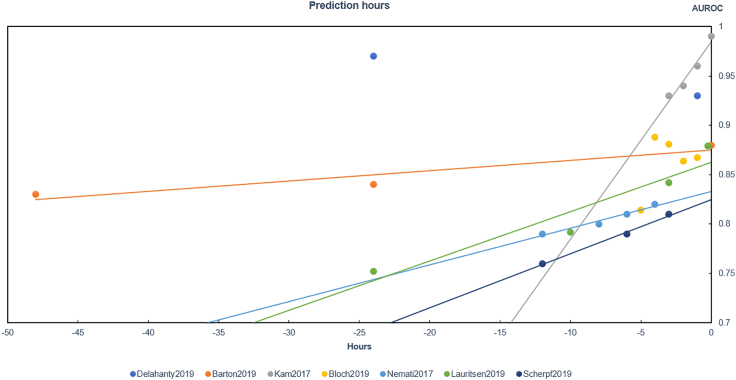
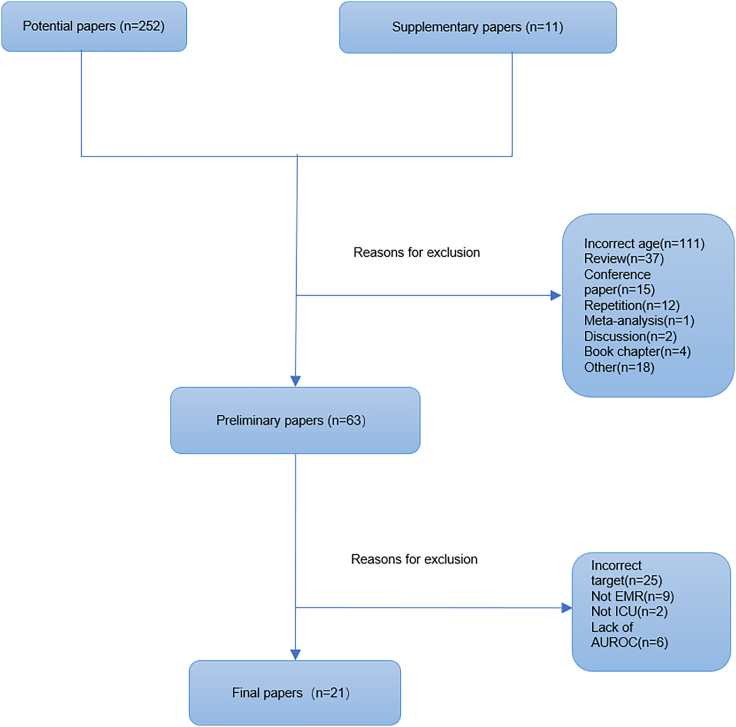
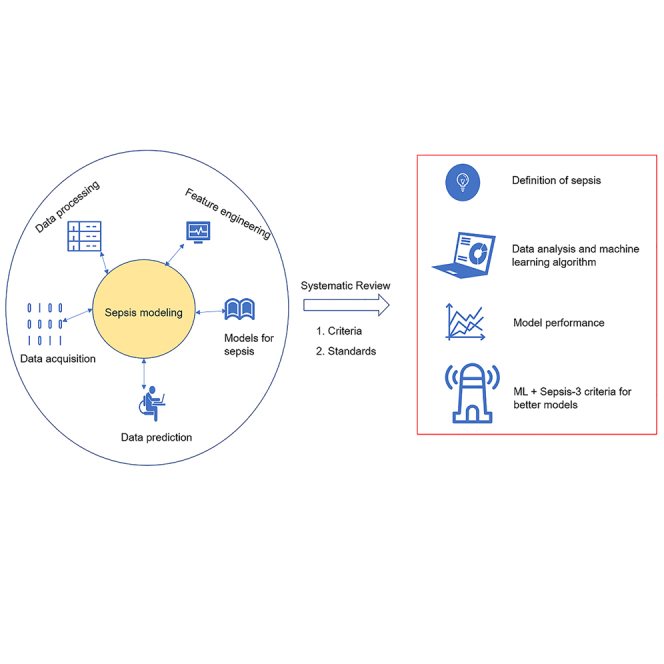
Studies for sepsis prediction using machine learning are developing rapidly in medical science recently. In this review, we propose a set of new evaluation criteria and reporting standards to assess 21 qualified machine learning models for quality analysis based on PRISMA. Our assessment shows that (1.) the definition of sepsis is not consistent among the studies; (2.) data sources and data preprocessing methods, machine learning models, feature engineering, and inclusion types vary widely among the studies; (3.) the closer to the onset of sepsis, the higher the value of AUROC is; (4.) the improvement in AUROC is primarily due to using machine learning as a feature engineering tool; (5.) deep neural networks coupled with Sepsis-3 diagnostic criteria tend to yield better results on the time series data collected from patients with sepsis. The new evaluation criteria and reporting standards will facilitate the development of improved machine learning models for clinical applications.
期刊介绍:
Science has many big remaining questions. To address them, we will need to work collaboratively and across disciplines. The goal of iScience is to help fuel that type of interdisciplinary thinking. iScience is a new open-access journal from Cell Press that provides a platform for original research in the life, physical, and earth sciences. The primary criterion for publication in iScience is a significant contribution to a relevant field combined with robust results and underlying methodology. The advances appearing in iScience include both fundamental and applied investigations across this interdisciplinary range of topic areas. To support transparency in scientific investigation, we are happy to consider replication studies and papers that describe negative results.
We know you want your work to be published quickly and to be widely visible within your community and beyond. With the strong international reputation of Cell Press behind it, publication in iScience will help your work garner the attention and recognition it merits. Like all Cell Press journals, iScience prioritizes rapid publication. Our editorial team pays special attention to high-quality author service and to efficient, clear-cut decisions based on the information available within the manuscript. iScience taps into the expertise across Cell Press journals and selected partners to inform our editorial decisions and help publish your science in a timely and seamless way.




 京公网安备 11010802042870号
京ICP备2023020795号-1
京公网安备 11010802042870号
京ICP备2023020795号-1

 分享
分享
 求助内容:
求助内容: 应助结果提醒方式:
 扫码关注我们
