M Cheng, K Roseberry, Y Choi, L Quast, M Gaines, G Sandusky, J A Kline, P Bogdan, A B Niculescu
{"title":"Polyphenic risk score shows robust predictive ability for long-term future suicidality.","authors":"M Cheng, K Roseberry, Y Choi, L Quast, M Gaines, G Sandusky, J A Kline, P Bogdan, A B Niculescu","doi":"10.1007/s44192-022-00016-z","DOIUrl":null,"url":null,"abstract":"<p><p>Suicides are preventable tragedies, if risk factors are tracked and mitigated. We had previously developed a new quantitative suicidality risk assessment instrument (Convergent Functional Information for Suicidality, CFI-S), which is in essence a simple polyphenic risk score, and deployed it in a busy urban hospital Emergency Department, in a naturalistic cohort of consecutive patients. We report a four years follow-up of that population (n = 482). Overall, the single administration of the CFI-S was significantly predictive of suicidality over the ensuing 4 years (occurrence- ROC AUC 80%, severity- Pearson correlation 0.44, imminence-Cox regression Hazard Ratio 1.33). The best predictive single phenes (phenotypic items) were feeling useless (not needed), a past history of suicidality, and social isolation. We next used machine learning approaches to enhance the predictive ability of CFI-S. We divided the population into a discovery cohort (n = 255) and testing cohort (n = 227), and developed a deep neural network algorithm that showed increased accuracy for predicting risk of future suicidality (increasing the ROC AUC from 80 to 90%), as well as a similarity network classifier for visualizing patient's risk. We propose that the widespread use of CFI-S for screening purposes, with or without machine learning enhancements, can boost suicidality prevention efforts. This study also identified as top risk factors for suicidality addressable social determinants.</p><p><strong>Supplementary information: </strong>The online version contains supplementary material available at 10.1007/s44192-022-00016-z.</p>","PeriodicalId":72827,"journal":{"name":"Discover mental health","volume":" ","pages":"13"},"PeriodicalIF":2.7000,"publicationDate":"2022-01-01","publicationTypes":"Journal Article","fieldsOfStudy":null,"isOpenAccess":false,"openAccessPdf":"https://www.ncbi.nlm.nih.gov/pmc/articles/PMC9192379/pdf/","citationCount":"0","resultStr":null,"platform":"Semanticscholar","paperid":null,"PeriodicalName":"Discover mental health","FirstCategoryId":"1085","ListUrlMain":"https://doi.org/10.1007/s44192-022-00016-z","RegionNum":0,"RegionCategory":null,"ArticlePicture":[],"TitleCN":null,"AbstractTextCN":null,"PMCID":null,"EPubDate":"2022/6/13 0:00:00","PubModel":"Epub","JCR":"","JCRName":"","Score":null,"Total":0}
引用次数: 0
Abstract
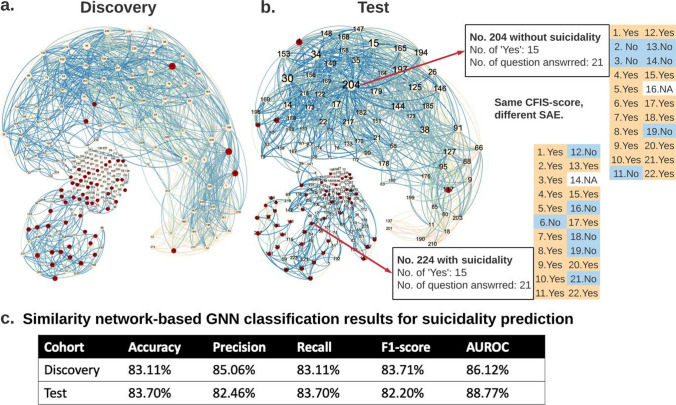
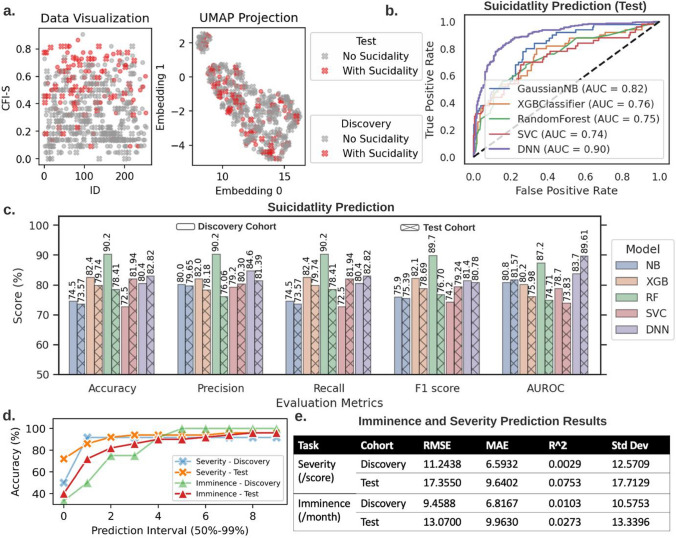
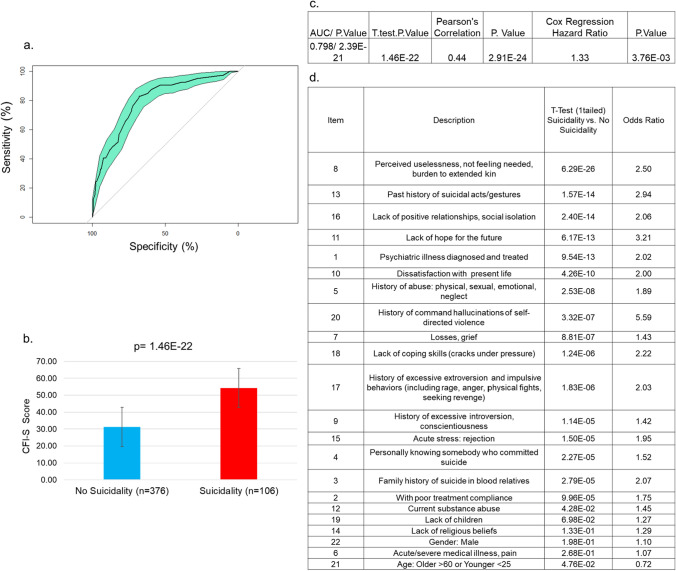
Suicides are preventable tragedies, if risk factors are tracked and mitigated. We had previously developed a new quantitative suicidality risk assessment instrument (Convergent Functional Information for Suicidality, CFI-S), which is in essence a simple polyphenic risk score, and deployed it in a busy urban hospital Emergency Department, in a naturalistic cohort of consecutive patients. We report a four years follow-up of that population (n = 482). Overall, the single administration of the CFI-S was significantly predictive of suicidality over the ensuing 4 years (occurrence- ROC AUC 80%, severity- Pearson correlation 0.44, imminence-Cox regression Hazard Ratio 1.33). The best predictive single phenes (phenotypic items) were feeling useless (not needed), a past history of suicidality, and social isolation. We next used machine learning approaches to enhance the predictive ability of CFI-S. We divided the population into a discovery cohort (n = 255) and testing cohort (n = 227), and developed a deep neural network algorithm that showed increased accuracy for predicting risk of future suicidality (increasing the ROC AUC from 80 to 90%), as well as a similarity network classifier for visualizing patient's risk. We propose that the widespread use of CFI-S for screening purposes, with or without machine learning enhancements, can boost suicidality prevention efforts. This study also identified as top risk factors for suicidality addressable social determinants.
Supplementary information: The online version contains supplementary material available at 10.1007/s44192-022-00016-z.



 京公网安备 11010802042870号
京ICP备2023020795号-1
京公网安备 11010802042870号
京ICP备2023020795号-1

 分享
分享

 求助内容:
求助内容: 应助结果提醒方式:
 扫码关注我们
