Carla Castillo-Laborde, Macarena Hirmas-Adauy, Isabel Matute, Anita Jasmen, Oscar Urrejola, Xaviera Molina, Camila Awad, Catalina Frey-Moreno, Sofia Pumarino-Lira, Fernando Descalzi-Rojas, Tomás José Ruiz, Barbara Plass
{"title":"Barriers and Facilitators in Access to Diabetes, Hypertension, and Dyslipidemia Medicines: A Scoping Review.","authors":"Carla Castillo-Laborde, Macarena Hirmas-Adauy, Isabel Matute, Anita Jasmen, Oscar Urrejola, Xaviera Molina, Camila Awad, Catalina Frey-Moreno, Sofia Pumarino-Lira, Fernando Descalzi-Rojas, Tomás José Ruiz, Barbara Plass","doi":"10.3389/phrs.2022.1604796","DOIUrl":null,"url":null,"abstract":"<p><p><b>Objective:</b> Identify barriers and facilitators in access to medicines for diabetes, hypertension, and dyslipidemia, considering patient, health provider, and health system perspectives. <b>Methods:</b> Scoping review based on Joanna Briggs methodology. The search considered PubMed, Cochrane Library, CINAHL, Academic Search Ultimate, Web of Science, SciELO Citation Index, and grey literature. Two researchers conducted screening and eligibility phases. Data were thematically analyzed. <b>Results:</b> The review included 219 documents. Diabetes was the most studied condition; most of the evidence comes from patients and the United States. Affordability and availability of medicines were the most reported dimension and specific barrier respectively, both cross-cutting concerns. Among high- and middle-income countries, identified barriers were cost of medicines, accompaniment by professionals, long distances to facilities, and cultural aspects; cost of transportation emerges in low-income settings. Facilitators reported were financial accessibility, trained health workers, medicines closer to communities, and patients' education. <b>Conclusion:</b> Barriers and facilitators are determined by socioeconomic and cultural conditions, highlighting the role of health systems in regulatory and policy context (assuring financial coverage and free medicines); providers' role bringing medicines closer; and patients' health education and disease management.</p>","PeriodicalId":3,"journal":{"name":"ACS Applied Electronic Materials","volume":" ","pages":"1604796"},"PeriodicalIF":4.7000,"publicationDate":"2022-09-02","publicationTypes":"Journal Article","fieldsOfStudy":null,"isOpenAccess":false,"openAccessPdf":"https://www.ncbi.nlm.nih.gov/pmc/articles/PMC9479461/pdf/","citationCount":"0","resultStr":null,"platform":"Semanticscholar","paperid":null,"PeriodicalName":"ACS Applied Electronic Materials","FirstCategoryId":"88","ListUrlMain":"https://doi.org/10.3389/phrs.2022.1604796","RegionNum":3,"RegionCategory":"材料科学","ArticlePicture":[],"TitleCN":null,"AbstractTextCN":null,"PMCID":null,"EPubDate":"2022/1/1 0:00:00","PubModel":"eCollection","JCR":"Q1","JCRName":"ENGINEERING, ELECTRICAL & ELECTRONIC","Score":null,"Total":0}
引用次数: 0
Abstract
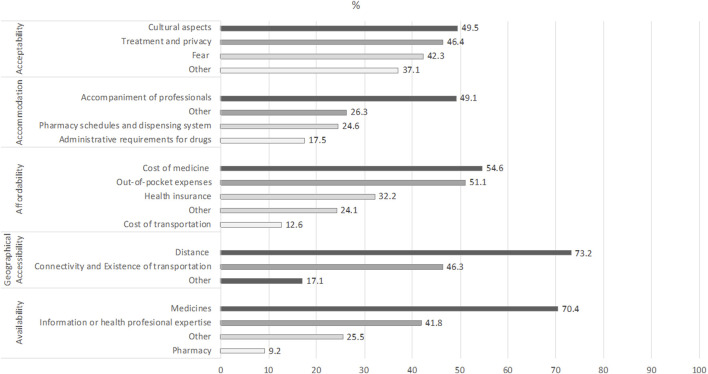
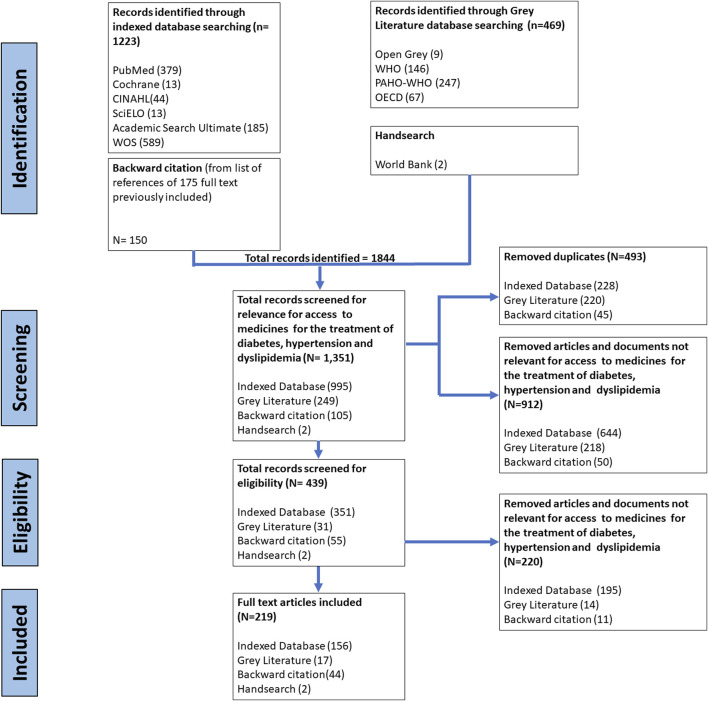
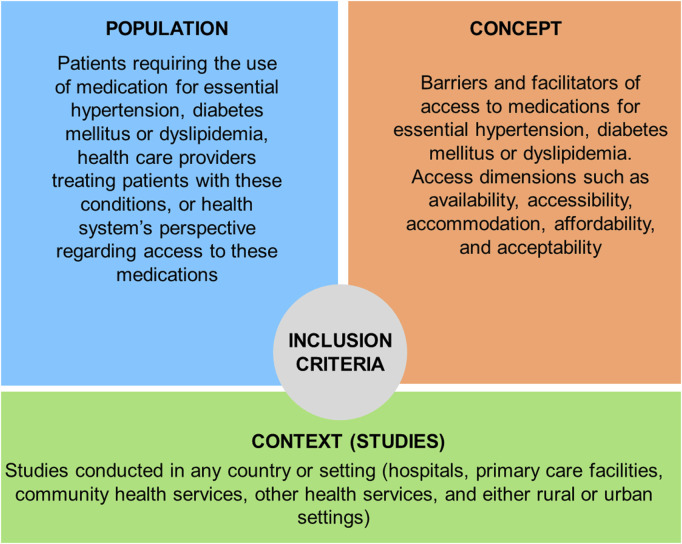
Objective: Identify barriers and facilitators in access to medicines for diabetes, hypertension, and dyslipidemia, considering patient, health provider, and health system perspectives. Methods: Scoping review based on Joanna Briggs methodology. The search considered PubMed, Cochrane Library, CINAHL, Academic Search Ultimate, Web of Science, SciELO Citation Index, and grey literature. Two researchers conducted screening and eligibility phases. Data were thematically analyzed. Results: The review included 219 documents. Diabetes was the most studied condition; most of the evidence comes from patients and the United States. Affordability and availability of medicines were the most reported dimension and specific barrier respectively, both cross-cutting concerns. Among high- and middle-income countries, identified barriers were cost of medicines, accompaniment by professionals, long distances to facilities, and cultural aspects; cost of transportation emerges in low-income settings. Facilitators reported were financial accessibility, trained health workers, medicines closer to communities, and patients' education. Conclusion: Barriers and facilitators are determined by socioeconomic and cultural conditions, highlighting the role of health systems in regulatory and policy context (assuring financial coverage and free medicines); providers' role bringing medicines closer; and patients' health education and disease management.
期刊介绍:
ACS Applied Electronic Materials is an interdisciplinary journal publishing original research covering all aspects of electronic materials. The journal is devoted to reports of new and original experimental and theoretical research of an applied nature that integrate knowledge in the areas of materials science, engineering, optics, physics, and chemistry into important applications of electronic materials. Sample research topics that span the journal's scope are inorganic, organic, ionic and polymeric materials with properties that include conducting, semiconducting, superconducting, insulating, dielectric, magnetic, optoelectronic, piezoelectric, ferroelectric and thermoelectric.
Indexed/Abstracted:
Web of Science SCIE
Scopus
CAS
INSPEC
Portico




 京公网安备 11010802042870号
京ICP备2023020795号-1
京公网安备 11010802042870号
京ICP备2023020795号-1

 分享
分享
 求助内容:
求助内容: 应助结果提醒方式:
 扫码关注我们
