'When the bedbugs come, that's another problem': exploring the lived experiences of bedbug infestations among low-income older adults and service providers who support them.
{"title":"'When the bedbugs come, that's another problem': exploring the lived experiences of bedbug infestations among low-income older adults and service providers who support them.","authors":"C L Sheppard, B Roche, A Austen, S L Hitzig","doi":"10.1177/17579139221118777","DOIUrl":null,"url":null,"abstract":"<p><strong>Aims: </strong>Older adults in low-income housing communities are more vulnerable to bedbug infestations. Prior research, however, has predominately focused on the effectiveness of integrated pest-management strategies, with little attention given to the lived experiences of tenants struggling with infestations. We used a qualitative approach to explore what it is like to live with and treat bedbug infestations from the perspectives of low-income older adults and service providers.</p><p><strong>Methods: </strong>Participants included low-income older adults (<i>n</i> = 58) and service providers (<i>n</i> = 58) who offer supports directly in the buildings. Semi-structured qualitative interviews and focus groups were used to explore the challenges of preparing and treating units for bedbugs, and examine how bedbugs impact access to support services.</p><p><strong>Results: </strong>Bedbugs were a widespread issue, and underlying physical, mental, social, and financial challenges made it difficult for older tenants to prepare their units and access treatment. Tenants also faced bedbug stigma from community services, as many were unwilling to provide services in infested units. Although some service providers utilized strategies to minimize exposure, many were concerned these strategies created additional stigma.</p><p><strong>Conclusion: </strong>Our findings highlight an urgent need to increase public health funding to support older adults with the costs of bedbug elimination and to enhance pest-management strategies through partnerships with health and social service agencies to improve outcomes for older adults.</p>","PeriodicalId":3,"journal":{"name":"ACS Applied Electronic Materials","volume":" ","pages":"111-118"},"PeriodicalIF":4.7000,"publicationDate":"2024-03-01","publicationTypes":"Journal Article","fieldsOfStudy":null,"isOpenAccess":false,"openAccessPdf":"https://www.ncbi.nlm.nih.gov/pmc/articles/PMC10916340/pdf/","citationCount":"0","resultStr":null,"platform":"Semanticscholar","paperid":null,"PeriodicalName":"ACS Applied Electronic Materials","FirstCategoryId":"3","ListUrlMain":"https://doi.org/10.1177/17579139221118777","RegionNum":3,"RegionCategory":"材料科学","ArticlePicture":[],"TitleCN":null,"AbstractTextCN":null,"PMCID":null,"EPubDate":"2022/9/20 0:00:00","PubModel":"Epub","JCR":"Q1","JCRName":"ENGINEERING, ELECTRICAL & ELECTRONIC","Score":null,"Total":0}
引用次数: 0
Abstract
Aims: Older adults in low-income housing communities are more vulnerable to bedbug infestations. Prior research, however, has predominately focused on the effectiveness of integrated pest-management strategies, with little attention given to the lived experiences of tenants struggling with infestations. We used a qualitative approach to explore what it is like to live with and treat bedbug infestations from the perspectives of low-income older adults and service providers.
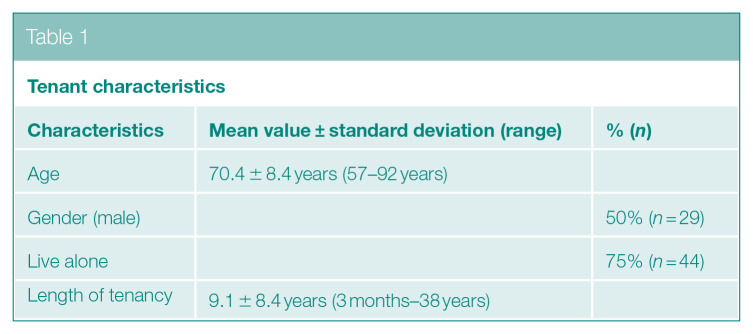
Methods: Participants included low-income older adults (n = 58) and service providers (n = 58) who offer supports directly in the buildings. Semi-structured qualitative interviews and focus groups were used to explore the challenges of preparing and treating units for bedbugs, and examine how bedbugs impact access to support services.
Results: Bedbugs were a widespread issue, and underlying physical, mental, social, and financial challenges made it difficult for older tenants to prepare their units and access treatment. Tenants also faced bedbug stigma from community services, as many were unwilling to provide services in infested units. Although some service providers utilized strategies to minimize exposure, many were concerned these strategies created additional stigma.
Conclusion: Our findings highlight an urgent need to increase public health funding to support older adults with the costs of bedbug elimination and to enhance pest-management strategies through partnerships with health and social service agencies to improve outcomes for older adults.
期刊介绍:
ACS Applied Electronic Materials is an interdisciplinary journal publishing original research covering all aspects of electronic materials. The journal is devoted to reports of new and original experimental and theoretical research of an applied nature that integrate knowledge in the areas of materials science, engineering, optics, physics, and chemistry into important applications of electronic materials. Sample research topics that span the journal's scope are inorganic, organic, ionic and polymeric materials with properties that include conducting, semiconducting, superconducting, insulating, dielectric, magnetic, optoelectronic, piezoelectric, ferroelectric and thermoelectric.
Indexed/Abstracted:
Web of Science SCIE
Scopus
CAS
INSPEC
Portico






 京公网安备 11010802042870号
京ICP备2023020795号-1
京公网安备 11010802042870号
京ICP备2023020795号-1

 分享
分享
 求助内容:
求助内容: 应助结果提醒方式:
 扫码关注我们
