D Solomon, M Cabecinha, J Gibbs, F Burns, C A Sabin
{"title":"How do we measure unmet need within sexual and reproductive health? A systematic review.","authors":"D Solomon, M Cabecinha, J Gibbs, F Burns, C A Sabin","doi":"10.1177/17579139221118778","DOIUrl":null,"url":null,"abstract":"<p><strong>Background: </strong>Addressing health inequality with sexual and reproductive health requires an understanding of unmet need within a range of populations. This review examined the methods and definitions that have been used to measure unmet need, and the populations most frequently assessed.</p><p><strong>Methods: </strong>Five databases (PubMed, Web of Science, Scopus, The Cumulative Index to Nursing and Allied Health Literature (CINAHL) and Health Management and Policy Database (HMIC)) were searched for studies that described quantitative measurement of unmet need within sexual and/or reproductive health between 2010 and 2021. A narrative synthesis was then undertaken to ascertain themes within the literature.</p><p><strong>Results: </strong>The database search yielded 19,747 papers; 216 papers were included after screening. 190 studies assessed unmet reproductive health need, of which 137 were analyses of trends among people living in low/lower-middle income countries; 181 used cross-sectional data, with only nine analyses being longitudinal. Eighteen studies analysed unmet sexual health need, of which 12 focused on high and upper-middle income populations. 16 papers used cross-sectional analyses. The remaining 10 studies examined unmet need for a combination of sexual and reproductive health services, eight among populations from upper-middle or high income countries. All were cross-sectional analyses. 165 studies used the Demographic and Health Surveys (DHS) definition of unmet need; no other standardised definition was used among the remaining papers.</p><p><strong>Discussion: </strong>There is a significant focus on unmet need for contraception among women in low income countries within the published literature, leaving considerable evidence gaps in relation to unmet need within sexual health generally and among men in particular, and unmet reproductive health need in high income settings. In addition, using an increased range of data collection methods, analyses and definitions of unmet need would enable better understanding of health inequality in this area.</p>","PeriodicalId":3,"journal":{"name":"ACS Applied Electronic Materials","volume":" ","pages":"78-85"},"PeriodicalIF":4.7000,"publicationDate":"2024-03-01","publicationTypes":"Journal Article","fieldsOfStudy":null,"isOpenAccess":false,"openAccessPdf":"https://www.ncbi.nlm.nih.gov/pmc/articles/PMC10916345/pdf/","citationCount":"0","resultStr":null,"platform":"Semanticscholar","paperid":null,"PeriodicalName":"ACS Applied Electronic Materials","FirstCategoryId":"88","ListUrlMain":"https://doi.org/10.1177/17579139221118778","RegionNum":3,"RegionCategory":"材料科学","ArticlePicture":[],"TitleCN":null,"AbstractTextCN":null,"PMCID":null,"EPubDate":"2022/9/20 0:00:00","PubModel":"Epub","JCR":"Q1","JCRName":"ENGINEERING, ELECTRICAL & ELECTRONIC","Score":null,"Total":0}
引用次数: 0
Abstract
Background: Addressing health inequality with sexual and reproductive health requires an understanding of unmet need within a range of populations. This review examined the methods and definitions that have been used to measure unmet need, and the populations most frequently assessed.
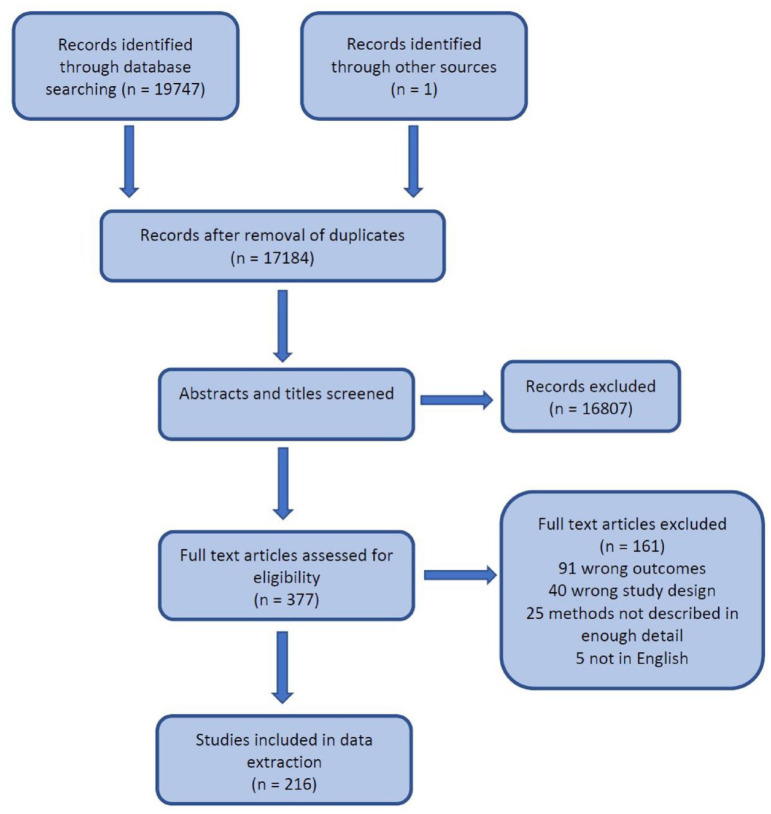
Methods: Five databases (PubMed, Web of Science, Scopus, The Cumulative Index to Nursing and Allied Health Literature (CINAHL) and Health Management and Policy Database (HMIC)) were searched for studies that described quantitative measurement of unmet need within sexual and/or reproductive health between 2010 and 2021. A narrative synthesis was then undertaken to ascertain themes within the literature.
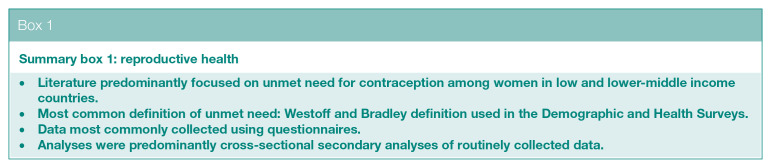
Results: The database search yielded 19,747 papers; 216 papers were included after screening. 190 studies assessed unmet reproductive health need, of which 137 were analyses of trends among people living in low/lower-middle income countries; 181 used cross-sectional data, with only nine analyses being longitudinal. Eighteen studies analysed unmet sexual health need, of which 12 focused on high and upper-middle income populations. 16 papers used cross-sectional analyses. The remaining 10 studies examined unmet need for a combination of sexual and reproductive health services, eight among populations from upper-middle or high income countries. All were cross-sectional analyses. 165 studies used the Demographic and Health Surveys (DHS) definition of unmet need; no other standardised definition was used among the remaining papers.
Discussion: There is a significant focus on unmet need for contraception among women in low income countries within the published literature, leaving considerable evidence gaps in relation to unmet need within sexual health generally and among men in particular, and unmet reproductive health need in high income settings. In addition, using an increased range of data collection methods, analyses and definitions of unmet need would enable better understanding of health inequality in this area.
期刊介绍:
ACS Applied Electronic Materials is an interdisciplinary journal publishing original research covering all aspects of electronic materials. The journal is devoted to reports of new and original experimental and theoretical research of an applied nature that integrate knowledge in the areas of materials science, engineering, optics, physics, and chemistry into important applications of electronic materials. Sample research topics that span the journal's scope are inorganic, organic, ionic and polymeric materials with properties that include conducting, semiconducting, superconducting, insulating, dielectric, magnetic, optoelectronic, piezoelectric, ferroelectric and thermoelectric.
Indexed/Abstracted:
Web of Science SCIE
Scopus
CAS
INSPEC
Portico





 京公网安备 11010802042870号
京ICP备2023020795号-1
京公网安备 11010802042870号
京ICP备2023020795号-1

 分享
分享
 求助内容:
求助内容: 应助结果提醒方式:
 扫码关注我们
