MicroRNA Content of Ewing Sarcoma Derived Extracellular Vesicles Leads to Biomarker Potential and Identification of a Previously Undocumented EWS-FLI1 Translocation.
Jennifer Crow, Glenson Samuel, Emily Farrow, Margaret Gibson, Jefferey Johnston, Erin Guest, Neil Miller, Dong Pei, Devin Koestler, Harsh Pathak, Xiaobo Liang, Cooper Mangels, Andrew K Godwin
{"title":"MicroRNA Content of Ewing Sarcoma Derived Extracellular Vesicles Leads to Biomarker Potential and Identification of a Previously Undocumented EWS-FLI1 Translocation.","authors":"Jennifer Crow, Glenson Samuel, Emily Farrow, Margaret Gibson, Jefferey Johnston, Erin Guest, Neil Miller, Dong Pei, Devin Koestler, Harsh Pathak, Xiaobo Liang, Cooper Mangels, Andrew K Godwin","doi":"10.1177/11772719221132693","DOIUrl":null,"url":null,"abstract":"<p><p><b>Objective:</b> Ewing Sarcoma Family of Tumors (ESFT) are a highly aggressive pediatric bone and soft tissue malignancy with poor outcomes in the refractory and recurrent setting. Over 90% of Ewing Sarcoma (ES) tumors are driven by the pathognomonic <i>EWS-ETS</i> chimeric transcripts and their corresponding oncoproteins. It has been suggested that the EWS-ETS oncogenic action can mediate microRNA (miRNA) processing. Importantly, small extracellular vesicles (sEVs), including those frequently referred to as exosomes have been shown to be highly enriched with tumor-derived small RNAs such as miRNAs. We hypothesized that ESFT-specific sEVs are enriched with certain miRNAs which could be utilized toward an exo-miRNA biomarker signature specific to this disease. <b>Methods:</b> We performed miRNAseq to compare both the exo-derived and cell-derived miRNA content from 8 ESFT, 2 osteosarcoma, 2 non-cancerous cell lines, and pediatric plasma samples. <b>Results:</b> We found that sEVs derived from ESFT cells contained nearly 2-fold more number of unique individual miRNAs as compared to non-ESFT samples. Quantitative analysis of the differential enrichment of sEV miRNAs resulted in the identification of 62 sEV-miRNAs (exo-miRNAs) with significant (<i>P</i> < .05) enrichment variation between ESFT and non-ESFT sEV samples. To determine if we could utilize this miRNA signature to diagnose ESFT patients via a liquid biopsy, we analyzed the RNA content of total circulating sEVs isolated from 500 µL plasma from 5 pediatric ESFT patients, 2 pediatric osteosarcoma patients, 2 pediatric rhabdomyosarcoma patients, and 4 non-cancer pediatric controls. Pearson's clustering of 60 of the 62 candidate exo-miRNAs correctly identified 80% (4 of 5) of pathology confirmed ESFT patients. Importantly, RNAseq analysis of tumor tissue from the 1 outlier, revealed a previously uncharacterized <i>EWS-FLI1</i> translocation.<b>Conclusions:</b> Taken together, these findings support the development and validation of an exo-miRNA-based liquid biopsy to aid in the diagnosis and monitoring of ESFT.</p>","PeriodicalId":3,"journal":{"name":"ACS Applied Electronic Materials","volume":" ","pages":"11772719221132693"},"PeriodicalIF":4.7000,"publicationDate":"2022-10-31","publicationTypes":"Journal Article","fieldsOfStudy":null,"isOpenAccess":false,"openAccessPdf":"https://ftp.ncbi.nlm.nih.gov/pub/pmc/oa_pdf/25/c8/10.1177_11772719221132693.PMC9629554.pdf","citationCount":"0","resultStr":null,"platform":"Semanticscholar","paperid":null,"PeriodicalName":"ACS Applied Electronic Materials","FirstCategoryId":"1085","ListUrlMain":"https://doi.org/10.1177/11772719221132693","RegionNum":3,"RegionCategory":"材料科学","ArticlePicture":[],"TitleCN":null,"AbstractTextCN":null,"PMCID":null,"EPubDate":"2022/1/1 0:00:00","PubModel":"eCollection","JCR":"Q1","JCRName":"ENGINEERING, ELECTRICAL & ELECTRONIC","Score":null,"Total":0}
引用次数: 0
Abstract
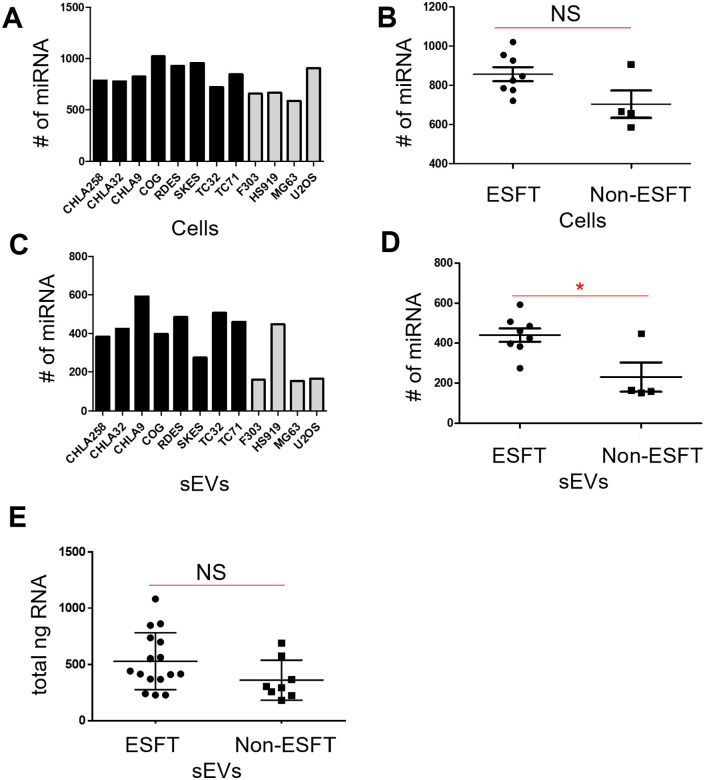
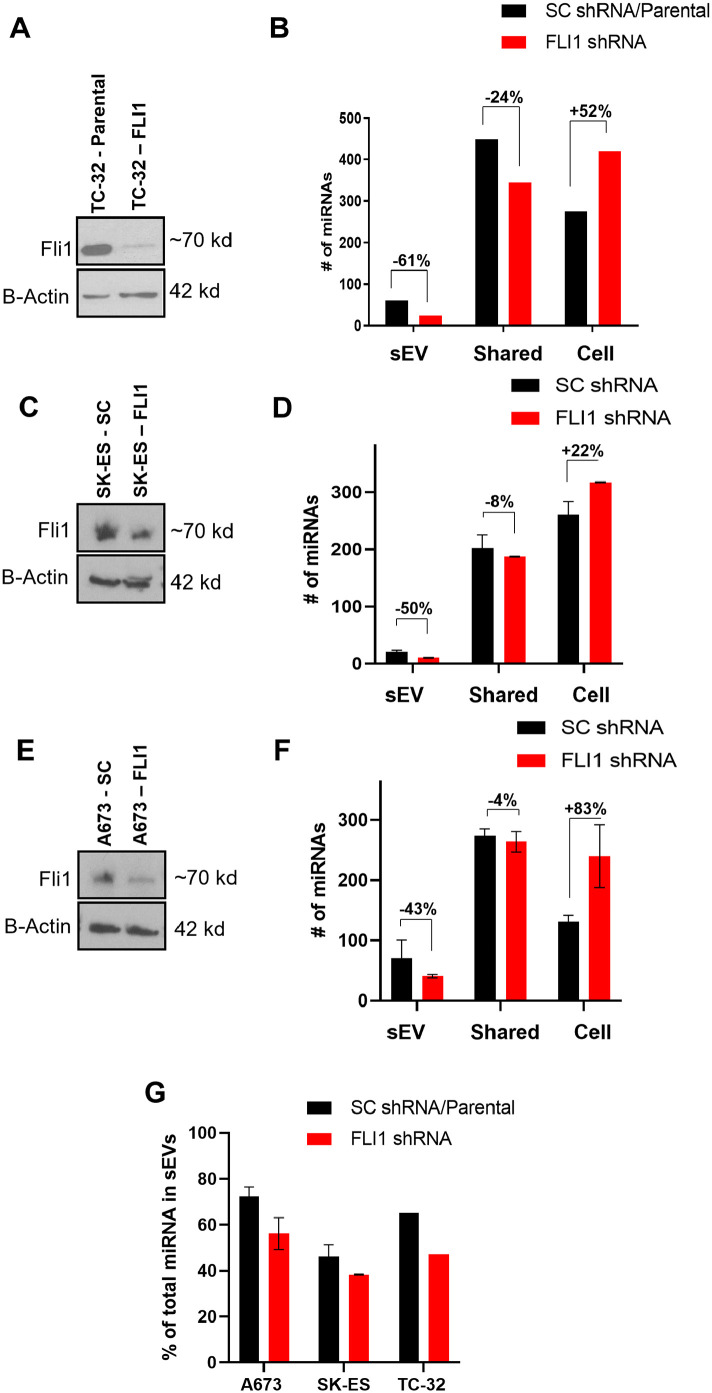
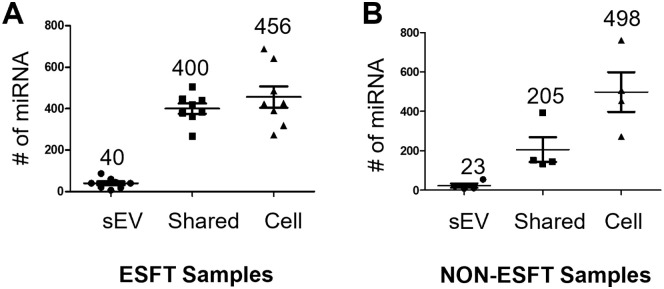
Objective: Ewing Sarcoma Family of Tumors (ESFT) are a highly aggressive pediatric bone and soft tissue malignancy with poor outcomes in the refractory and recurrent setting. Over 90% of Ewing Sarcoma (ES) tumors are driven by the pathognomonic EWS-ETS chimeric transcripts and their corresponding oncoproteins. It has been suggested that the EWS-ETS oncogenic action can mediate microRNA (miRNA) processing. Importantly, small extracellular vesicles (sEVs), including those frequently referred to as exosomes have been shown to be highly enriched with tumor-derived small RNAs such as miRNAs. We hypothesized that ESFT-specific sEVs are enriched with certain miRNAs which could be utilized toward an exo-miRNA biomarker signature specific to this disease. Methods: We performed miRNAseq to compare both the exo-derived and cell-derived miRNA content from 8 ESFT, 2 osteosarcoma, 2 non-cancerous cell lines, and pediatric plasma samples. Results: We found that sEVs derived from ESFT cells contained nearly 2-fold more number of unique individual miRNAs as compared to non-ESFT samples. Quantitative analysis of the differential enrichment of sEV miRNAs resulted in the identification of 62 sEV-miRNAs (exo-miRNAs) with significant (P < .05) enrichment variation between ESFT and non-ESFT sEV samples. To determine if we could utilize this miRNA signature to diagnose ESFT patients via a liquid biopsy, we analyzed the RNA content of total circulating sEVs isolated from 500 µL plasma from 5 pediatric ESFT patients, 2 pediatric osteosarcoma patients, 2 pediatric rhabdomyosarcoma patients, and 4 non-cancer pediatric controls. Pearson's clustering of 60 of the 62 candidate exo-miRNAs correctly identified 80% (4 of 5) of pathology confirmed ESFT patients. Importantly, RNAseq analysis of tumor tissue from the 1 outlier, revealed a previously uncharacterized EWS-FLI1 translocation.Conclusions: Taken together, these findings support the development and validation of an exo-miRNA-based liquid biopsy to aid in the diagnosis and monitoring of ESFT.
期刊介绍:
ACS Applied Electronic Materials is an interdisciplinary journal publishing original research covering all aspects of electronic materials. The journal is devoted to reports of new and original experimental and theoretical research of an applied nature that integrate knowledge in the areas of materials science, engineering, optics, physics, and chemistry into important applications of electronic materials. Sample research topics that span the journal's scope are inorganic, organic, ionic and polymeric materials with properties that include conducting, semiconducting, superconducting, insulating, dielectric, magnetic, optoelectronic, piezoelectric, ferroelectric and thermoelectric.
Indexed/Abstracted:
Web of Science SCIE
Scopus
CAS
INSPEC
Portico




 京公网安备 11010802042870号
京ICP备2023020795号-1
京公网安备 11010802042870号
京ICP备2023020795号-1

 分享
分享
 求助内容:
求助内容: 应助结果提醒方式:
 扫码关注我们
