Kishan P Patel, Parker M Korbitz, John P Gallagher, Cynthia Schmidt, Thammasin Ingviya, Wuttiporn Manatsathit
{"title":"Ascitic calprotectin and lactoferrin for detection of spontaneous bacterial peritonitis: a systematic review and meta-analysis.","authors":"Kishan P Patel, Parker M Korbitz, John P Gallagher, Cynthia Schmidt, Thammasin Ingviya, Wuttiporn Manatsathit","doi":"10.21037/tgh-20-323","DOIUrl":null,"url":null,"abstract":"<p><strong>Background: </strong>Spontaneous bacterial peritonitis (SBP) is a common bacterial infection in cirrhotic patients associated with a high mortality rate. Prompt diagnosis and early antibiotic administration are crucial in minimizing adverse outcomes. Although detection of ≥250 polymorphonuclear leukocytes (PMN) in ascitic fluid is the current gold standard to diagnose SBP, consideration for rapid detection with biomarkers is warranted.</p><p><strong>Methods: </strong>A literature search for studies evaluating ascitic calprotectin and lactoferrin for detection of SBP was performed using PubMed, Embase, Scopus, Google Scholar, Cochrane library, and Clinical Trial Registries. Summary sensitivity, specificity, log diagnostic odds ratio (LDOR), and area under the summary receiver operating curve (AUC) were calculated.</p><p><strong>Results: </strong>In total, 12 and 13 studies evaluated ascitic calprotectin and lactoferrin, respectively, for detection of SBP. Summary sensitivity, specificity, and LDOR for calprotectin were 0.942 (95% CI, 0.916, 0.967), 0.860 (95% CI, 0.799, 0.935), and 4.250 (95% CI, 3.504, 4.990), respectively. AUC for calprotectin was 0.91. Summary sensitivity, specificity, and LDOR for lactoferrin were 0.954 (95% CI, 0.930, 0.979), 0.890 (95% CI, 0.836, 0.945), and 4.630 (95% CI, 3.800, 5.452), respectively. AUC for lactoferrin was 0.958.</p><p><strong>Conclusions: </strong>The overall performance of ascitic calprotectin and lactoferrin was substantial, potentially serving as a screening tool or an alternative to manual cell count. However, a variety of manufacturers, cut-off values, and significant heterogeneity between studies should be noted. Point-of-care testing for calprotectin and lactoferrin may resolve disadvantages associated with the current methods. Future studies on this topic are, therefore, needed.</p>","PeriodicalId":3,"journal":{"name":"ACS Applied Electronic Materials","volume":" ","pages":"37"},"PeriodicalIF":4.7000,"publicationDate":"2022-10-25","publicationTypes":"Journal Article","fieldsOfStudy":null,"isOpenAccess":false,"openAccessPdf":"https://ftp.ncbi.nlm.nih.gov/pub/pmc/oa_pdf/81/9e/tgh-07-20-323.PMC9468990.pdf","citationCount":"0","resultStr":null,"platform":"Semanticscholar","paperid":null,"PeriodicalName":"ACS Applied Electronic Materials","FirstCategoryId":"3","ListUrlMain":"https://doi.org/10.21037/tgh-20-323","RegionNum":3,"RegionCategory":"材料科学","ArticlePicture":[],"TitleCN":null,"AbstractTextCN":null,"PMCID":null,"EPubDate":"2022/1/1 0:00:00","PubModel":"eCollection","JCR":"Q1","JCRName":"ENGINEERING, ELECTRICAL & ELECTRONIC","Score":null,"Total":0}
引用次数: 0
Abstract
Background: Spontaneous bacterial peritonitis (SBP) is a common bacterial infection in cirrhotic patients associated with a high mortality rate. Prompt diagnosis and early antibiotic administration are crucial in minimizing adverse outcomes. Although detection of ≥250 polymorphonuclear leukocytes (PMN) in ascitic fluid is the current gold standard to diagnose SBP, consideration for rapid detection with biomarkers is warranted.
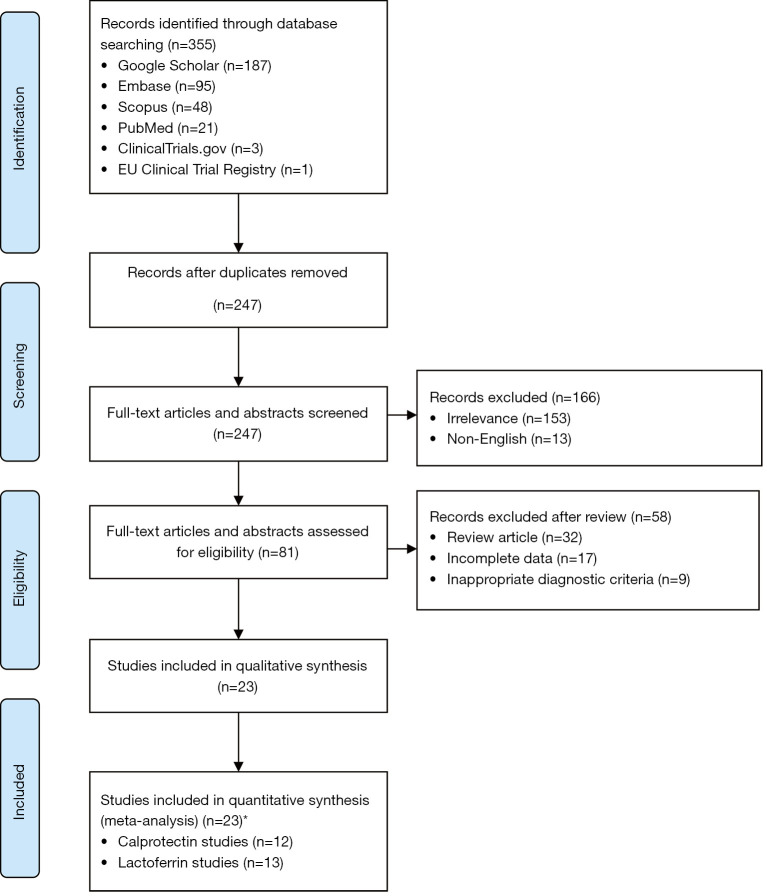
Methods: A literature search for studies evaluating ascitic calprotectin and lactoferrin for detection of SBP was performed using PubMed, Embase, Scopus, Google Scholar, Cochrane library, and Clinical Trial Registries. Summary sensitivity, specificity, log diagnostic odds ratio (LDOR), and area under the summary receiver operating curve (AUC) were calculated.
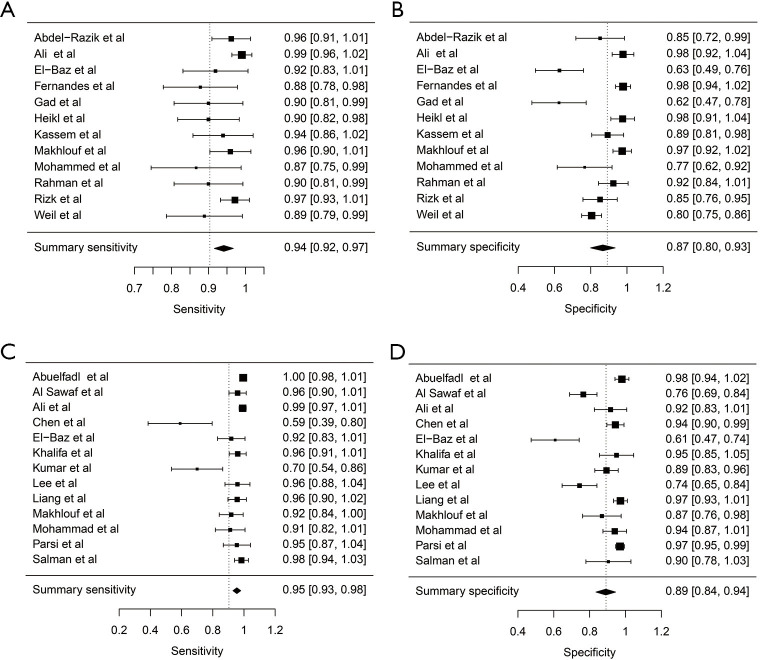
Results: In total, 12 and 13 studies evaluated ascitic calprotectin and lactoferrin, respectively, for detection of SBP. Summary sensitivity, specificity, and LDOR for calprotectin were 0.942 (95% CI, 0.916, 0.967), 0.860 (95% CI, 0.799, 0.935), and 4.250 (95% CI, 3.504, 4.990), respectively. AUC for calprotectin was 0.91. Summary sensitivity, specificity, and LDOR for lactoferrin were 0.954 (95% CI, 0.930, 0.979), 0.890 (95% CI, 0.836, 0.945), and 4.630 (95% CI, 3.800, 5.452), respectively. AUC for lactoferrin was 0.958.
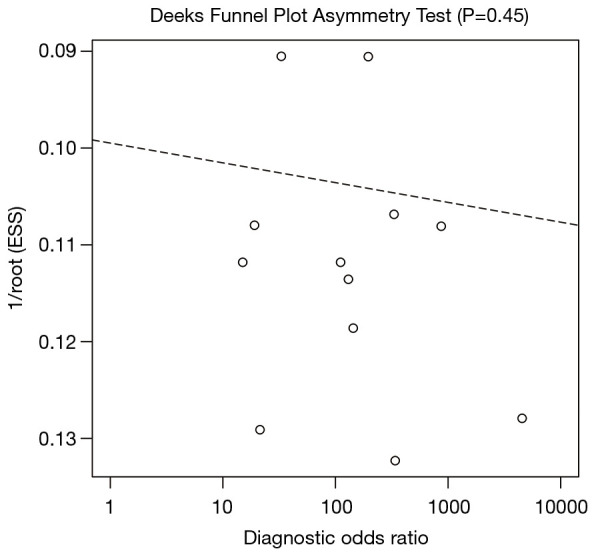
Conclusions: The overall performance of ascitic calprotectin and lactoferrin was substantial, potentially serving as a screening tool or an alternative to manual cell count. However, a variety of manufacturers, cut-off values, and significant heterogeneity between studies should be noted. Point-of-care testing for calprotectin and lactoferrin may resolve disadvantages associated with the current methods. Future studies on this topic are, therefore, needed.
期刊介绍:
ACS Applied Electronic Materials is an interdisciplinary journal publishing original research covering all aspects of electronic materials. The journal is devoted to reports of new and original experimental and theoretical research of an applied nature that integrate knowledge in the areas of materials science, engineering, optics, physics, and chemistry into important applications of electronic materials. Sample research topics that span the journal's scope are inorganic, organic, ionic and polymeric materials with properties that include conducting, semiconducting, superconducting, insulating, dielectric, magnetic, optoelectronic, piezoelectric, ferroelectric and thermoelectric.
Indexed/Abstracted:
Web of Science SCIE
Scopus
CAS
INSPEC
Portico




 京公网安备 11010802042870号
京ICP备2023020795号-1
京公网安备 11010802042870号
京ICP备2023020795号-1

 分享
分享
 求助内容:
求助内容: 应助结果提醒方式:
 扫码关注我们
