Juliana N A Costa, Alexandre L A Ribeiro, Daniele B G Ribeiro, Silvia G R Neri, Daniel F Barbosa, Bruna P Avelar, Marisete P Safons
{"title":"Balance Exercise Circuit for fall prevention in older adults: a randomized controlled crossover trial.","authors":"Juliana N A Costa, Alexandre L A Ribeiro, Daniele B G Ribeiro, Silvia G R Neri, Daniel F Barbosa, Bruna P Avelar, Marisete P Safons","doi":"10.22540/JFSF-07-060","DOIUrl":null,"url":null,"abstract":"<p><strong>Objectives: </strong>This study aimed to assess the immediate and short-term effects of the Balance Exercise Circuit (BEC) on muscle strength, postural balance, and quality of life, with the aim of preventing falls in older adults.</p><p><strong>Methods: </strong>Twenty-two volunteers participated in this randomized controlled crossover study. Group A performed BEC training in the initial 3 months and received no intervention in the following 3 months. Group B received no intervention during the first 3 months and then participated in BEC training for the next 3 months. In addition, participants were followed for an additional 3 months. Muscle strength, postural balance, functional mobility, and quality of life were assessed, respectively, using an isokinetic dynamometer, force platform, TUG test, and the WHOQOL.</p><p><strong>Results: </strong>After 3 months of training, Group A presented improved balance and rate of force development (RFD), while Group B presented improvements in RFD, TUG performance, and WHOQOL physical and psychological domains. Regarding the short-term effects, the participants maintained the training effects in WHOQOL balance, RFD, and the social domain. In addition, the number of falls decreased during follow-up.</p><p><strong>Conclusion: </strong>The BEC intervention improved muscle strength, postural balance, and quality of life in older adults, in addition to reducing the risk of falls.</p><p><strong>Trial registration: </strong>Brazilian Registry of Clinical Trials (ReBEC) - RBR-5nvrwm.</p>","PeriodicalId":73754,"journal":{"name":"Journal of frailty, sarcopenia and falls","volume":" ","pages":"60-71"},"PeriodicalIF":0.0000,"publicationDate":"2022-06-01","publicationTypes":"Journal Article","fieldsOfStudy":null,"isOpenAccess":false,"openAccessPdf":"https://ftp.ncbi.nlm.nih.gov/pub/pmc/oa_pdf/9a/d0/JFSF-7-060.PMC9175283.pdf","citationCount":"0","resultStr":null,"platform":"Semanticscholar","paperid":null,"PeriodicalName":"Journal of frailty, sarcopenia and falls","FirstCategoryId":"1085","ListUrlMain":"https://doi.org/10.22540/JFSF-07-060","RegionNum":0,"RegionCategory":null,"ArticlePicture":[],"TitleCN":null,"AbstractTextCN":null,"PMCID":null,"EPubDate":"","PubModel":"","JCR":"","JCRName":"","Score":null,"Total":0}
引用次数: 0
Abstract
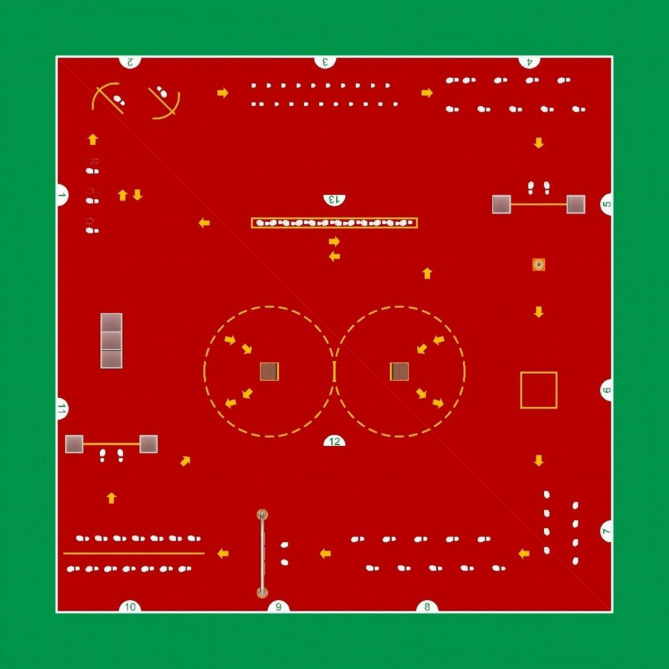
Objectives: This study aimed to assess the immediate and short-term effects of the Balance Exercise Circuit (BEC) on muscle strength, postural balance, and quality of life, with the aim of preventing falls in older adults.
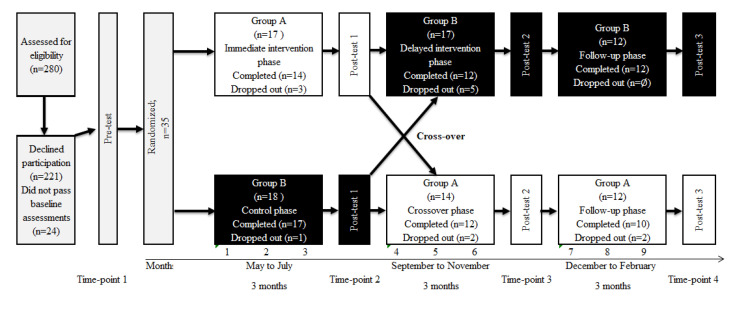
Methods: Twenty-two volunteers participated in this randomized controlled crossover study. Group A performed BEC training in the initial 3 months and received no intervention in the following 3 months. Group B received no intervention during the first 3 months and then participated in BEC training for the next 3 months. In addition, participants were followed for an additional 3 months. Muscle strength, postural balance, functional mobility, and quality of life were assessed, respectively, using an isokinetic dynamometer, force platform, TUG test, and the WHOQOL.
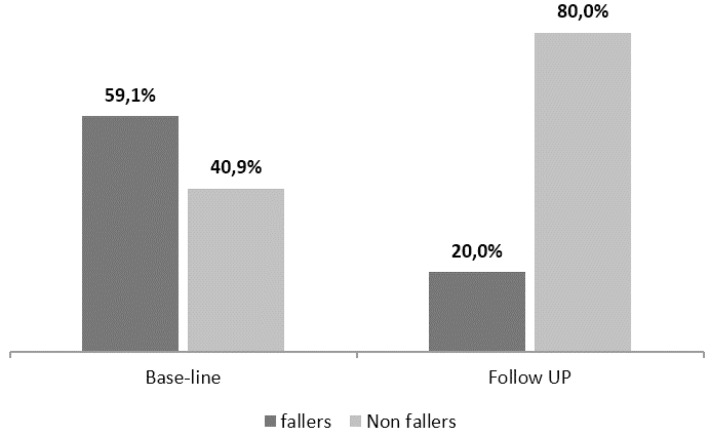
Results: After 3 months of training, Group A presented improved balance and rate of force development (RFD), while Group B presented improvements in RFD, TUG performance, and WHOQOL physical and psychological domains. Regarding the short-term effects, the participants maintained the training effects in WHOQOL balance, RFD, and the social domain. In addition, the number of falls decreased during follow-up.
Conclusion: The BEC intervention improved muscle strength, postural balance, and quality of life in older adults, in addition to reducing the risk of falls.
Trial registration: Brazilian Registry of Clinical Trials (ReBEC) - RBR-5nvrwm.



 京公网安备 11010802042870号
京ICP备2023020795号-1
京公网安备 11010802042870号
京ICP备2023020795号-1

 分享
分享

 求助内容:
求助内容: 应助结果提醒方式:
 扫码关注我们
