Factors Influencing the Implementation of Remote Delivery Strategies for Non-Communicable Disease Care in Low- and Middle-Income Countries: A Narrative Review.
{"title":"Factors Influencing the Implementation of Remote Delivery Strategies for Non-Communicable Disease Care in Low- and Middle-Income Countries: A Narrative Review.","authors":"Caroline Favas, Éimhín Ansbro, Evette Eweka, Gina Agarwal, Maria Lazo Porras, Ioanna Tsiligianni, Rajesh Vedanthan, Ruth Webster, Pablo Perel, Adrianna Murphy","doi":"10.3389/phrs.2022.1604583","DOIUrl":null,"url":null,"abstract":"<p><p><b>Objectives:</b> The COVID-19 pandemic has disrupted health care for non-communicable diseases (NCDs) and necessitated strategies to minimize contact with facilities. We aimed to examine factors influencing implementation of remote (non-facility-based) delivery approaches for people with hypertension and/or diabetes in low- and middle-income countries (LMICs), to inform NCD care delivery during health service disruption, including humanitarian crises. <b>Methods:</b> Our narrative review used a hermeneutic and purposive approach, including primary studies conducted in LMICs, which assessed implementation factors influencing remote NCD care delivery. Results were analyzed using the Consolidated Framework for Implementation Research. <b>Results:</b> Twenty-eight included studies revealed the strong influence of both internal organizational and broader contextual factors, such as community health worker policies or technological environment. Addressing patients' specific characteristics, needs and resources was important for implementation success. <b>Conclusion:</b> This review highlighted the multiple, complex, interdependent factors influencing implementation of remote NCD care in LMICs. Our findings may inform actors designing NCD care delivery in contexts where facility-based access is challenging. Implementation research is needed to evaluate context-adapted e-Health, community-based, and simplified clinical management strategies to facilitate remote NCD care.</p>","PeriodicalId":3,"journal":{"name":"ACS Applied Electronic Materials","volume":" ","pages":"1604583"},"PeriodicalIF":4.7000,"publicationDate":"2022-06-27","publicationTypes":"Journal Article","fieldsOfStudy":null,"isOpenAccess":false,"openAccessPdf":"https://www.ncbi.nlm.nih.gov/pmc/articles/PMC9272771/pdf/","citationCount":"0","resultStr":null,"platform":"Semanticscholar","paperid":null,"PeriodicalName":"ACS Applied Electronic Materials","FirstCategoryId":"1085","ListUrlMain":"https://doi.org/10.3389/phrs.2022.1604583","RegionNum":3,"RegionCategory":"材料科学","ArticlePicture":[],"TitleCN":null,"AbstractTextCN":null,"PMCID":null,"EPubDate":"2022/1/1 0:00:00","PubModel":"eCollection","JCR":"Q1","JCRName":"ENGINEERING, ELECTRICAL & ELECTRONIC","Score":null,"Total":0}
引用次数: 0
Abstract
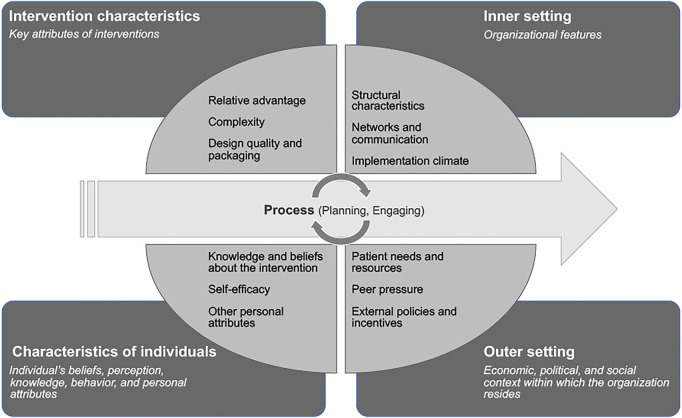
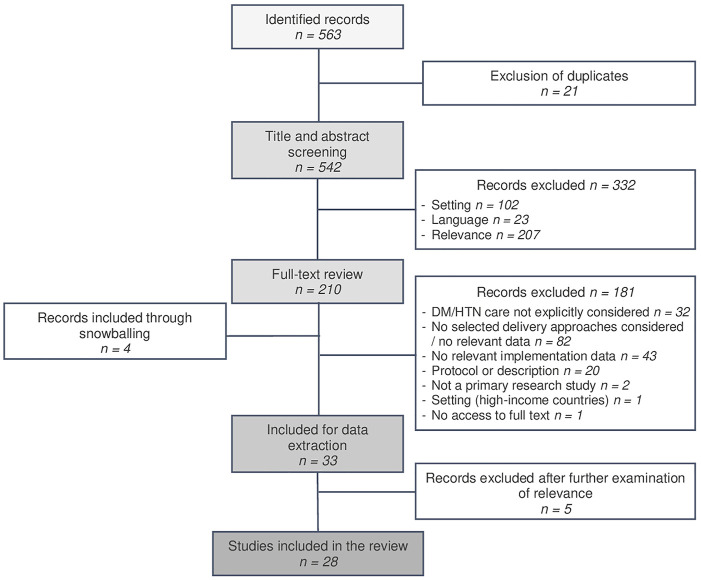
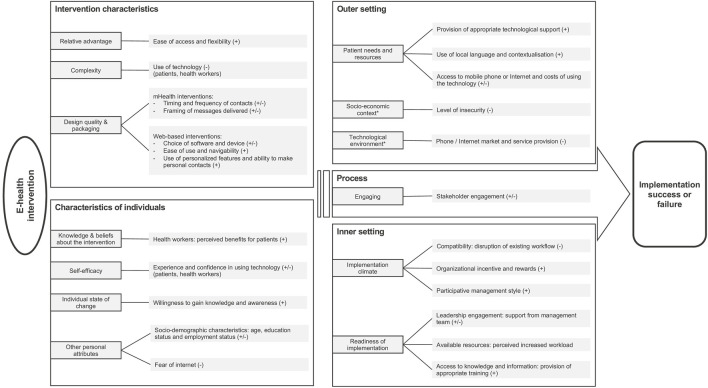
Objectives: The COVID-19 pandemic has disrupted health care for non-communicable diseases (NCDs) and necessitated strategies to minimize contact with facilities. We aimed to examine factors influencing implementation of remote (non-facility-based) delivery approaches for people with hypertension and/or diabetes in low- and middle-income countries (LMICs), to inform NCD care delivery during health service disruption, including humanitarian crises. Methods: Our narrative review used a hermeneutic and purposive approach, including primary studies conducted in LMICs, which assessed implementation factors influencing remote NCD care delivery. Results were analyzed using the Consolidated Framework for Implementation Research. Results: Twenty-eight included studies revealed the strong influence of both internal organizational and broader contextual factors, such as community health worker policies or technological environment. Addressing patients' specific characteristics, needs and resources was important for implementation success. Conclusion: This review highlighted the multiple, complex, interdependent factors influencing implementation of remote NCD care in LMICs. Our findings may inform actors designing NCD care delivery in contexts where facility-based access is challenging. Implementation research is needed to evaluate context-adapted e-Health, community-based, and simplified clinical management strategies to facilitate remote NCD care.
期刊介绍:
ACS Applied Electronic Materials is an interdisciplinary journal publishing original research covering all aspects of electronic materials. The journal is devoted to reports of new and original experimental and theoretical research of an applied nature that integrate knowledge in the areas of materials science, engineering, optics, physics, and chemistry into important applications of electronic materials. Sample research topics that span the journal's scope are inorganic, organic, ionic and polymeric materials with properties that include conducting, semiconducting, superconducting, insulating, dielectric, magnetic, optoelectronic, piezoelectric, ferroelectric and thermoelectric.
Indexed/Abstracted:
Web of Science SCIE
Scopus
CAS
INSPEC
Portico




 京公网安备 11010802042870号
京ICP备2023020795号-1
京公网安备 11010802042870号
京ICP备2023020795号-1

 分享
分享
 求助内容:
求助内容: 应助结果提醒方式:
 扫码关注我们
