Rauf Hamid, Bora Korkmazer, Esra Kochan Kizilkilic, Gokce Merve Arman, Murat Ozogul, Osman Aykan Kargın, Serdar Arslan, Osman Kizilkilic
{"title":"Potential Association Between COVID-19 Vaccination and Facial Palsy: Three Cases With Neuroimaging Findings.","authors":"Rauf Hamid, Bora Korkmazer, Esra Kochan Kizilkilic, Gokce Merve Arman, Murat Ozogul, Osman Aykan Kargın, Serdar Arslan, Osman Kizilkilic","doi":"10.1177/01455613221113818","DOIUrl":null,"url":null,"abstract":"<p><p>Acute onset Facial palsy was reported in four vaccinated participants in the BNT162b2 (Pfizer-BioNTech) vaccine clinical trials published on December 10, 2020. So far, few cases of Facial palsy among the mRNA vaccine groups have been previously documented in the literature. Facial palsy is cited as medically attended adverse event following immunization on April 12, 2021, after the first dose of the approved Pfizer-BioNTech COVID-19 vaccines for preventive immunization for SARS-CoV-2 is administrated to the population in Turkey. This study is aimed to describe clinical and magnetic resonance imaging features of three patients, who developed acute onset peripheral facial paralysis after administration of the BNT162b2 vaccine, without any previous medical condition. The first patient presented with right sided facial palsy within the same day following the vaccine was administrated, while the second patient presented with left sided facial palsy 2 months after vaccination. The third patient, on the other hand, presented with right sided facial palsy and abducens nerve (CN VI) paralysis two days after vaccine was administrated.</p>","PeriodicalId":1,"journal":{"name":"Accounts of Chemical Research","volume":" ","pages":"110S-114S"},"PeriodicalIF":17.7000,"publicationDate":"2024-06-01","publicationTypes":"Journal Article","fieldsOfStudy":null,"isOpenAccess":false,"openAccessPdf":"https://ftp.ncbi.nlm.nih.gov/pub/pmc/oa_pdf/a1/29/10.1177_01455613221113818.PMC9301354.pdf","citationCount":"0","resultStr":null,"platform":"Semanticscholar","paperid":null,"PeriodicalName":"Accounts of Chemical Research","FirstCategoryId":"3","ListUrlMain":"https://doi.org/10.1177/01455613221113818","RegionNum":1,"RegionCategory":"化学","ArticlePicture":[],"TitleCN":null,"AbstractTextCN":null,"PMCID":null,"EPubDate":"2022/7/19 0:00:00","PubModel":"Epub","JCR":"Q1","JCRName":"CHEMISTRY, MULTIDISCIPLINARY","Score":null,"Total":0}
引用次数: 0
Abstract
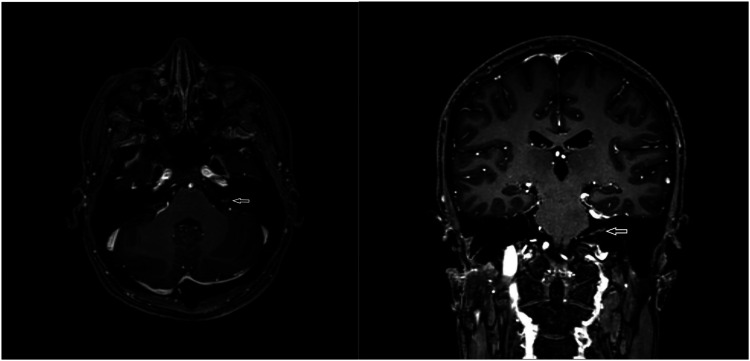
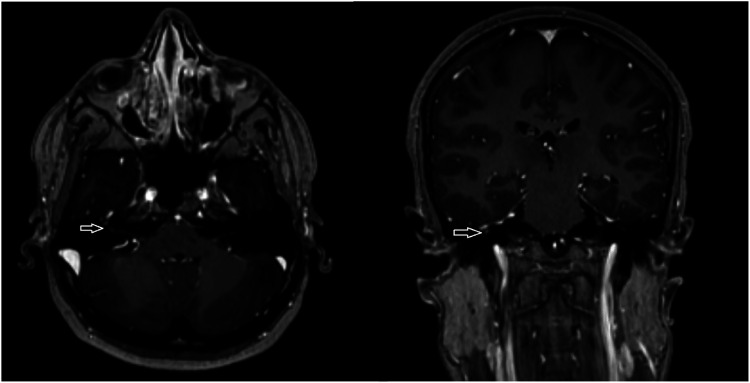
Acute onset Facial palsy was reported in four vaccinated participants in the BNT162b2 (Pfizer-BioNTech) vaccine clinical trials published on December 10, 2020. So far, few cases of Facial palsy among the mRNA vaccine groups have been previously documented in the literature. Facial palsy is cited as medically attended adverse event following immunization on April 12, 2021, after the first dose of the approved Pfizer-BioNTech COVID-19 vaccines for preventive immunization for SARS-CoV-2 is administrated to the population in Turkey. This study is aimed to describe clinical and magnetic resonance imaging features of three patients, who developed acute onset peripheral facial paralysis after administration of the BNT162b2 vaccine, without any previous medical condition. The first patient presented with right sided facial palsy within the same day following the vaccine was administrated, while the second patient presented with left sided facial palsy 2 months after vaccination. The third patient, on the other hand, presented with right sided facial palsy and abducens nerve (CN VI) paralysis two days after vaccine was administrated.
期刊介绍:
Accounts of Chemical Research presents short, concise and critical articles offering easy-to-read overviews of basic research and applications in all areas of chemistry and biochemistry. These short reviews focus on research from the author’s own laboratory and are designed to teach the reader about a research project. In addition, Accounts of Chemical Research publishes commentaries that give an informed opinion on a current research problem. Special Issues online are devoted to a single topic of unusual activity and significance.
Accounts of Chemical Research replaces the traditional article abstract with an article "Conspectus." These entries synopsize the research affording the reader a closer look at the content and significance of an article. Through this provision of a more detailed description of the article contents, the Conspectus enhances the article's discoverability by search engines and the exposure for the research.





 京公网安备 11010802042870号
京ICP备2023020795号-1
京公网安备 11010802042870号
京ICP备2023020795号-1

 分享
分享
 求助内容:
求助内容: 应助结果提醒方式:
 扫码关注我们
