{"title":"Antitumor Effect of Demethylzeylasteral (T-96) on Triple-Negative Breast Cancer via LSD1-Mediate Epigenetic Mechanisms.","authors":"Zhengjie Shen, Yongjuan Gu, Ruiyang Jiang, Heya Qian, Siyuan Li, Lixian Xu, Wenzhe Gu, Yun Zuo","doi":"10.1155/2022/2522597","DOIUrl":null,"url":null,"abstract":"<p><p><i>Background and Purpose</i>. Breast cancer ranks first in the incidence of female tumors. Triple-negative breast cancer (TNBC), one type of breast cancer, is more aggressive and has a worse prognosis. Demethylzeylasteral (T-96) is isolated from <i>Tripterygium wilfordii</i> Hook F. Our previous study found that T96 could inhibit TNBC invasion via suppressing the canonical and noncanonical TGF-<i>β</i> signaling pathways. However, the antitumor effects and mechanisms of T-96 on TNBC have not been studied. This study is aimed at investigating the antitumor effect and mechanism of T-96 on breast cancer. <i>Experimental approach</i>. MTT assay, Live and Dead cell assay, and TUNEL were used to observe the antitumor effect of breast cancer cells treated with T-96. siRNA of LSD1, Co-IP, and molecular docking were used to explore the direct target and mechanism of T-96. Subcutaneous murine xenograft models were used to detect the efficacy of T-96 antitumor activity in vivo. <i>Key Results</i>. T-96 was more susceptible to inducing the apoptosis of highly metastatic TNBC cell lines (SUM-1315). An abnormal level of histone methylation is a crucial characteristic of metastatic cancer cells. LSD1 is a histone demethylase. We found that T-96 could significantly decrease the protein expression of LSD1, increase its target protein PTEN expression and enhance histone methylation. T-96 could also down-regulate the PI3K/AKT signaling pathway, which could be blocked by PTEN. Knockdown of LSD1 by siRNA blocked the pharmacological activity of T-96. And the molecular docking predicted T-96 processed affinity toward LSD1 through hydrogen bonding. Finally, T-96 was evaluated in a murine xenograft model of SUM-1315 cells. And T-96 could significantly inhibit tumor growth without showing marked toxicity. <i>Conclusions & Implications</i>. The results illustrated that T-96 exerted antitumor activity in highly metastatic TNBC by inactivating the LSD1 function.</p>","PeriodicalId":313227,"journal":{"name":"Analytical Cellular Pathology (Amsterdam)","volume":" ","pages":"2522597"},"PeriodicalIF":0.0000,"publicationDate":"2022-10-12","publicationTypes":"Journal Article","fieldsOfStudy":null,"isOpenAccess":false,"openAccessPdf":"https://www.ncbi.nlm.nih.gov/pmc/articles/PMC9581660/pdf/","citationCount":"0","resultStr":null,"platform":"Semanticscholar","paperid":null,"PeriodicalName":"Analytical Cellular Pathology (Amsterdam)","FirstCategoryId":"3","ListUrlMain":"https://doi.org/10.1155/2022/2522597","RegionNum":0,"RegionCategory":null,"ArticlePicture":[],"TitleCN":null,"AbstractTextCN":null,"PMCID":null,"EPubDate":"2022/1/1 0:00:00","PubModel":"eCollection","JCR":"","JCRName":"","Score":null,"Total":0}
引用次数: 0
Abstract
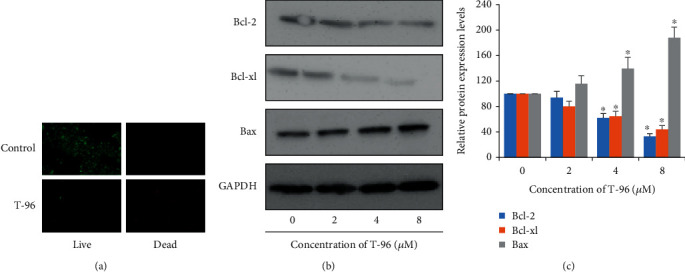
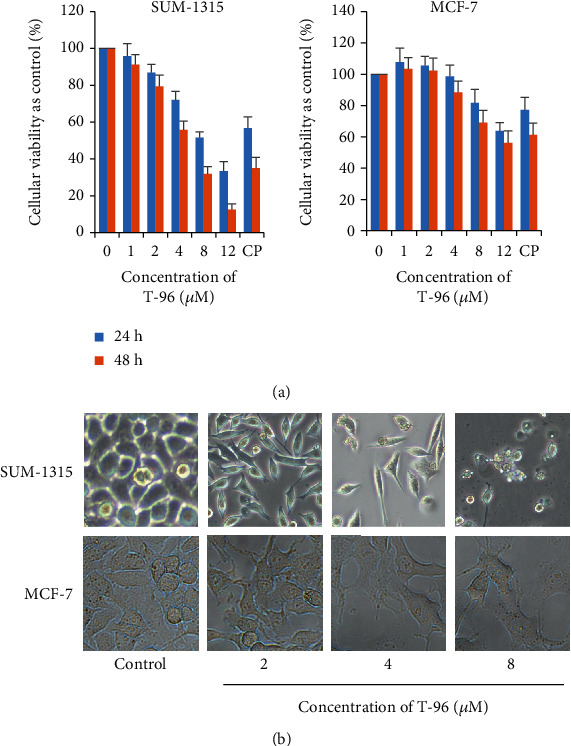
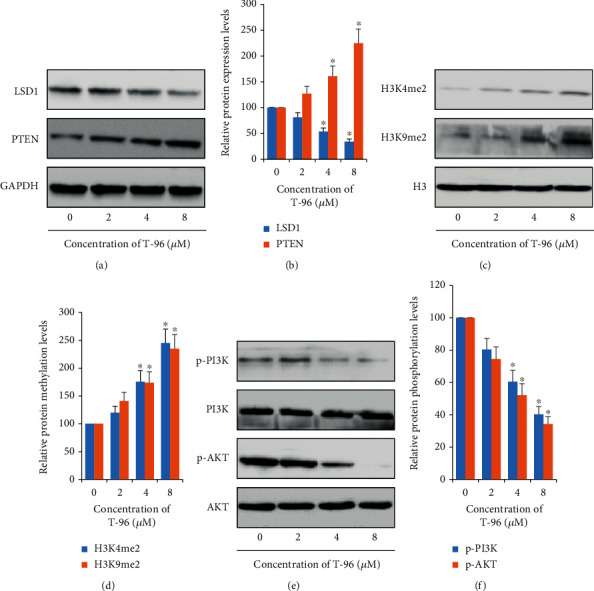
Background and Purpose. Breast cancer ranks first in the incidence of female tumors. Triple-negative breast cancer (TNBC), one type of breast cancer, is more aggressive and has a worse prognosis. Demethylzeylasteral (T-96) is isolated from Tripterygium wilfordii Hook F. Our previous study found that T96 could inhibit TNBC invasion via suppressing the canonical and noncanonical TGF-β signaling pathways. However, the antitumor effects and mechanisms of T-96 on TNBC have not been studied. This study is aimed at investigating the antitumor effect and mechanism of T-96 on breast cancer. Experimental approach. MTT assay, Live and Dead cell assay, and TUNEL were used to observe the antitumor effect of breast cancer cells treated with T-96. siRNA of LSD1, Co-IP, and molecular docking were used to explore the direct target and mechanism of T-96. Subcutaneous murine xenograft models were used to detect the efficacy of T-96 antitumor activity in vivo. Key Results. T-96 was more susceptible to inducing the apoptosis of highly metastatic TNBC cell lines (SUM-1315). An abnormal level of histone methylation is a crucial characteristic of metastatic cancer cells. LSD1 is a histone demethylase. We found that T-96 could significantly decrease the protein expression of LSD1, increase its target protein PTEN expression and enhance histone methylation. T-96 could also down-regulate the PI3K/AKT signaling pathway, which could be blocked by PTEN. Knockdown of LSD1 by siRNA blocked the pharmacological activity of T-96. And the molecular docking predicted T-96 processed affinity toward LSD1 through hydrogen bonding. Finally, T-96 was evaluated in a murine xenograft model of SUM-1315 cells. And T-96 could significantly inhibit tumor growth without showing marked toxicity. Conclusions & Implications. The results illustrated that T-96 exerted antitumor activity in highly metastatic TNBC by inactivating the LSD1 function.



 京公网安备 11010802042870号
京ICP备2023020795号-1
京公网安备 11010802042870号
京ICP备2023020795号-1

 分享
分享

 求助内容:
求助内容: 应助结果提醒方式:
 扫码关注我们
