{"title":"Development of a Biosensor Based on Angiotensin-Converting Enzyme II for Severe Acute Respiratory Syndrome Coronavirus 2 Detection in Human Saliva.","authors":"Geisianny Moreira, Lisseth Casso-Hartmann, Shoumen Palit Austin Datta, Delphine Dean, Eric McLamore, Diana Vanegas","doi":"10.3389/fsens.2022.917380","DOIUrl":null,"url":null,"abstract":"<p><p>Severe acute respiratory syndrome coronavirus 2 (SARS-CoV-2) is the novel coronavirus responsible for COVID-19. Infection in humans requires angiotensin-converting enzyme II (hACE2) as the point of entry for SARS-CoV-2. PCR testing is generally definitive but expensive, although it is highly sensitive and accurate. Biosensor-based monitoring could be a low-cost, accurate, and non-invasive approach to improve testing capacity. We develop a capacitive hACE2 biosensor for intact SARS-CoV-2 detection in saliva. Laser-induced graphene (LIG) electrodes were modified with platinum nanoparticles. The quality control of LIG electrodes was performed using cyclic voltammetry. Truncated hACE2 was used as a biorecognition element and attached to the electrode surface by streptavidin-biotin coupling. Biolayer interferometry was used for qualitative interaction screening of hACE2 with UV-attenuated virions. Electrochemical impedance spectroscopy (EIS) was used for signal transduction. Truncated hACE2 binds wild-type SARS-CoV-2 and its variants with greater avidity than human coronavirus (common cold virus). The limit of detection (LoD) is estimated to be 2,960 copies/ml. The detection process usually takes less than 30 min. The strength of these features makes the hACE2 biosensor a potentially low-cost approach for screening SARS-CoV-2 in non-clinical settings with high demand for rapid testing (for example, schools and airports).</p>","PeriodicalId":93754,"journal":{"name":"Frontiers in sensors","volume":"3 ","pages":""},"PeriodicalIF":0.0000,"publicationDate":"2022-01-01","publicationTypes":"Journal Article","fieldsOfStudy":null,"isOpenAccess":false,"openAccessPdf":"https://www.ncbi.nlm.nih.gov/pmc/articles/PMC9386735/pdf/","citationCount":"0","resultStr":null,"platform":"Semanticscholar","paperid":null,"PeriodicalName":"Frontiers in sensors","FirstCategoryId":"1085","ListUrlMain":"https://doi.org/10.3389/fsens.2022.917380","RegionNum":0,"RegionCategory":null,"ArticlePicture":[],"TitleCN":null,"AbstractTextCN":null,"PMCID":null,"EPubDate":"2022/7/13 0:00:00","PubModel":"Epub","JCR":"","JCRName":"","Score":null,"Total":0}
引用次数: 0
Abstract
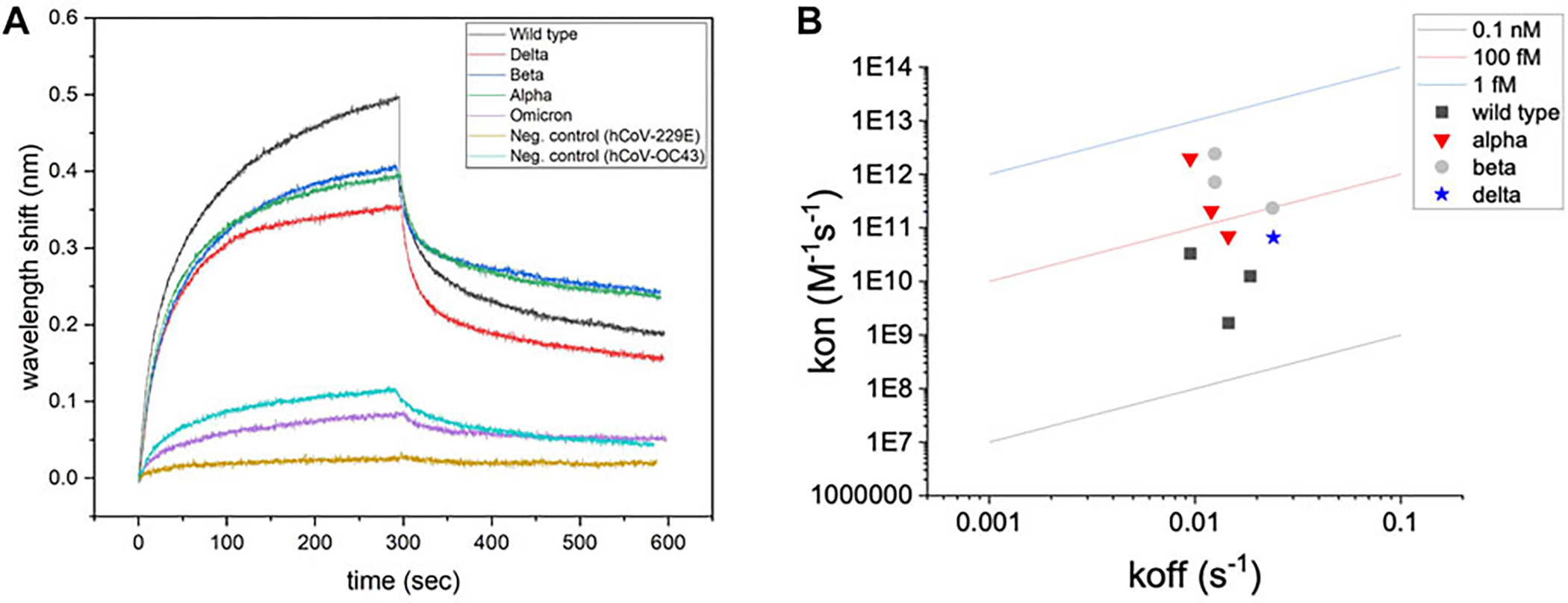
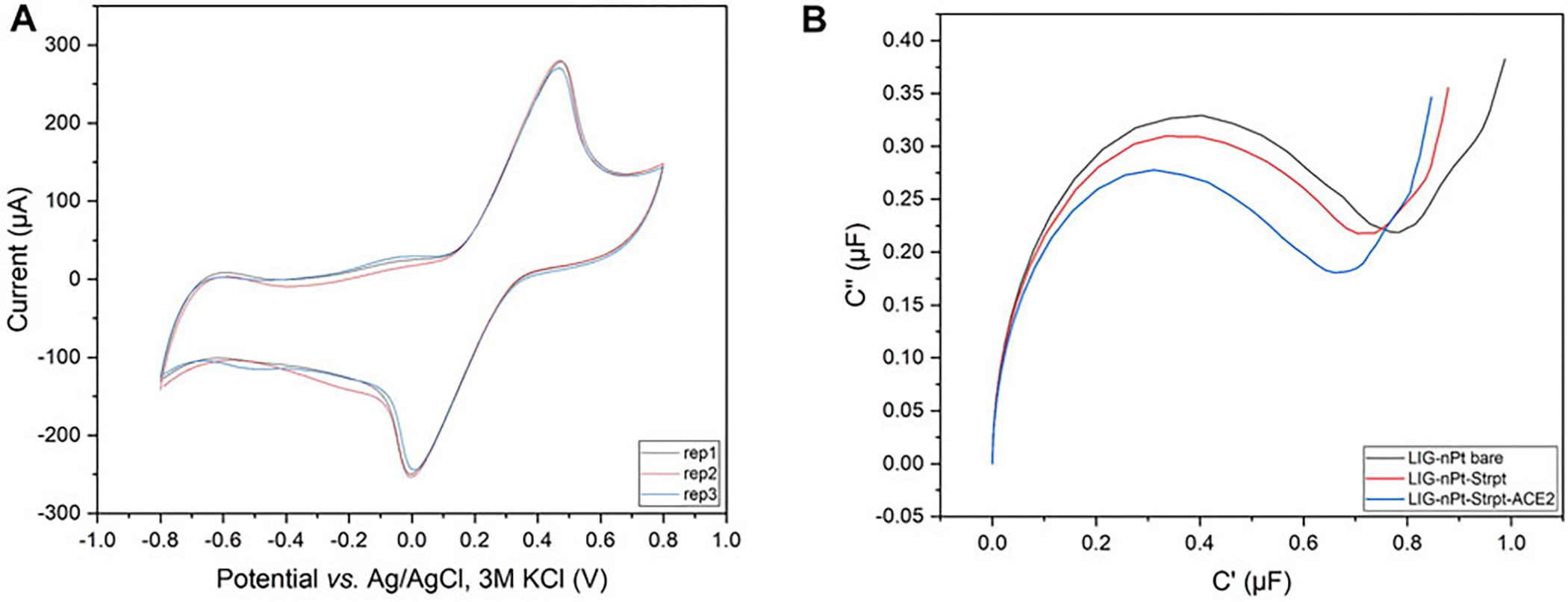
Severe acute respiratory syndrome coronavirus 2 (SARS-CoV-2) is the novel coronavirus responsible for COVID-19. Infection in humans requires angiotensin-converting enzyme II (hACE2) as the point of entry for SARS-CoV-2. PCR testing is generally definitive but expensive, although it is highly sensitive and accurate. Biosensor-based monitoring could be a low-cost, accurate, and non-invasive approach to improve testing capacity. We develop a capacitive hACE2 biosensor for intact SARS-CoV-2 detection in saliva. Laser-induced graphene (LIG) electrodes were modified with platinum nanoparticles. The quality control of LIG electrodes was performed using cyclic voltammetry. Truncated hACE2 was used as a biorecognition element and attached to the electrode surface by streptavidin-biotin coupling. Biolayer interferometry was used for qualitative interaction screening of hACE2 with UV-attenuated virions. Electrochemical impedance spectroscopy (EIS) was used for signal transduction. Truncated hACE2 binds wild-type SARS-CoV-2 and its variants with greater avidity than human coronavirus (common cold virus). The limit of detection (LoD) is estimated to be 2,960 copies/ml. The detection process usually takes less than 30 min. The strength of these features makes the hACE2 biosensor a potentially low-cost approach for screening SARS-CoV-2 in non-clinical settings with high demand for rapid testing (for example, schools and airports).




 京公网安备 11010802042870号
京ICP备2023020795号-1
京公网安备 11010802042870号
京ICP备2023020795号-1

 分享
分享

 求助内容:
求助内容: 应助结果提醒方式:
 扫码关注我们
