Y Saco, R Peña, M Matas-Quintanilla, F J Ibáñez-López, M Piñeiro, J Sotillo, A Bassols, A M Gutiérrez
{"title":"Influence of the circadian cycle, sex and production stage on the reference values of parameters related to stress and pathology in porcine saliva.","authors":"Y Saco, R Peña, M Matas-Quintanilla, F J Ibáñez-López, M Piñeiro, J Sotillo, A Bassols, A M Gutiérrez","doi":"10.1186/s40813-023-00337-7","DOIUrl":null,"url":null,"abstract":"<p><strong>Background: </strong>The concentration of biomarkers in saliva could be influenced by several factors not related to the specific condition under analyses, which should be considered for proper clinical interpretation. In the present study, the circadian rhythm of C-reactive protein (CRP), haptoglobin (Hp), Pig-MAP, S100A12, Cu, Zn, Adenosine deaminase (ADA), total protein (TP), total antioxidant capacity (TAC), total oxidant status (TOS), oxidative stress index (OSI), cortisol and α-amylase in saliva of 20 female and 20 male pigs was investigated. Moreover, the influence of sex and production phase (post-weaning, fattening and finishing) on the concentrations of biomarkers in a total of 414 healthy pigs was studied and the reference intervals for all salivary biomarkers were calculated accordingly.</p><p><strong>Results: </strong>All parameters except Pig-MAP, OSI and α-amylase varied significantly along the daytime, and most of them peak around early afternoon (13-15 h). The cosinor analysis described the temporal dynamics of circadian rhythms for all parameters. The range values showed differences between male and female pigs in 8 out of the 13 biomarkers, with higher concentrations in females in comparison to male pigs. The influence of the production phase on the salivary concentrations was observed for all the biomarkers. The highest concentrations were observed for Pig-MAP, S100A12 and α-amylase in post-weaning animals, for TP in growing pigs and for OSI in finishing animals. Most of the sex-influenced biomarkers showed the highest concentrations at growing stages with some exceptions such as ADA or Hp that showed the peak at finishing and post-weaning stages respectively.</p><p><strong>Conclusions: </strong>It is necessary to establish the optimal daytime for routine saliva sampling to avoid circadian variations and for that end, the time interval between 10:00 a.m. to 12:00 a.m. is highly recommended. The factors sex and production phase influence the concentration of biomarkers and should be considered for proper biomarker interpretation. The reference intervals presented here for each salivary biomarker will help to correctly interpret the results of these analytes and contribute to the use of saliva as a non-invasive sample for the diagnosis and monitoring of the health status of swine farms.</p>","PeriodicalId":20352,"journal":{"name":"Porcine Health Management","volume":"9 1","pages":"42"},"PeriodicalIF":3.1000,"publicationDate":"2023-09-29","publicationTypes":"Journal Article","fieldsOfStudy":null,"isOpenAccess":false,"openAccessPdf":"https://www.ncbi.nlm.nih.gov/pmc/articles/PMC10541711/pdf/","citationCount":"0","resultStr":null,"platform":"Semanticscholar","paperid":null,"PeriodicalName":"Porcine Health Management","FirstCategoryId":"97","ListUrlMain":"https://doi.org/10.1186/s40813-023-00337-7","RegionNum":2,"RegionCategory":"农林科学","ArticlePicture":[],"TitleCN":null,"AbstractTextCN":null,"PMCID":null,"EPubDate":"","PubModel":"","JCR":"Q1","JCRName":"VETERINARY SCIENCES","Score":null,"Total":0}
引用次数: 0
Abstract
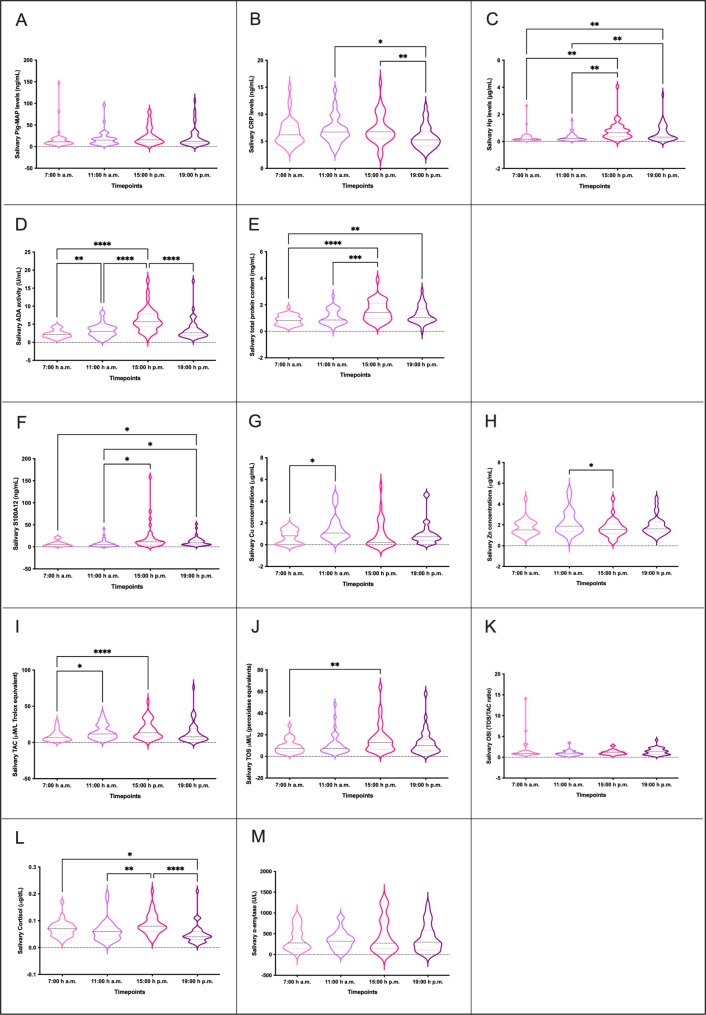
Background: The concentration of biomarkers in saliva could be influenced by several factors not related to the specific condition under analyses, which should be considered for proper clinical interpretation. In the present study, the circadian rhythm of C-reactive protein (CRP), haptoglobin (Hp), Pig-MAP, S100A12, Cu, Zn, Adenosine deaminase (ADA), total protein (TP), total antioxidant capacity (TAC), total oxidant status (TOS), oxidative stress index (OSI), cortisol and α-amylase in saliva of 20 female and 20 male pigs was investigated. Moreover, the influence of sex and production phase (post-weaning, fattening and finishing) on the concentrations of biomarkers in a total of 414 healthy pigs was studied and the reference intervals for all salivary biomarkers were calculated accordingly.
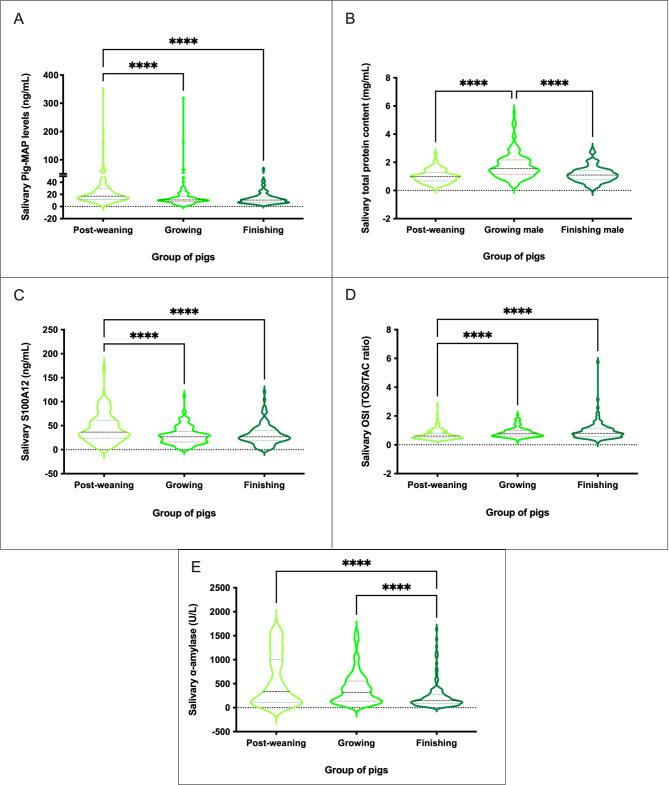
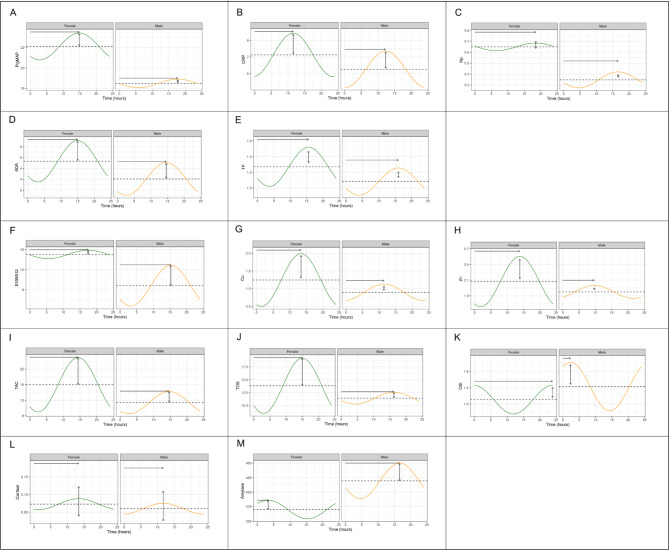
Results: All parameters except Pig-MAP, OSI and α-amylase varied significantly along the daytime, and most of them peak around early afternoon (13-15 h). The cosinor analysis described the temporal dynamics of circadian rhythms for all parameters. The range values showed differences between male and female pigs in 8 out of the 13 biomarkers, with higher concentrations in females in comparison to male pigs. The influence of the production phase on the salivary concentrations was observed for all the biomarkers. The highest concentrations were observed for Pig-MAP, S100A12 and α-amylase in post-weaning animals, for TP in growing pigs and for OSI in finishing animals. Most of the sex-influenced biomarkers showed the highest concentrations at growing stages with some exceptions such as ADA or Hp that showed the peak at finishing and post-weaning stages respectively.
Conclusions: It is necessary to establish the optimal daytime for routine saliva sampling to avoid circadian variations and for that end, the time interval between 10:00 a.m. to 12:00 a.m. is highly recommended. The factors sex and production phase influence the concentration of biomarkers and should be considered for proper biomarker interpretation. The reference intervals presented here for each salivary biomarker will help to correctly interpret the results of these analytes and contribute to the use of saliva as a non-invasive sample for the diagnosis and monitoring of the health status of swine farms.
期刊介绍:
Porcine Health Management (PHM) is an open access peer-reviewed journal that aims to publish relevant, novel and revised information regarding all aspects of swine health medicine and production.



 京公网安备 11010802042870号
京ICP备2023020795号-1
京公网安备 11010802042870号
京ICP备2023020795号-1

 分享
分享
 求助内容:
求助内容: 应助结果提醒方式:
 扫码关注我们
