‘That's someone's grandma’: Teaching person-centred care in a frailty context

IF 1.2 Q4 MEDICINE, RESEARCH & EXPERIMENTAL Clinical Teacher Pub Date : 2023-10-12 DOI:10.1111/tct.13627
Lucy Robinson, Inga Andrew, Lee Kenny, Sophie Garrad, Richard Thomson, James Fisher
{"title":"‘That's someone's grandma’: Teaching person-centred care in a frailty context","authors":"Lucy Robinson,&nbsp;Inga Andrew,&nbsp;Lee Kenny,&nbsp;Sophie Garrad,&nbsp;Richard Thomson,&nbsp;James Fisher","doi":"10.1111/tct.13627","DOIUrl":null,"url":null,"abstract":"<div>\n \n \n <section>\n \n <h3> Background</h3>\n \n <p>The ability to provide person-centred care (PCC) is an essential skill for doctors and requires therapeutic empathy. We sought to evaluate a novel teaching approach to understand how medical students' personal reflections on an older person impact their views about PCC and frailty.</p>\n </section>\n \n <section>\n \n <h3> Approach</h3>\n \n <p>We designed a teaching session where students prepared an image and story about an older person they knew. Given the innovative nature of this, we set it in the context of a Plan Do Study Act cycle to ensure evaluation and continuous improvement at each stage. Students' contributions were discussed in a supportive environment, weaving together stories about individuals with the impacts of ageing they experienced. We evaluated the teaching with a pre- and post-session ‘frailty’ word cloud and an online focus group.</p>\n </section>\n \n <section>\n \n <h3> Evaluation</h3>\n \n <p>Word cloud analysis showed a shift in the words students used when considering ‘frailty’, from words associated with illness and vulnerability to those associated with character and experience. Focus group themes supported these findings. Students expressed a change in their perception of frailty to consider ‘the person behind the patient’, which, unexpectedly, led to them also seeing ‘the person behind the medical student’. The session stimulated student reflection on challenges that may impact on delivery of truly person-centred care.</p>\n </section>\n \n <section>\n \n <h3> Implications</h3>\n \n <p>This flexible teaching technique was an effective stimulus for medical students to consider the person behind the patient. Future work could consider how to promote retention of empathy as medical students make the transition to working as a doctor.</p>\n </section>\n </div>","PeriodicalId":47324,"journal":{"name":"Clinical Teacher","volume":"21 1","pages":""},"PeriodicalIF":1.2000,"publicationDate":"2023-10-12","publicationTypes":"Journal Article","fieldsOfStudy":null,"isOpenAccess":false,"openAccessPdf":"https://onlinelibrary.wiley.com/doi/epdf/10.1111/tct.13627","citationCount":"0","resultStr":null,"platform":"Semanticscholar","paperid":null,"PeriodicalName":"Clinical Teacher","FirstCategoryId":"1085","ListUrlMain":"https://asmepublications.onlinelibrary.wiley.com/doi/10.1111/tct.13627","RegionNum":0,"RegionCategory":null,"ArticlePicture":[],"TitleCN":null,"AbstractTextCN":null,"PMCID":null,"EPubDate":"","PubModel":"","JCR":"Q4","JCRName":"MEDICINE, RESEARCH & EXPERIMENTAL","Score":null,"Total":0}
引用次数: 0

Abstract

Background

The ability to provide person-centred care (PCC) is an essential skill for doctors and requires therapeutic empathy. We sought to evaluate a novel teaching approach to understand how medical students' personal reflections on an older person impact their views about PCC and frailty.

Approach

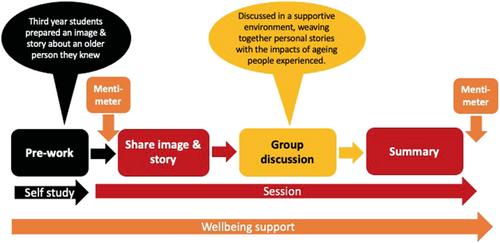
We designed a teaching session where students prepared an image and story about an older person they knew. Given the innovative nature of this, we set it in the context of a Plan Do Study Act cycle to ensure evaluation and continuous improvement at each stage. Students' contributions were discussed in a supportive environment, weaving together stories about individuals with the impacts of ageing they experienced. We evaluated the teaching with a pre- and post-session ‘frailty’ word cloud and an online focus group.

Evaluation

Word cloud analysis showed a shift in the words students used when considering ‘frailty’, from words associated with illness and vulnerability to those associated with character and experience. Focus group themes supported these findings. Students expressed a change in their perception of frailty to consider ‘the person behind the patient’, which, unexpectedly, led to them also seeing ‘the person behind the medical student’. The session stimulated student reflection on challenges that may impact on delivery of truly person-centred care.

Implications

This flexible teaching technique was an effective stimulus for medical students to consider the person behind the patient. Future work could consider how to promote retention of empathy as medical students make the transition to working as a doctor.

Abstract Image

Abstract Image

查看原文
分享 分享
微信好友 朋友圈 QQ好友 复制链接
本刊更多论文
“那是别人的奶奶”:在虚弱的背景下教授以人为中心的护理。
背景:提供以人为中心的护理(PCC)的能力是医生的基本技能,需要治疗同理心。我们试图评估一种新颖的教学方法,以了解医学生对老年人的个人反思如何影响他们对PCC和虚弱的看法。方法:我们设计了一个教学环节,学生们准备了一个他们认识的老年人的形象和故事。鉴于这一点的创新性,我们将其设置在计划-研究-法案周期的背景下,以确保每个阶段的评估和持续改进。学生们的贡献在一个支持性的环境中进行了讨论,将个人经历的老龄化影响交织在一起。我们用课前和课后的“虚弱”单词云和在线焦点小组对教学进行了评估。评估:单词云分析显示,学生在考虑“脆弱”时使用的单词发生了变化,从与疾病和脆弱性相关的单词转变为与性格和经历相关的单词。焦点小组的主题支持了这些发现。学生们表示,他们对虚弱的看法发生了变化,转而考虑“病人背后的人”,出乎意料的是,这也导致他们看到了“医学生身后的人”。该课程激发了学生对可能影响提供真正以人为中心的护理的挑战的反思。启示:这种灵活的教学技巧是一种有效的激励,让医学生考虑病人背后的人。未来的工作可以考虑如何在医学生过渡到医生工作时促进同理心的保持。
本文章由计算机程序翻译,如有差异,请以英文原文为准。
求助全文
约1分钟内获得全文 去求助
来源期刊
Clinical Teacher
Clinical Teacher MEDICINE, RESEARCH & EXPERIMENTAL-
CiteScore
2.90
自引率
5.60%
发文量
113
期刊介绍: The Clinical Teacher has been designed with the active, practising clinician in mind. It aims to provide a digest of current research, practice and thinking in medical education presented in a readable, stimulating and practical style. The journal includes sections for reviews of the literature relating to clinical teaching bringing authoritative views on the latest thinking about modern teaching. There are also sections on specific teaching approaches, a digest of the latest research published in Medical Education and other teaching journals, reports of initiatives and advances in thinking and practical teaching from around the world, and expert community and discussion on challenging and controversial issues in today"s clinical education.
期刊最新文献
Supporting Feedback and Trust in CBME: A Conjoint WBA Workshop for Trainers and Trainees Generative Artificial Intelligence and Risk of Premature Expertise: Why Human Judgement Remains Essential in Medical Education Structure and Utility of e-Portfolios for Reflection and Learning in Healthcare Professional Education: A Narrative Review New Associate Editors, New Article Type, New Voices and New Special Issue Education in the Era of Teleneurology: Development and Evaluation of a Curriculum for Internal Medicine Residents
×
引用
GB/T 7714-2015
复制
MLA
复制
APA
复制
导出至
BibTeX EndNote RefMan NoteFirst NoteExpress
×
×
提示
您的信息不完整,为了账户安全,请先补充。
现在去补充
×
提示
您因"违规操作"
具体请查看互助需知
我知道了
×
提示
现在去查看 取消
×
提示
确定
0
微信
客服QQ
Book学术公众号 扫码关注我们
反馈
×
意见反馈
请填写您的意见或建议
请填写您的手机或邮箱
已复制链接
已复制链接
快去分享给好友吧!
我知道了
×
扫码分享
扫码分享
Book学术官方微信
Book学术文献互助
Book学术文献互助群
群 号:604180095
Book学术
文献互助 智能选刊 最新文献 互助须知 联系我们:info@booksci.cn
Book学术提供免费学术资源搜索服务,方便国内外学者检索中英文文献。致力于提供最便捷和优质的服务体验。
Copyright © 2023 Book学术 All rights reserved.
ghs 京公网安备 11010802042870号 京ICP备2023020795号-1






