Laura S P Bloomfield, Christopher Tracey, Edith Mbabazi, Rhiannon L Schultz, Rebecca Henderson, Kevin Bardosh, Shannon Randolph, Sarah Paige
{"title":"Research Participation Influences Willingness to Reduce Zoonotic Exposure in Uganda.","authors":"Laura S P Bloomfield, Christopher Tracey, Edith Mbabazi, Rhiannon L Schultz, Rebecca Henderson, Kevin Bardosh, Shannon Randolph, Sarah Paige","doi":"10.1007/s10393-022-01589-5","DOIUrl":null,"url":null,"abstract":"<p><p>The majority of emerging and re-emerging infectious diseases in people are zoonotic. Despite substantial research in communities adjacent to protected areas with high levels of biodiversity, limited data exist on people's knowledge, attitudes, and practices to avoid exposure to infections from domestic and wild animals. We used a modified grounded-theory framework in QS NVivo to develop a Knowledge, Attitude, and Practices (KAP) survey administered at two time points, KAPT1 (April-July 2016) and KAPT2 (February-May 2018) to participants living at the edge of Kibale National Park, Uganda. We measured the difference in willingness to engage in protective behaviors around zoonotic exposure between an Intervention group (n = 61) and a Comparison group (n = 125). Prior to KAPT1, the Intervention group engaged in a human-centered design (HCD) activity identifying behaviors that reduce zoonotic exposure (March-May 2016). Using a difference-in-difference approach, we compared the Intervention and Comparison groups to assess sustained willingness and use of protective behaviors against domestic and wild animal exposures. At KAPT1, Comparison group participants had a significantly lower (p < 0.05) level of willingness to engage in behaviors that increase exposure to zoonoses from domestic animals; Intervention group participants had a significantly higher (p < 0.01) level of willingness to engage in behaviors that increase exposure to zoonoses from wild animals. At KAPT2, the treatment effect was significant (p < 0.01) for sustained willingness to engage in protective behaviors for domestic animal exposure in the Intervention group. There were no significant differences in practices to avoid domestic and wild animal zoonotic exposure between the Intervention and Comparison groups.</p>","PeriodicalId":51027,"journal":{"name":"Ecohealth","volume":"19 1","pages":"299-314"},"PeriodicalIF":2.2000,"publicationDate":"2022-06-01","publicationTypes":"Journal Article","fieldsOfStudy":null,"isOpenAccess":false,"openAccessPdf":"","citationCount":"0","resultStr":null,"platform":"Semanticscholar","paperid":null,"PeriodicalName":"Ecohealth","FirstCategoryId":"93","ListUrlMain":"https://doi.org/10.1007/s10393-022-01589-5","RegionNum":3,"RegionCategory":"环境科学与生态学","ArticlePicture":[],"TitleCN":null,"AbstractTextCN":null,"PMCID":null,"EPubDate":"2022/6/8 0:00:00","PubModel":"Epub","JCR":"Q3","JCRName":"ENVIRONMENTAL SCIENCES","Score":null,"Total":0}
引用次数: 0
Abstract
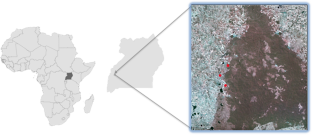
The majority of emerging and re-emerging infectious diseases in people are zoonotic. Despite substantial research in communities adjacent to protected areas with high levels of biodiversity, limited data exist on people's knowledge, attitudes, and practices to avoid exposure to infections from domestic and wild animals. We used a modified grounded-theory framework in QS NVivo to develop a Knowledge, Attitude, and Practices (KAP) survey administered at two time points, KAPT1 (April-July 2016) and KAPT2 (February-May 2018) to participants living at the edge of Kibale National Park, Uganda. We measured the difference in willingness to engage in protective behaviors around zoonotic exposure between an Intervention group (n = 61) and a Comparison group (n = 125). Prior to KAPT1, the Intervention group engaged in a human-centered design (HCD) activity identifying behaviors that reduce zoonotic exposure (March-May 2016). Using a difference-in-difference approach, we compared the Intervention and Comparison groups to assess sustained willingness and use of protective behaviors against domestic and wild animal exposures. At KAPT1, Comparison group participants had a significantly lower (p < 0.05) level of willingness to engage in behaviors that increase exposure to zoonoses from domestic animals; Intervention group participants had a significantly higher (p < 0.01) level of willingness to engage in behaviors that increase exposure to zoonoses from wild animals. At KAPT2, the treatment effect was significant (p < 0.01) for sustained willingness to engage in protective behaviors for domestic animal exposure in the Intervention group. There were no significant differences in practices to avoid domestic and wild animal zoonotic exposure between the Intervention and Comparison groups.
期刊介绍:
EcoHealth aims to advance research, practice, and knowledge integration at the interface of ecology and health by publishing high quality research and review articles that address and profile new ideas, developments, and programs. The journal’s scope encompasses research that integrates concepts and theory from many fields of scholarship (including ecological, social and health sciences, and the humanities) and draws upon multiple types of knowledge, including those of relevance to practice and policy. Papers address integrated ecology and health challenges arising in public health, human and veterinary medicine, conservation and ecosystem management, rural and urban development and planning, and other fields that address the social-ecological context of health. The journal is a central platform for fulfilling the mission of the EcoHealth Alliance to strive for sustainable health of people, domestic animals, wildlife, and ecosystems by promoting discovery, understanding, and transdisciplinarity.
The journal invites substantial contributions in the following areas:
One Health and Conservation Medicine
o Integrated research on health of humans, wildlife, livestock and ecosystems
o Research and policy in ecology, public health, and agricultural sustainability
o Emerging infectious diseases affecting people, wildlife, domestic animals, and plants
o Research and practice linking human and animal health and/or social-ecological systems
o Anthropogenic environmental change and drivers of disease emergence in humans, wildlife, livestock and ecosystems
o Health of humans and animals in relation to terrestrial, freshwater, and marine ecosystems
Ecosystem Approaches to Health
o Systems thinking and social-ecological systems in relation to health
o Transdiiplinary approaches to health, ecosystems and society.



 京公网安备 11010802042870号
京ICP备2023020795号-1
京公网安备 11010802042870号
京ICP备2023020795号-1

 分享
分享
 求助内容:
求助内容: 应助结果提醒方式:
 扫码关注我们
