Stephen Leong, Bing M Teh, Ton Duong, Diane Hu, Alexander Chui, Jocelyn S Chen, Michael B Sisti, Tony J C Wang, Damiano Zanotto, Anil K Lalwani
{"title":"Instrumented insoles for assessment of gait in patients with vestibular schwannoma.","authors":"Stephen Leong, Bing M Teh, Ton Duong, Diane Hu, Alexander Chui, Jocelyn S Chen, Michael B Sisti, Tony J C Wang, Damiano Zanotto, Anil K Lalwani","doi":"10.1017/wtc.2023.11","DOIUrl":null,"url":null,"abstract":"<p><strong>Background: </strong>Imbalance and gait disturbances are common in patients with vestibular schwannoma (VS) and can result in significant morbidity. Current methods for quantitative gait analysis are cumbersome and difficult to implement. Here, we use custom-engineered instrumented insoles to evaluate the gait of patients diagnosed with VS.</p><p><strong>Methods: </strong>Twenty patients with VS were recruited from otology, neurosurgery, and radiation oncology clinics at a tertiary referral center. Functional gait assessment (FGA), 2-minute walk test (2MWT), and uneven surface walk test (USWT) were performed. Custom-engineered instrumented insoles, equipped with an 8-cell force sensitive resistor (FSR) and a 9-degree-of-freedom inertial measurement unit (IMU), were used to collect stride-by-stride spatiotemporal gait parameters, from which mean values and coefficients of variation (CV) were determined for each patient.</p><p><strong>Results: </strong>FGA scores were significantly correlated with gait metrics obtained from the 2MWT and USWT, including stride length, stride velocity, normalized stride length, normalized stride velocity, stride length CV, and stride velocity CV. Tumor diameter was negatively associated with stride time and swing time on the 2MWT; no such association existed between tumor diameter and FGA or DHI.</p><p><strong>Conclusions: </strong>Instrumented insoles may unveil associations between VS tumor size and gait dysfunction that cannot be captured by standardized clinical assessments and self-reported questionnaires.</p>","PeriodicalId":3,"journal":{"name":"ACS Applied Electronic Materials","volume":" ","pages":"e14"},"PeriodicalIF":4.7000,"publicationDate":"2023-05-10","publicationTypes":"Journal Article","fieldsOfStudy":null,"isOpenAccess":false,"openAccessPdf":"https://www.ncbi.nlm.nih.gov/pmc/articles/PMC10936291/pdf/","citationCount":"0","resultStr":null,"platform":"Semanticscholar","paperid":null,"PeriodicalName":"ACS Applied Electronic Materials","FirstCategoryId":"1085","ListUrlMain":"https://doi.org/10.1017/wtc.2023.11","RegionNum":3,"RegionCategory":"材料科学","ArticlePicture":[],"TitleCN":null,"AbstractTextCN":null,"PMCID":null,"EPubDate":"2023/1/1 0:00:00","PubModel":"eCollection","JCR":"Q1","JCRName":"ENGINEERING, ELECTRICAL & ELECTRONIC","Score":null,"Total":0}
引用次数: 0
Abstract
Background: Imbalance and gait disturbances are common in patients with vestibular schwannoma (VS) and can result in significant morbidity. Current methods for quantitative gait analysis are cumbersome and difficult to implement. Here, we use custom-engineered instrumented insoles to evaluate the gait of patients diagnosed with VS.
Methods: Twenty patients with VS were recruited from otology, neurosurgery, and radiation oncology clinics at a tertiary referral center. Functional gait assessment (FGA), 2-minute walk test (2MWT), and uneven surface walk test (USWT) were performed. Custom-engineered instrumented insoles, equipped with an 8-cell force sensitive resistor (FSR) and a 9-degree-of-freedom inertial measurement unit (IMU), were used to collect stride-by-stride spatiotemporal gait parameters, from which mean values and coefficients of variation (CV) were determined for each patient.
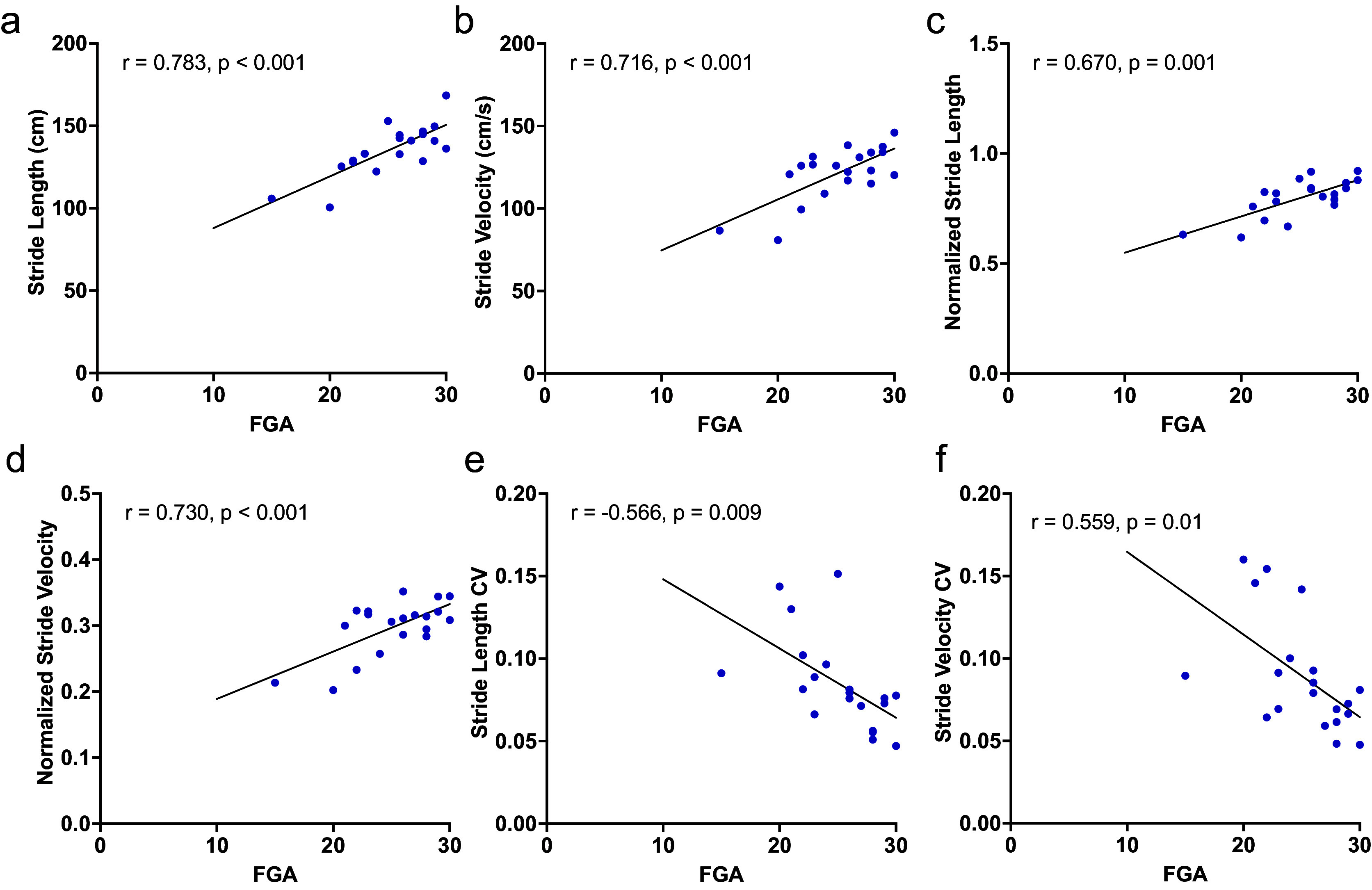
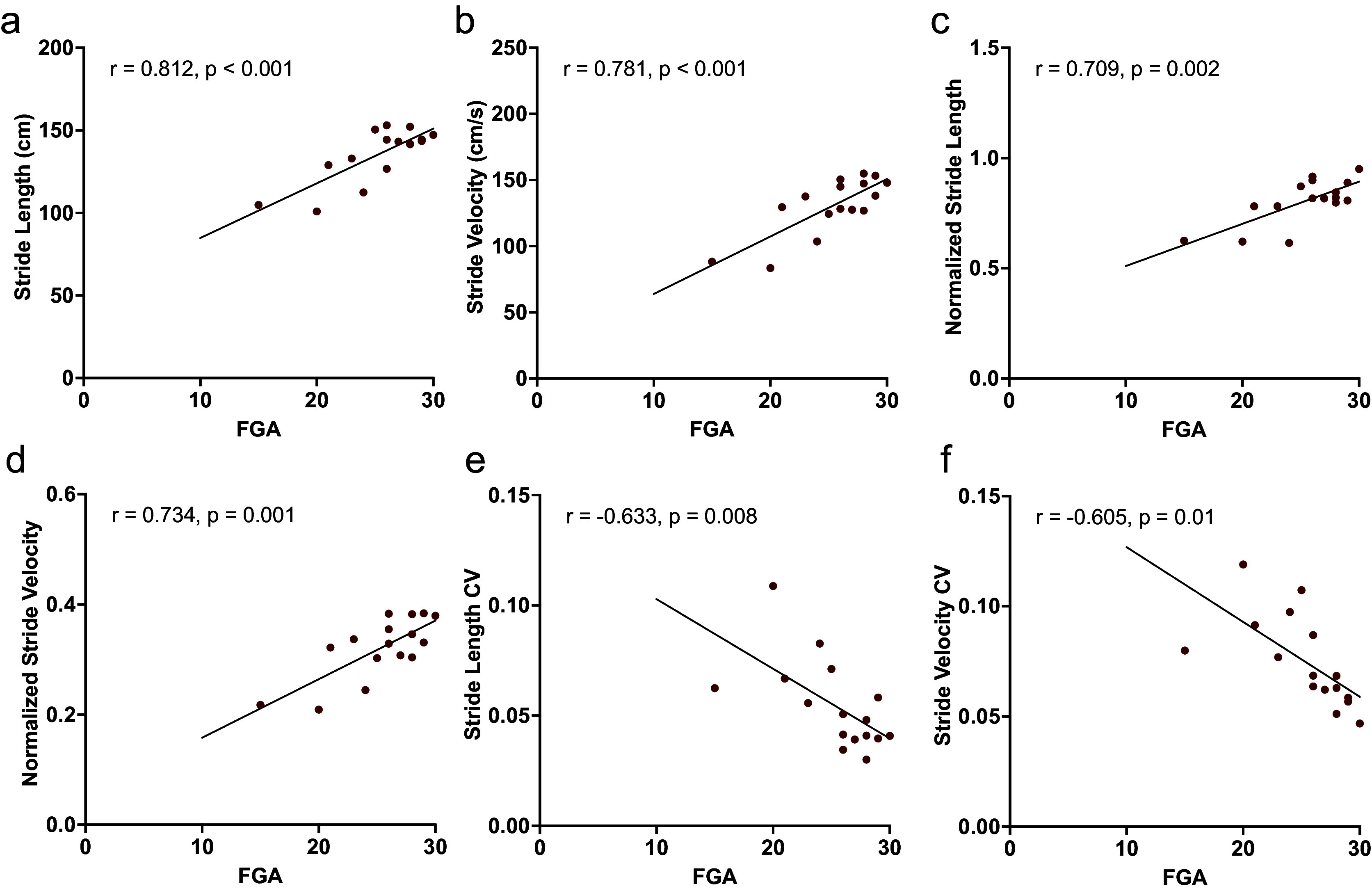
Results: FGA scores were significantly correlated with gait metrics obtained from the 2MWT and USWT, including stride length, stride velocity, normalized stride length, normalized stride velocity, stride length CV, and stride velocity CV. Tumor diameter was negatively associated with stride time and swing time on the 2MWT; no such association existed between tumor diameter and FGA or DHI.
Conclusions: Instrumented insoles may unveil associations between VS tumor size and gait dysfunction that cannot be captured by standardized clinical assessments and self-reported questionnaires.
期刊介绍:
ACS Applied Electronic Materials is an interdisciplinary journal publishing original research covering all aspects of electronic materials. The journal is devoted to reports of new and original experimental and theoretical research of an applied nature that integrate knowledge in the areas of materials science, engineering, optics, physics, and chemistry into important applications of electronic materials. Sample research topics that span the journal's scope are inorganic, organic, ionic and polymeric materials with properties that include conducting, semiconducting, superconducting, insulating, dielectric, magnetic, optoelectronic, piezoelectric, ferroelectric and thermoelectric.
Indexed/Abstracted:
Web of Science SCIE
Scopus
CAS
INSPEC
Portico





 京公网安备 11010802042870号
京ICP备2023020795号-1
京公网安备 11010802042870号
京ICP备2023020795号-1

 分享
分享
 求助内容:
求助内容: 应助结果提醒方式:
 扫码关注我们
