Zhen Ling Teo, Ann Kwee, John Cw Lim, Carolyn Sp Lam, Dean Ho, Sebastian Maurer-Stroh, Yi Su, Simon Chesterman, Tsuhan Chen, Chorh Chuan Tan, Tien Yin Wong, Kee Yuan Ngiam, Cher Heng Tan, Danny Soon, May Ling Choong, Raymond Chua, Sutowo Wong, Colin Lim, Wei Yang Cheong, Daniel Sw Ting
{"title":"Artificial intelligence innovation in healthcare: Relevance of reporting guidelines for clinical translation from bench to bedside.","authors":"Zhen Ling Teo, Ann Kwee, John Cw Lim, Carolyn Sp Lam, Dean Ho, Sebastian Maurer-Stroh, Yi Su, Simon Chesterman, Tsuhan Chen, Chorh Chuan Tan, Tien Yin Wong, Kee Yuan Ngiam, Cher Heng Tan, Danny Soon, May Ling Choong, Raymond Chua, Sutowo Wong, Colin Lim, Wei Yang Cheong, Daniel Sw Ting","doi":"10.47102/annals-acadmedsg.2022452","DOIUrl":null,"url":null,"abstract":"<p><p>Artificial intelligence (AI) and digital innovation are transforming healthcare. Technologies such as machine learning in image analysis, natural language processing in medical chatbots and electronic medical record extraction have the potential to improve screening, diagnostics and prognostication, leading to precision medicine and preventive health. However, it is crucial to ensure that AI research is conducted with scientific rigour to facilitate clinical implementation. Therefore, reporting guidelines have been developed to standardise and streamline the development and validation of AI technologies in health. This commentary proposes a structured approach to utilise these reporting guidelines for the translation of promising AI techniques from research and development into clinical translation, and eventual widespread implementation from bench to bedside.</p>","PeriodicalId":5,"journal":{"name":"ACS Applied Materials & Interfaces","volume":" ","pages":"199-212"},"PeriodicalIF":8.2000,"publicationDate":"2023-04-27","publicationTypes":"Journal Article","fieldsOfStudy":null,"isOpenAccess":false,"openAccessPdf":"","citationCount":"0","resultStr":null,"platform":"Semanticscholar","paperid":null,"PeriodicalName":"ACS Applied Materials & Interfaces","FirstCategoryId":"3","ListUrlMain":"https://doi.org/10.47102/annals-acadmedsg.2022452","RegionNum":2,"RegionCategory":"材料科学","ArticlePicture":[],"TitleCN":null,"AbstractTextCN":null,"PMCID":null,"EPubDate":"","PubModel":"","JCR":"Q1","JCRName":"MATERIALS SCIENCE, MULTIDISCIPLINARY","Score":null,"Total":0}
引用次数: 0
Abstract
Artificial intelligence (AI) and digital innovation are transforming healthcare. Technologies such as machine learning in image analysis, natural language processing in medical chatbots and electronic medical record extraction have the potential to improve screening, diagnostics and prognostication, leading to precision medicine and preventive health. However, it is crucial to ensure that AI research is conducted with scientific rigour to facilitate clinical implementation. Therefore, reporting guidelines have been developed to standardise and streamline the development and validation of AI technologies in health. This commentary proposes a structured approach to utilise these reporting guidelines for the translation of promising AI techniques from research and development into clinical translation, and eventual widespread implementation from bench to bedside.
期刊介绍:
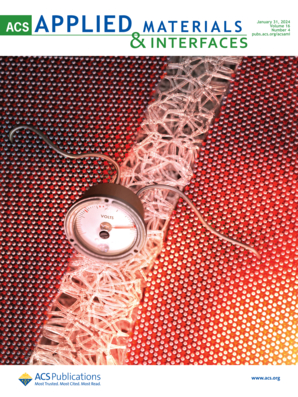
ACS Applied Materials & Interfaces is a leading interdisciplinary journal that brings together chemists, engineers, physicists, and biologists to explore the development and utilization of newly-discovered materials and interfacial processes for specific applications. Our journal has experienced remarkable growth since its establishment in 2009, both in terms of the number of articles published and the impact of the research showcased. We are proud to foster a truly global community, with the majority of published articles originating from outside the United States, reflecting the rapid growth of applied research worldwide.



 京公网安备 11010802042870号
京ICP备2023020795号-1
京公网安备 11010802042870号
京ICP备2023020795号-1

 分享
分享
 求助内容:
求助内容: 应助结果提醒方式:
 扫码关注我们
