{"title":"Success in achieving LDL-C target values in a high-risk population in Slovakia: the SlovakLipid retrospective study.","authors":"Stefan Toth, Martin Turek, Daniel Pella","doi":"10.5114/aoms/170961","DOIUrl":null,"url":null,"abstract":"<p><strong>Introduction: </strong>Slovakia is among the countries with the highest cardiovascular mortality; nevertheless, extensive data on the effectiveness of dyslipidaemia management are lacking. The aim of this study was to assess the implementation of European guidelines in the very high-risk population in Slovakia.</p><p><strong>Material and methods: </strong>We retrospectively analysed anonymised low-density lipoprotein-cholesterol (LDL-C) values of patients at very high cardiovascular risk gathered between 2017 and 2019 from a collaborating laboratory with nationwide reach. Cardiovascular risk (CV) risk was based on the patient's International Classification of Diseases (ICD) diagnosis. LDL-C target values were based on the 2016 ESC/EAS recommendations, as well as current recommendations from 2019. Patients diagnosed with acute coronary syndrome (ACS), stroke, or overall very high-risk cardiovascular disease (CVD) were selected.</p><p><strong>Results: </strong>A total of 220 657 LDL-C test results from 72 039 patients were processed. Only 8-9% of patients with ACS attained target LDL-C in a follow-up test each year. 6-9% of patients had LDL-C levels ≥ 4.9 mmol/l. Only 9-10% of patients with stroke achieved target LDL-C levels, and 7-8% had levels ≥ 4.9 mmol/l. In the very high CV risk group, only 7% of patients achieved target levels, and 7-8% had extremely high LDL-C levels ≥ 4.9 mmol/l. With the ESC/EAS 2019 recommendations only 2-3% of patients in each group achieved target levels each year.</p><p><strong>Conclusions: </strong>Based on our results, we found that over 90% of patients with very high CVD risk do not achieve target LDL-C levels. This percentage is even higher when implementing the 2019 guidelines. These patients remain at high risk of subsequent CVD events and would benefit significantly from intensified hypolipaemic therapy.</p>","PeriodicalId":8278,"journal":{"name":"Archives of Medical Science","volume":" ","pages":"738-746"},"PeriodicalIF":3.3000,"publicationDate":"2023-09-06","publicationTypes":"Journal Article","fieldsOfStudy":null,"isOpenAccess":false,"openAccessPdf":"https://www.ncbi.nlm.nih.gov/pmc/articles/PMC12305535/pdf/","citationCount":"0","resultStr":null,"platform":"Semanticscholar","paperid":null,"PeriodicalName":"Archives of Medical Science","FirstCategoryId":"3","ListUrlMain":"https://doi.org/10.5114/aoms/170961","RegionNum":4,"RegionCategory":"医学","ArticlePicture":[],"TitleCN":null,"AbstractTextCN":null,"PMCID":null,"EPubDate":"2025/1/1 0:00:00","PubModel":"eCollection","JCR":"Q1","JCRName":"MEDICINE, GENERAL & INTERNAL","Score":null,"Total":0}
引用次数: 0
Abstract
Introduction: Slovakia is among the countries with the highest cardiovascular mortality; nevertheless, extensive data on the effectiveness of dyslipidaemia management are lacking. The aim of this study was to assess the implementation of European guidelines in the very high-risk population in Slovakia.
Material and methods: We retrospectively analysed anonymised low-density lipoprotein-cholesterol (LDL-C) values of patients at very high cardiovascular risk gathered between 2017 and 2019 from a collaborating laboratory with nationwide reach. Cardiovascular risk (CV) risk was based on the patient's International Classification of Diseases (ICD) diagnosis. LDL-C target values were based on the 2016 ESC/EAS recommendations, as well as current recommendations from 2019. Patients diagnosed with acute coronary syndrome (ACS), stroke, or overall very high-risk cardiovascular disease (CVD) were selected.
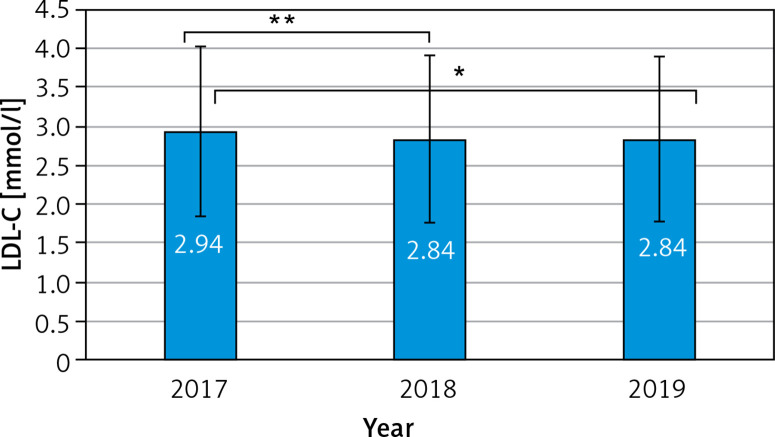
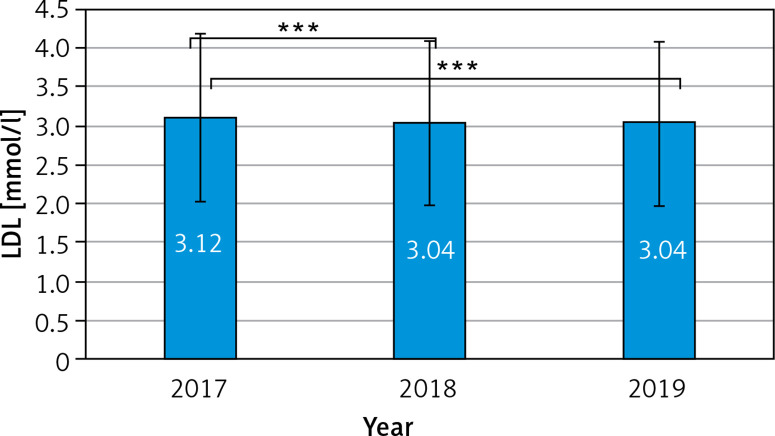
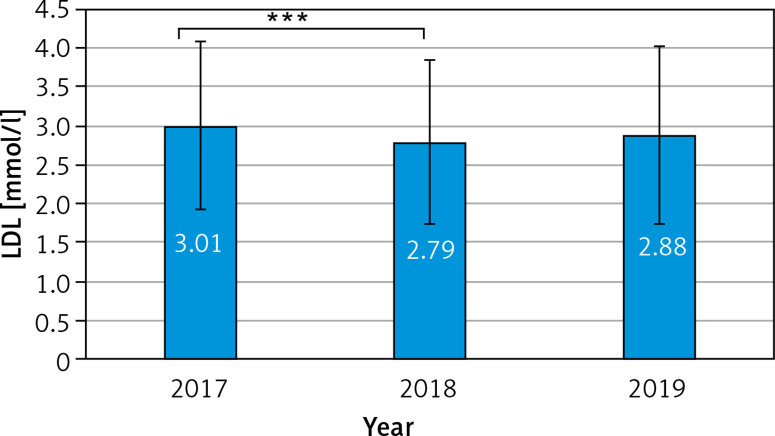
Results: A total of 220 657 LDL-C test results from 72 039 patients were processed. Only 8-9% of patients with ACS attained target LDL-C in a follow-up test each year. 6-9% of patients had LDL-C levels ≥ 4.9 mmol/l. Only 9-10% of patients with stroke achieved target LDL-C levels, and 7-8% had levels ≥ 4.9 mmol/l. In the very high CV risk group, only 7% of patients achieved target levels, and 7-8% had extremely high LDL-C levels ≥ 4.9 mmol/l. With the ESC/EAS 2019 recommendations only 2-3% of patients in each group achieved target levels each year.
Conclusions: Based on our results, we found that over 90% of patients with very high CVD risk do not achieve target LDL-C levels. This percentage is even higher when implementing the 2019 guidelines. These patients remain at high risk of subsequent CVD events and would benefit significantly from intensified hypolipaemic therapy.
期刊介绍:
Archives of Medical Science (AMS) publishes high quality original articles and reviews of recognized scientists that deal with all scientific medicine. AMS opens the possibilities for young, capable scientists. The journal would like to give them a chance to have a publication following matter-of-fact, professional review by outstanding, famous medical scientists. Thanks to that they will have an opportunity to present their study results and/or receive useful advice about the mistakes they have made so far.
The second equally important aim is a presentation of review manuscripts of recognized scientists about the educational capacity, in order that young scientists, often at the beginning of their scientific carrier, could constantly deepen their medical knowledge and be up-to-date with current guidelines and trends in world-wide medicine. The fact that our educational articles are written by world-famous scientists determines their innovation and the highest quality.



 京公网安备 11010802042870号
京ICP备2023020795号-1
京公网安备 11010802042870号
京ICP备2023020795号-1

 分享
分享
 求助内容:
求助内容: 应助结果提醒方式:
 扫码关注我们
