Predicting drivers' direction sign reading reaction time using an integrated cognitive architecture

IF 2.5 4区 工程技术 Q2 ENGINEERING, ELECTRICAL & ELECTRONIC IET Intelligent Transport Systems Pub Date : 2018-12-05 DOI:10.1049/iet-its.2018.5160
Chao Deng, Shi Cao, Chaozhong Wu, Nengchao Lyu
{"title":"Predicting drivers' direction sign reading reaction time using an integrated cognitive architecture","authors":"Chao Deng,&nbsp;Shi Cao,&nbsp;Chaozhong Wu,&nbsp;Nengchao Lyu","doi":"10.1049/iet-its.2018.5160","DOIUrl":null,"url":null,"abstract":"<div>\n <p>Drivers' reaction time of reading signs on expressways is a fundamental component of sight distance design requirements, and reaction time is affected by many factors such as information volume and concurrent tasks. We built cognitive simulation models to predict drivers' direction sign reading reaction time. Models were built using the queueing network-adaptive control of thought rational (QN-ACTR) cognitive architecture. Drivers' task-specific knowledge and skills were programmed as production rules. Two assumptions about drivers' strategies were proposed and tested. The models were connected to a driving simulator program to produce prediction of reaction time. Model results were compared to human results in sign reading single-task and reading while driving dual-task conditions. The models were built using existing modelling methods without adjusting any parameter to fit the human data. The models' prediction was similar to the human data and could capture the different reaction time in different task conditions with different numbers of road names on the direction signs. Root mean square error (RMSE) was 0.3 s, and mean absolute percentage error (MAPE) was 12%. The results demonstrated the models' predictive power. The models provide a useful tool for the prediction of driver performance and the evaluation of direction sign design.</p>\n </div>","PeriodicalId":50381,"journal":{"name":"IET Intelligent Transport Systems","volume":"13 4","pages":"622-627"},"PeriodicalIF":2.5000,"publicationDate":"2018-12-05","publicationTypes":"Journal Article","fieldsOfStudy":null,"isOpenAccess":false,"openAccessPdf":"https://sci-hub-pdf.com/10.1049/iet-its.2018.5160","citationCount":"6","resultStr":null,"platform":"Semanticscholar","paperid":null,"PeriodicalName":"IET Intelligent Transport Systems","FirstCategoryId":"5","ListUrlMain":"https://onlinelibrary.wiley.com/doi/10.1049/iet-its.2018.5160","RegionNum":4,"RegionCategory":"工程技术","ArticlePicture":[],"TitleCN":null,"AbstractTextCN":null,"PMCID":null,"EPubDate":"","PubModel":"","JCR":"Q2","JCRName":"ENGINEERING, ELECTRICAL & ELECTRONIC","Score":null,"Total":0}
引用次数: 6

Abstract

Drivers' reaction time of reading signs on expressways is a fundamental component of sight distance design requirements, and reaction time is affected by many factors such as information volume and concurrent tasks. We built cognitive simulation models to predict drivers' direction sign reading reaction time. Models were built using the queueing network-adaptive control of thought rational (QN-ACTR) cognitive architecture. Drivers' task-specific knowledge and skills were programmed as production rules. Two assumptions about drivers' strategies were proposed and tested. The models were connected to a driving simulator program to produce prediction of reaction time. Model results were compared to human results in sign reading single-task and reading while driving dual-task conditions. The models were built using existing modelling methods without adjusting any parameter to fit the human data. The models' prediction was similar to the human data and could capture the different reaction time in different task conditions with different numbers of road names on the direction signs. Root mean square error (RMSE) was 0.3 s, and mean absolute percentage error (MAPE) was 12%. The results demonstrated the models' predictive power. The models provide a useful tool for the prediction of driver performance and the evaluation of direction sign design.
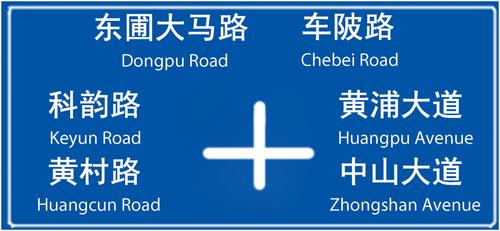
Abstract Image

查看原文
分享 分享
微信好友 朋友圈 QQ好友 复制链接
本刊更多论文
基于综合认知架构的驾驶员方向标志阅读反应时间预测
高速公路驾驶员阅读标志的反应时间是视距设计要求的基本组成部分,反应时间受信息量、并发任务等诸多因素的影响。建立认知模拟模型,预测驾驶员方向标志阅读反应时间。模型采用排队网络自适应控制思维理性(QN-ACTR)认知架构。驾驶员的特定任务知识和技能被编程为生产规则。提出并验证了两个关于司机策略的假设。这些模型被连接到一个驾驶模拟器程序,以产生反应时间的预测。将模型结果与人类在单任务和双任务条件下的阅读结果进行比较。这些模型是利用现有的建模方法建立的,没有调整任何参数来拟合人类数据。该模型的预测结果与人类数据相似,可以捕捉到在不同任务条件下,方向标志上不同数量的道路名称的不同反应时间。均方根误差(RMSE)为0.3 s,平均绝对百分比误差(MAPE)为12%。结果证明了模型的预测能力。这些模型为预测驾驶员行为和评价方向标志设计提供了有用的工具。
本文章由计算机程序翻译,如有差异,请以英文原文为准。
求助全文
约1分钟内获得全文 去求助
来源期刊
IET Intelligent Transport Systems
IET Intelligent Transport Systems 工程技术-运输科技
CiteScore
6.50
自引率
7.40%
发文量
159
审稿时长
3 months
期刊介绍: IET Intelligent Transport Systems is an interdisciplinary journal devoted to research into the practical applications of ITS and infrastructures. The scope of the journal includes the following: Sustainable traffic solutions Deployments with enabling technologies Pervasive monitoring Applications; demonstrations and evaluation Economic and behavioural analyses of ITS services and scenario Data Integration and analytics Information collection and processing; image processing applications in ITS ITS aspects of electric vehicles Autonomous vehicles; connected vehicle systems; In-vehicle ITS, safety and vulnerable road user aspects Mobility as a service systems Traffic management and control Public transport systems technologies Fleet and public transport logistics Emergency and incident management Demand management and electronic payment systems Traffic related air pollution management Policy and institutional issues Interoperability, standards and architectures Funding scenarios Enforcement Human machine interaction Education, training and outreach Current Special Issue Call for papers: Intelligent Transportation Systems in Smart Cities for Sustainable Environment - https://digital-library.theiet.org/files/IET_ITS_CFP_ITSSCSE.pdf Sustainably Intelligent Mobility (SIM) - https://digital-library.theiet.org/files/IET_ITS_CFP_SIM.pdf Traffic Theory and Modelling in the Era of Artificial Intelligence and Big Data (in collaboration with World Congress for Transport Research, WCTR 2019) - https://digital-library.theiet.org/files/IET_ITS_CFP_WCTR.pdf
期刊最新文献
An Optimization Method for Solving Three-Phase Unbalance and Vehicle-to-Grid Reactive Power Compensation Utilizing Three-Phase Inverter Control Bridging Low-Altitude Economy and Environmental Sustainability: A User-Oriented Framework for Low-Noise Green UAV Development Section-Based Crash Risk Analysis Integrating the Effect of Traffic States and Road Geometry Multi-Resolution Deep Learning for Coupler Force Prediction in 20,000-Ton Heavy-Haul Trains Optimisation Design of Feeder-Bus Network Related to Urban Rail Transit With Time Windows
×
引用
GB/T 7714-2015
复制
MLA
复制
APA
复制
导出至
BibTeX EndNote RefMan NoteFirst NoteExpress
×
×
提示
您的信息不完整,为了账户安全,请先补充。
现在去补充
×
提示
您因"违规操作"
具体请查看互助需知
我知道了
×
提示
现在去查看 取消
×
提示
确定
0
微信
客服QQ
Book学术公众号 扫码关注我们
反馈
×
意见反馈
请填写您的意见或建议
请填写您的手机或邮箱
已复制链接
已复制链接
快去分享给好友吧!
我知道了
×
扫码分享
扫码分享
Book学术官方微信
Book学术文献互助
Book学术文献互助群
群 号:604180095
Book学术
文献互助 智能选刊 最新文献 互助须知 联系我们:info@booksci.cn
Book学术提供免费学术资源搜索服务,方便国内外学者检索中英文文献。致力于提供最便捷和优质的服务体验。
Copyright © 2023 Book学术 All rights reserved.
ghs 京公网安备 11010802042870号 京ICP备2023020795号-1





