Aditya Prakash Kanth, Manager Rajdeo Singh, Buddha Rashmi Mani
{"title":"Archaeometallurgical characterisation of ancient copper slags from pre-Harappan site, Kunal, India.","authors":"Aditya Prakash Kanth, Manager Rajdeo Singh, Buddha Rashmi Mani","doi":"10.1002/ansa.202100050","DOIUrl":null,"url":null,"abstract":"<p><p>The copper slags collected during the excavation of the Early Harappan period site at Kunal in northern India were studied to understand the advancement of smelting technology and the achieved smelting temperature in the furnace by undertaking archaeometallurgical characterisation of the slags. In this research, two types of slags such as slag with glassy appearance and granulated slag were selected for the study. The microscopic structure and distribution of slag components were investigated using optical microscopy and phase determination was done by X-ray diffraction (XRD). Chemical characterization of the slags was conducted using scanning electron microscopy-energy-dispersive X-ray spectroscopy, X-ray fluorescence analysis (XRF) and inductively coupled plasma-mass spectrometry to build a complete chemical profile of the slags. Fayalite and magnetite were the dominant phases in the glassy slag; however, the granulated slag showed the dominance of calcite as secondary phase which reflected the dolomitic stoichiometry of the slag. The presence of dominant fayalite mineral phase as detected by XRD and higher concentration of iron as detected by XRF indicated the reducing environment during the smelting process. In this study, the absence of sulphur is reported which is unique to the ancient copper slag.</p>","PeriodicalId":3,"journal":{"name":"ACS Applied Electronic Materials","volume":" ","pages":"226-234"},"PeriodicalIF":4.7000,"publicationDate":"2022-07-20","publicationTypes":"Journal Article","fieldsOfStudy":null,"isOpenAccess":false,"openAccessPdf":"https://www.ncbi.nlm.nih.gov/pmc/articles/PMC10989616/pdf/","citationCount":"0","resultStr":null,"platform":"Semanticscholar","paperid":null,"PeriodicalName":"ACS Applied Electronic Materials","FirstCategoryId":"1085","ListUrlMain":"https://doi.org/10.1002/ansa.202100050","RegionNum":3,"RegionCategory":"材料科学","ArticlePicture":[],"TitleCN":null,"AbstractTextCN":null,"PMCID":null,"EPubDate":"2022/8/1 0:00:00","PubModel":"eCollection","JCR":"Q1","JCRName":"ENGINEERING, ELECTRICAL & ELECTRONIC","Score":null,"Total":0}
引用次数: 0
Abstract
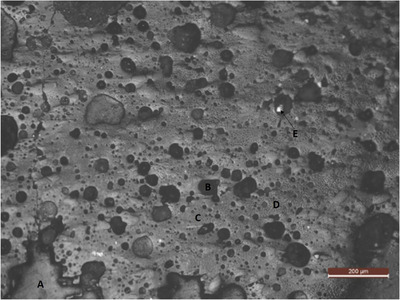
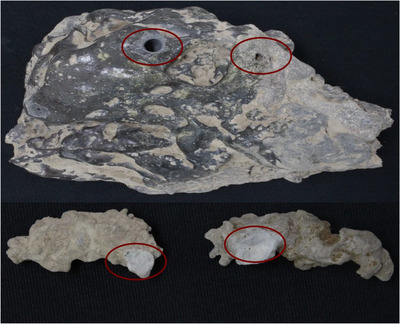
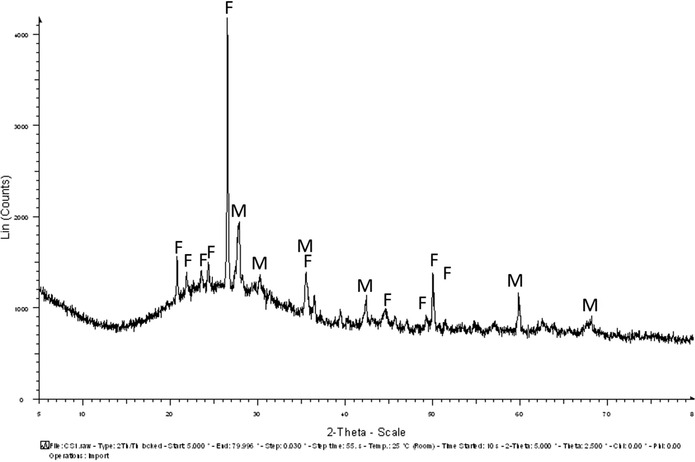
The copper slags collected during the excavation of the Early Harappan period site at Kunal in northern India were studied to understand the advancement of smelting technology and the achieved smelting temperature in the furnace by undertaking archaeometallurgical characterisation of the slags. In this research, two types of slags such as slag with glassy appearance and granulated slag were selected for the study. The microscopic structure and distribution of slag components were investigated using optical microscopy and phase determination was done by X-ray diffraction (XRD). Chemical characterization of the slags was conducted using scanning electron microscopy-energy-dispersive X-ray spectroscopy, X-ray fluorescence analysis (XRF) and inductively coupled plasma-mass spectrometry to build a complete chemical profile of the slags. Fayalite and magnetite were the dominant phases in the glassy slag; however, the granulated slag showed the dominance of calcite as secondary phase which reflected the dolomitic stoichiometry of the slag. The presence of dominant fayalite mineral phase as detected by XRD and higher concentration of iron as detected by XRF indicated the reducing environment during the smelting process. In this study, the absence of sulphur is reported which is unique to the ancient copper slag.
期刊介绍:
ACS Applied Electronic Materials is an interdisciplinary journal publishing original research covering all aspects of electronic materials. The journal is devoted to reports of new and original experimental and theoretical research of an applied nature that integrate knowledge in the areas of materials science, engineering, optics, physics, and chemistry into important applications of electronic materials. Sample research topics that span the journal's scope are inorganic, organic, ionic and polymeric materials with properties that include conducting, semiconducting, superconducting, insulating, dielectric, magnetic, optoelectronic, piezoelectric, ferroelectric and thermoelectric.
Indexed/Abstracted:
Web of Science SCIE
Scopus
CAS
INSPEC
Portico




 京公网安备 11010802042870号
京ICP备2023020795号-1
京公网安备 11010802042870号
京ICP备2023020795号-1

 分享
分享
 求助内容:
求助内容: 应助结果提醒方式:
 扫码关注我们
