{"title":"VEGF (vascular endothelial growth factor) provides antimicrobial effects via autophagy and lysosomal empowerment in endothelial cells.","authors":"Shiou-Ling Lu, Takeshi Noda","doi":"10.1080/27694127.2022.2137755","DOIUrl":null,"url":null,"abstract":"<p><p>Xenophagy is an intracellular defense mechanism against invading pathogens. <i>Streptococcus pyogenes</i> (group A <i>Streptococcus</i>, GAS) is efficiently eliminated by this process in epithelial cells. However, we previously reported that the efficacy of xenophagy differs among cell types; intrinsic deficits in endothelial cell xenophagy failed to suppress GAS growth. Considering that the basal level of xenophagy is lower in endothelial cells as compared to epithelial cells, additional stimulation may be required to enhance this activity. Recently, we reported that VEGF (vascular endothelial growth factor) is the key factor facilitating xenophagy and lysosomal activity in endothelial cells. These processes further lead to the efficient killing of invading GAS. The cAMP-IP<sub>3</sub>-Ca<sup>2+</sup> axis of the signaling pathway that activates TFEB (transcription factor EB) supports the transduction of the signal from VEGF. In addition, the severity of sepsis was observed to correlate with low VEGF concentrations in serum, both in a mouse model and in human patients. VEGF administration reduces mortality in a GAS sepsis model. Based on these findings, we propose that VEGF boosts the intracellular defense system of the endothelium by providing a strong blood vessel barrier to prevent bacterial dissemination.</p>","PeriodicalId":72341,"journal":{"name":"Autophagy reports","volume":" ","pages":"555-558"},"PeriodicalIF":0.0000,"publicationDate":"2022-10-24","publicationTypes":"Journal Article","fieldsOfStudy":null,"isOpenAccess":false,"openAccessPdf":"https://www.ncbi.nlm.nih.gov/pmc/articles/PMC11864673/pdf/","citationCount":"0","resultStr":null,"platform":"Semanticscholar","paperid":null,"PeriodicalName":"Autophagy reports","FirstCategoryId":"1085","ListUrlMain":"https://doi.org/10.1080/27694127.2022.2137755","RegionNum":0,"RegionCategory":null,"ArticlePicture":[],"TitleCN":null,"AbstractTextCN":null,"PMCID":null,"EPubDate":"2022/1/1 0:00:00","PubModel":"eCollection","JCR":"","JCRName":"","Score":null,"Total":0}
引用次数: 0
Abstract
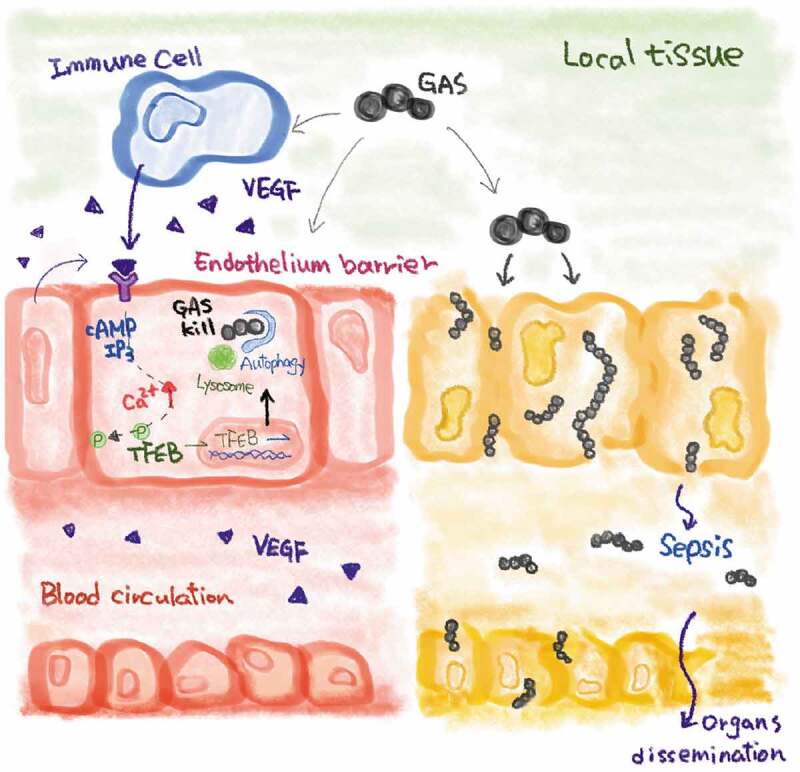
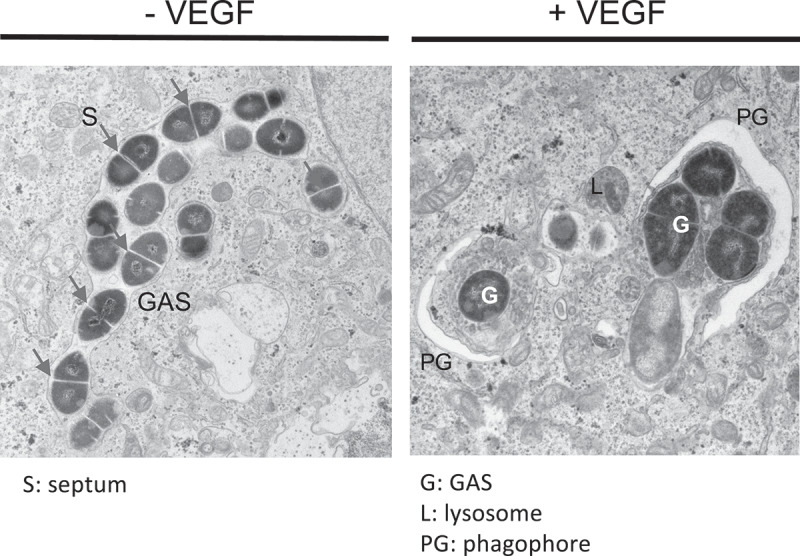
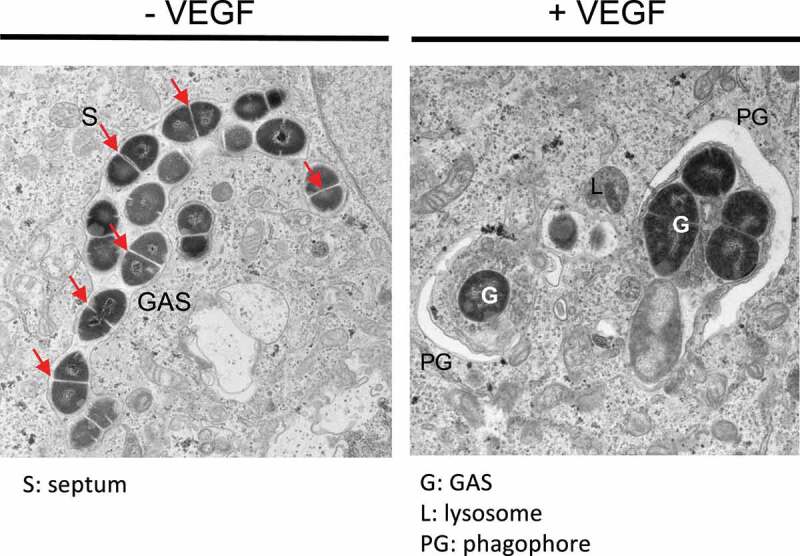
Xenophagy is an intracellular defense mechanism against invading pathogens. Streptococcus pyogenes (group A Streptococcus, GAS) is efficiently eliminated by this process in epithelial cells. However, we previously reported that the efficacy of xenophagy differs among cell types; intrinsic deficits in endothelial cell xenophagy failed to suppress GAS growth. Considering that the basal level of xenophagy is lower in endothelial cells as compared to epithelial cells, additional stimulation may be required to enhance this activity. Recently, we reported that VEGF (vascular endothelial growth factor) is the key factor facilitating xenophagy and lysosomal activity in endothelial cells. These processes further lead to the efficient killing of invading GAS. The cAMP-IP3-Ca2+ axis of the signaling pathway that activates TFEB (transcription factor EB) supports the transduction of the signal from VEGF. In addition, the severity of sepsis was observed to correlate with low VEGF concentrations in serum, both in a mouse model and in human patients. VEGF administration reduces mortality in a GAS sepsis model. Based on these findings, we propose that VEGF boosts the intracellular defense system of the endothelium by providing a strong blood vessel barrier to prevent bacterial dissemination.



 京公网安备 11010802042870号
京ICP备2023020795号-1
京公网安备 11010802042870号
京ICP备2023020795号-1

 分享
分享

 求助内容:
求助内容: 应助结果提醒方式:
 扫码关注我们
