Siti Intan Nurdiana Wong Abdullah, Klara Arokiyasamy, Sock Leng Goh, Andrea Joveena Culas, Nor Masheera Abdul Manaf
{"title":"University students' satisfaction and future outlook towards forced remote learning during a global pandemic.","authors":"Siti Intan Nurdiana Wong Abdullah, Klara Arokiyasamy, Sock Leng Goh, Andrea Joveena Culas, Nor Masheera Abdul Manaf","doi":"10.1186/s40561-022-00197-8","DOIUrl":null,"url":null,"abstract":"<p><p>Technology has enabled the higher education ecosystem to tailor to the students who have diverse needs and to engage with them remotely, especially when face-to-face interaction is not possible. This research contributes knowledge in forced remote learning during the unprecedented global pandemic situation of Covid-19. Using a cross-sectional quantitative method, a total of 480 respondents among undergraduate students from five private universities in Malaysia participated in this study. The data was analysed using structural equation modelling and results indicated that online feedback, online future relevance, online interaction, online teaching effectiveness, and personal well-being were statistically significant in influencing students' satisfaction. Moreover, online learning satisfaction directly predicted 68.3% of the students' continuous usage intention while their usage intention was heightened with higher levels of proficiency in online learning. Students' satisfaction was found to be a significant mediator between all the factors towards usage intention except online assessment, online support, and personal well-being. This study provides the higher education institutions with insights to continuously improve their online delivery strategies and bridge the gap with their students during the pandemic crisis.</p>","PeriodicalId":21774,"journal":{"name":"Smart Learning Environments","volume":" ","pages":"15"},"PeriodicalIF":12.1000,"publicationDate":"2022-01-01","publicationTypes":"Journal Article","fieldsOfStudy":null,"isOpenAccess":false,"openAccessPdf":"https://www.ncbi.nlm.nih.gov/pmc/articles/PMC8935260/pdf/","citationCount":"0","resultStr":null,"platform":"Semanticscholar","paperid":null,"PeriodicalName":"Smart Learning Environments","FirstCategoryId":"1085","ListUrlMain":"https://doi.org/10.1186/s40561-022-00197-8","RegionNum":0,"RegionCategory":null,"ArticlePicture":[],"TitleCN":null,"AbstractTextCN":null,"PMCID":null,"EPubDate":"2022/3/21 0:00:00","PubModel":"Epub","JCR":"Q1","JCRName":"EDUCATION & EDUCATIONAL RESEARCH","Score":null,"Total":0}
引用次数: 0
Abstract
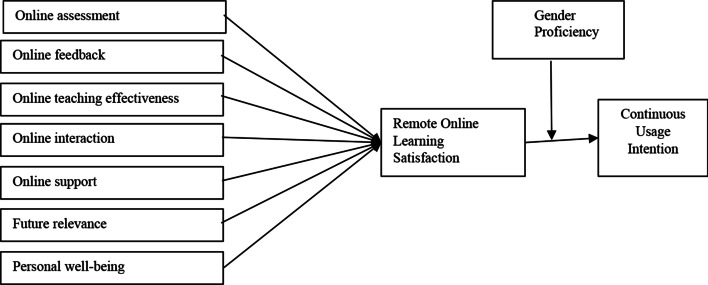
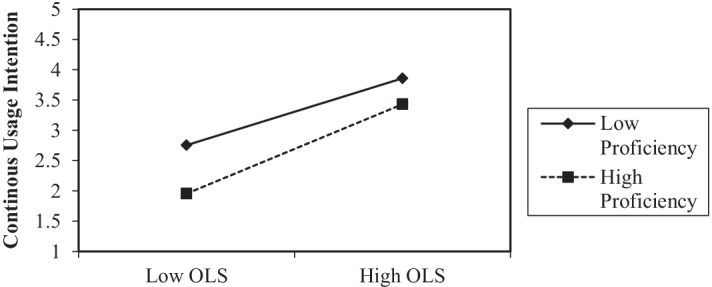
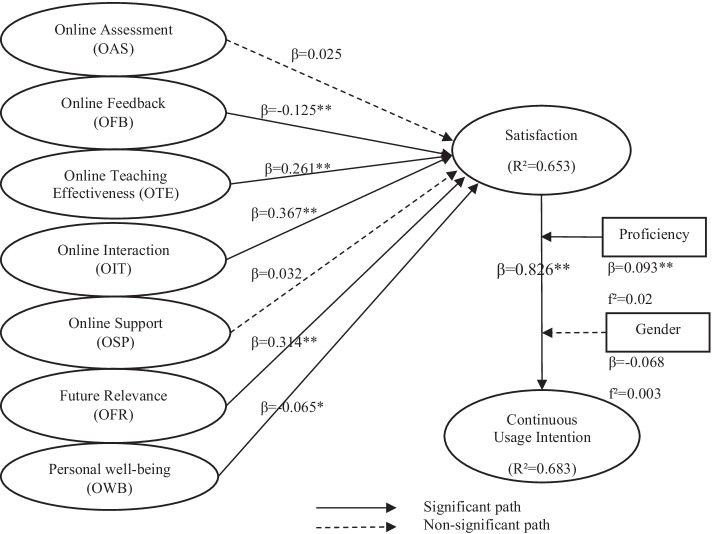
Technology has enabled the higher education ecosystem to tailor to the students who have diverse needs and to engage with them remotely, especially when face-to-face interaction is not possible. This research contributes knowledge in forced remote learning during the unprecedented global pandemic situation of Covid-19. Using a cross-sectional quantitative method, a total of 480 respondents among undergraduate students from five private universities in Malaysia participated in this study. The data was analysed using structural equation modelling and results indicated that online feedback, online future relevance, online interaction, online teaching effectiveness, and personal well-being were statistically significant in influencing students' satisfaction. Moreover, online learning satisfaction directly predicted 68.3% of the students' continuous usage intention while their usage intention was heightened with higher levels of proficiency in online learning. Students' satisfaction was found to be a significant mediator between all the factors towards usage intention except online assessment, online support, and personal well-being. This study provides the higher education institutions with insights to continuously improve their online delivery strategies and bridge the gap with their students during the pandemic crisis.



 京公网安备 11010802042870号
京ICP备2023020795号-1
京公网安备 11010802042870号
京ICP备2023020795号-1

 分享
分享
 求助内容:
求助内容: 应助结果提醒方式:
 扫码关注我们
