Mythily Subramaniam, Edimansyah Abdin, Saleha Shafie, Peizhi Wang, Shazana Shahwan, Pratika Satghare, Boon Yiang Chua, Michael Y Ni, Phyllis Lun, Wen Lin Teh, Janhavi Ajit Vaingankar, Siow Ann Chong
{"title":"Risk and protective factors of mental health during the COVID-19 pandemic: A cross-sectional study in Singapore.","authors":"Mythily Subramaniam, Edimansyah Abdin, Saleha Shafie, Peizhi Wang, Shazana Shahwan, Pratika Satghare, Boon Yiang Chua, Michael Y Ni, Phyllis Lun, Wen Lin Teh, Janhavi Ajit Vaingankar, Siow Ann Chong","doi":"10.47102/annals-acadmedsg.202341","DOIUrl":null,"url":null,"abstract":"<p><strong>Introduction: </strong>The main aims of the study were to: establish the average levels of psychological distress, suicidality and positive mental health (PMH); and examine their associated risk and protective factors in the population of Singapore during the early phase of the COVID-19 pandemic.</p><p><strong>Method: </strong>Participants from a national psychiatric epidemiological study conducted in the general population of Singapore from 2016 to 2018, who had agreed to be re-contacted, were invited to participate in the study that was conducted from May 2020 to June 2021. Questionnaires assessing psychological distress, causes of stress, resilience and PMH were administered.</p><p><strong>Results: </strong>A total of 1,129 respondents completed the study. The mean age was 47.7 (standard deviation = 16.5) years. The prevalence of stress, depression and anxiety was 7.1%, 8.0% and 8.4%, respectively. The final pathways model showed that high concerns related to possible COVID-19 infection of family members or friends were significantly associated with higher stress (β = 0.242, P<0.001), depression (β = 0.152, P=0.001) and anxiety (β = 0.280, P<0.001). High resilience was significantly associated with lower stress (β = -0.482, P<0.001), depression (β = -0.394, P<0.001) and anxiety (β = -0.516, P<0.001), and with high PMH (β = 0.498, P<0.001).</p><p><strong>Conclusion: </strong>The findings highlight the negative impact of fear of COVID-19 infection, social distancing and isolation on the mental health of the population. Resilience and PMH were associated with lower psychological stress, and interventions to improve these characteristics can enhance mental health and well-being.</p>","PeriodicalId":5,"journal":{"name":"ACS Applied Materials & Interfaces","volume":" ","pages":"249-258"},"PeriodicalIF":8.2000,"publicationDate":"2023-05-30","publicationTypes":"Journal Article","fieldsOfStudy":null,"isOpenAccess":false,"openAccessPdf":"","citationCount":"0","resultStr":null,"platform":"Semanticscholar","paperid":null,"PeriodicalName":"ACS Applied Materials & Interfaces","FirstCategoryId":"3","ListUrlMain":"https://doi.org/10.47102/annals-acadmedsg.202341","RegionNum":2,"RegionCategory":"材料科学","ArticlePicture":[],"TitleCN":null,"AbstractTextCN":null,"PMCID":null,"EPubDate":"","PubModel":"","JCR":"Q1","JCRName":"MATERIALS SCIENCE, MULTIDISCIPLINARY","Score":null,"Total":0}
引用次数: 0
Abstract
Introduction: The main aims of the study were to: establish the average levels of psychological distress, suicidality and positive mental health (PMH); and examine their associated risk and protective factors in the population of Singapore during the early phase of the COVID-19 pandemic.
Method: Participants from a national psychiatric epidemiological study conducted in the general population of Singapore from 2016 to 2018, who had agreed to be re-contacted, were invited to participate in the study that was conducted from May 2020 to June 2021. Questionnaires assessing psychological distress, causes of stress, resilience and PMH were administered.
Results: A total of 1,129 respondents completed the study. The mean age was 47.7 (standard deviation = 16.5) years. The prevalence of stress, depression and anxiety was 7.1%, 8.0% and 8.4%, respectively. The final pathways model showed that high concerns related to possible COVID-19 infection of family members or friends were significantly associated with higher stress (β = 0.242, P<0.001), depression (β = 0.152, P=0.001) and anxiety (β = 0.280, P<0.001). High resilience was significantly associated with lower stress (β = -0.482, P<0.001), depression (β = -0.394, P<0.001) and anxiety (β = -0.516, P<0.001), and with high PMH (β = 0.498, P<0.001).
Conclusion: The findings highlight the negative impact of fear of COVID-19 infection, social distancing and isolation on the mental health of the population. Resilience and PMH were associated with lower psychological stress, and interventions to improve these characteristics can enhance mental health and well-being.
期刊介绍:
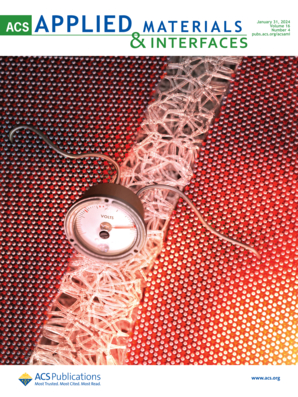
ACS Applied Materials & Interfaces is a leading interdisciplinary journal that brings together chemists, engineers, physicists, and biologists to explore the development and utilization of newly-discovered materials and interfacial processes for specific applications. Our journal has experienced remarkable growth since its establishment in 2009, both in terms of the number of articles published and the impact of the research showcased. We are proud to foster a truly global community, with the majority of published articles originating from outside the United States, reflecting the rapid growth of applied research worldwide.



 京公网安备 11010802042870号
京ICP备2023020795号-1
京公网安备 11010802042870号
京ICP备2023020795号-1

 分享
分享
 求助内容:
求助内容: 应助结果提醒方式:
 扫码关注我们
