[Evaluation of the use of a flipchart about breastfeeding as an educational intervention strategy in the puerperiumEvaluación del uso de un rotafolio sobre lactancia materna como estrategia de intervención educativa en el puerperio].
Iara Angélica da Silva Lima, Paula Gabrielle Gomes Candido, Romila Martins de Moura Stabnow Santos, Laise Sousa Siqueira, Leonardo Hunaldo Dos Santos, Marcelino Santos, Floriacy Stabnow Santos
{"title":"[Evaluation of the use of a flipchart about breastfeeding as an educational intervention strategy in the puerperiumEvaluación del uso de un rotafolio sobre lactancia materna como estrategia de intervención educativa en el puerperio].","authors":"Iara Angélica da Silva Lima, Paula Gabrielle Gomes Candido, Romila Martins de Moura Stabnow Santos, Laise Sousa Siqueira, Leonardo Hunaldo Dos Santos, Marcelino Santos, Floriacy Stabnow Santos","doi":"10.15649/cuidarte.2880","DOIUrl":null,"url":null,"abstract":"<p><strong>Introduction: </strong>Breastfeeding is an act that goes beyond nourishing the child. The implementation of educational technologies can favor the promotion of breastfeeding.</p><p><strong>Objective: </strong>To evaluate the use of a flipchart about breastfeeding as an educational intervention strategy in the immediate postpartum period among mothers in a public maternity hospital according to their sociodemographic and obstetric profile.</p><p><strong>Materials and methods: </strong>Quasi-experimental study of a pre- and post-test model with a single group, carried out between November 2019 and March 2020. Data collected through the Breastfeeding Self-Efficacy Scale - short form. The number of women with high self efficacy before and after the intervention was evaluated. As they did not show normality and/ or homogeneity of variance, non-parametric Kruskal-Wallis tests with post-hoc Nemenyi tests were performed.</p><p><strong>Results: </strong>The results showed that there was an increase in self-efficacy after the intervention, especially in puerperal women under 18 years of age, with Elementary Education, housewives, with less than six consultations, those oriented about breastfeeding during prenatal care and those who had not previously breastfed.</p><p><strong>Discussion: </strong>The sociodemographic profile of mothers may influence self-efficacy in breastfeeding.</p><p><strong>Conclusion: </strong>educational technology was effective in increasing maternal self-efficacy in breastfeeding in the immediate puerperium.</p>","PeriodicalId":43234,"journal":{"name":"Revista Cuidarte","volume":" ","pages":"e17"},"PeriodicalIF":0.4000,"publicationDate":"2023-09-09","publicationTypes":"Journal Article","fieldsOfStudy":null,"isOpenAccess":false,"openAccessPdf":"https://www.ncbi.nlm.nih.gov/pmc/articles/PMC11559273/pdf/","citationCount":"0","resultStr":null,"platform":"Semanticscholar","paperid":null,"PeriodicalName":"Revista Cuidarte","FirstCategoryId":"1085","ListUrlMain":"https://doi.org/10.15649/cuidarte.2880","RegionNum":0,"RegionCategory":null,"ArticlePicture":[],"TitleCN":null,"AbstractTextCN":null,"PMCID":null,"EPubDate":"2023/5/1 0:00:00","PubModel":"eCollection","JCR":"Q4","JCRName":"NURSING","Score":null,"Total":0}
引用次数: 0
Abstract
Introduction: Breastfeeding is an act that goes beyond nourishing the child. The implementation of educational technologies can favor the promotion of breastfeeding.
Objective: To evaluate the use of a flipchart about breastfeeding as an educational intervention strategy in the immediate postpartum period among mothers in a public maternity hospital according to their sociodemographic and obstetric profile.
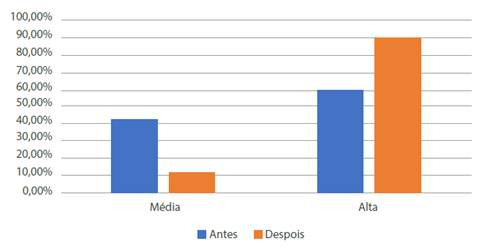
Materials and methods: Quasi-experimental study of a pre- and post-test model with a single group, carried out between November 2019 and March 2020. Data collected through the Breastfeeding Self-Efficacy Scale - short form. The number of women with high self efficacy before and after the intervention was evaluated. As they did not show normality and/ or homogeneity of variance, non-parametric Kruskal-Wallis tests with post-hoc Nemenyi tests were performed.
Results: The results showed that there was an increase in self-efficacy after the intervention, especially in puerperal women under 18 years of age, with Elementary Education, housewives, with less than six consultations, those oriented about breastfeeding during prenatal care and those who had not previously breastfed.
Discussion: The sociodemographic profile of mothers may influence self-efficacy in breastfeeding.
Conclusion: educational technology was effective in increasing maternal self-efficacy in breastfeeding in the immediate puerperium.
导言:母乳喂养不仅仅是一种喂养孩子的行为。实施教育技术可以促进母乳喂养。本研究的目的是评估母乳喂养作为一种教育干预策略在公立医院产褥期妇女的社会人口学和产科特征中的应用。材料和方法:对2019年11月至2020年3月进行的单组前后测试模型的准实验研究。通过母乳喂养自我效能量表收集的数据-简短表格。我们评估了干预前后具有高自我效能感的女性人数。由于它们没有显示正态性和/或方差均匀性,非参数Kruskal-Wallis检验采用后hoc Nemenyi检验。结果:结果显示,干预后自我效能有提高,特别是18岁以下、受过初等教育的母亲、家庭主妇、咨询少于6次的母亲、产前母乳喂养指导的母亲和以前没有母乳喂养的母亲。母乳喂养的自我效能感是由母亲的社会人口学特征决定的。结论:教育技术对提高产后立即母乳喂养的产妇自我效能有有效作用。如何引用本文:Lima, Iara angelica da Silva;宝拉·加布里埃尔·戈梅斯;Stabnow Santos, Romila Martins de Moura;Siqueira, Laise Sousa;多斯·桑托斯,列奥纳多·胡纳尔多;桑托斯·内托,马塞利诺;斯塔布诺·桑托斯,佛罗里达。使用母乳喂养系列专辑作为产褥期教育干预策略的评价。《Cuidarte》杂志2023;14(2):e2880。http://dx.doi.org/10.15649/cuidarte.2880




 京公网安备 11010802042870号
京ICP备2023020795号-1
京公网安备 11010802042870号
京ICP备2023020795号-1

 分享
分享
 求助内容:
求助内容: 应助结果提醒方式:
 扫码关注我们
