A. Cartoni Mancinelli, S. Mattioli, C. Twining, A. Dal Bosco, A. Donoghue, K. Arsi, E. Angelucci, Diletta Chiattelli, C. Castellini
{"title":"Poultry Meat and Eggs as an Alternative Source of n-3 Long-Chain Polyunsaturated Fatty Acids for Human Nutrition","authors":"A. Cartoni Mancinelli, S. Mattioli, C. Twining, A. Dal Bosco, A. Donoghue, K. Arsi, E. Angelucci, Diletta Chiattelli, C. Castellini","doi":"10.3390/nu14091969","DOIUrl":null,"url":null,"abstract":"The beneficial effects of n-3 long-chain polyunsaturated fatty acids (n-3 LC-PUFA) on human health are widely known. Humans are rather inefficient in synthesizing n-3 LC-PUFA; thus, these compounds should be supplemented in the diet. However, most Western human diets have unbalanced n-6/n-3 ratios resulting from eating habits and the fact that fish sources (rich in n-3 LC-PUFA) are not sufficient (worldwide deficit ~347,956 t/y) to meet the world requirements. In this context, it is necessary to find new and sustainable sources of n-3 LC-PUFA. Poultry products can provide humans n-3 LC-PUFA due to physiological characteristics and the wide consumption of meat and eggs. The present work aims to provide a general overview of the main strategies that should be adopted during rearing and postproduction to enrich and preserve n-3 LC-PUFA in poultry products. The strategies include dietary supplementation of α-Linolenic acid (ALA) or n-3 LC-PUFA, or enhancing n-3 LC-PUFA by improving the LA (Linoleic acid)/ALA ratio and antioxidant concentrations. Moreover, factors such as genotype, rearing system, transport, and cooking processes can impact the n-3 LC-PUFA in poultry products. The use of a multifactorial view in the entire production chain allows the relevant enrichment and preservation of n-3 LC-PUFA in poultry products.","PeriodicalId":19486,"journal":{"name":"Nutrients","volume":" ","pages":""},"PeriodicalIF":5.0000,"publicationDate":"2022-05-01","publicationTypes":"Journal Article","fieldsOfStudy":null,"isOpenAccess":false,"openAccessPdf":"","citationCount":"21","resultStr":null,"platform":"Semanticscholar","paperid":null,"PeriodicalName":"Nutrients","FirstCategoryId":"3","ListUrlMain":"https://doi.org/10.3390/nu14091969","RegionNum":2,"RegionCategory":"医学","ArticlePicture":[],"TitleCN":null,"AbstractTextCN":null,"PMCID":null,"EPubDate":"","PubModel":"","JCR":"Q1","JCRName":"NUTRITION & DIETETICS","Score":null,"Total":0}
引用次数: 21
Abstract
The beneficial effects of n-3 long-chain polyunsaturated fatty acids (n-3 LC-PUFA) on human health are widely known. Humans are rather inefficient in synthesizing n-3 LC-PUFA; thus, these compounds should be supplemented in the diet. However, most Western human diets have unbalanced n-6/n-3 ratios resulting from eating habits and the fact that fish sources (rich in n-3 LC-PUFA) are not sufficient (worldwide deficit ~347,956 t/y) to meet the world requirements. In this context, it is necessary to find new and sustainable sources of n-3 LC-PUFA. Poultry products can provide humans n-3 LC-PUFA due to physiological characteristics and the wide consumption of meat and eggs. The present work aims to provide a general overview of the main strategies that should be adopted during rearing and postproduction to enrich and preserve n-3 LC-PUFA in poultry products. The strategies include dietary supplementation of α-Linolenic acid (ALA) or n-3 LC-PUFA, or enhancing n-3 LC-PUFA by improving the LA (Linoleic acid)/ALA ratio and antioxidant concentrations. Moreover, factors such as genotype, rearing system, transport, and cooking processes can impact the n-3 LC-PUFA in poultry products. The use of a multifactorial view in the entire production chain allows the relevant enrichment and preservation of n-3 LC-PUFA in poultry products.
期刊介绍:
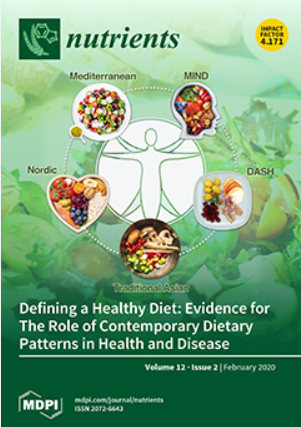
Nutrients (ISSN 2072-6643) is an international, peer-reviewed open access advanced forum for studies related to Human Nutrition. It publishes reviews, regular research papers and short communications. Our aim is to encourage scientists to publish their experimental and theoretical results in as much detail as possible. There is no restriction on the length of the papers. The full experimental details must be provided so that the results can be reproduced.



 京公网安备 11010802042870号
京ICP备2023020795号-1
京公网安备 11010802042870号
京ICP备2023020795号-1

 分享
分享
 求助内容:
求助内容: 应助结果提醒方式:
 扫码关注我们
