[SARS-CoV-2 seroprevalence and associated factors among migrants with a vocation for permanence, Bucaramanga, ColombiaSoroprevalencia de SARS-CoV-2 e fatores associados em migrantes com vocaao de permanencia, Bucaramanga, Colombia.]
{"title":"[SARS-CoV-2 seroprevalence and associated factors among migrants with a vocation for permanence, Bucaramanga, ColombiaSoroprevalencia de SARS-CoV-2 e fatores associados em migrantes com vocaao de permanencia, Bucaramanga, Colombia.]","authors":"Ruth Aralí Martínez-Vega, Alix Bolívar-Grimaldos, Bladimiro Rincón-Orozco","doi":"10.15649/cuidarte.2657","DOIUrl":null,"url":null,"abstract":"<p><strong>Introduction: </strong>There are few reports assessing anti-SARS-CoV-2 seroprevalence in the migrant population in the world. These studies help to understand the exposure of populations to the virus to take actions to reduce the impact of SARS-CoV-2 infection.</p><p><strong>Objective: </strong>To determine the anti-SARS-CoV-2 seroprevalence in migrants with a vocation for permanence in Bucaramanga and to identify factors associated with previous SARS-CoV-2 infection.</p><p><strong>Methods: </strong>Analytical cross-sectional study using consecutive sampling, which included adult migrants in Bucaramanga in February 2021. Surveys were conducted, and chemiluminescent immunoassays were performed to detect IgM and IgG antibodies to SARS-CoV-2 in serum samples. Prevalence ratios (PR) were estimated using a log-binomial regression model.</p><p><strong>Results: </strong>The study enrolled 462 participants. IgM seroprevalence was 11.7% (95% CI 9.1-14.9), IgG seroprevalence was 32.9% (95% CI 28.8-37.3), and IgM or IgG seroprevalence was 36.1% (95% CI 31.9-40.6). Contact with a confirmed case of COVID-19 (PR:1.54; 95% CI 1.04-2.29) or suspected case (PR:1.56; 95% CI 1.13-2.16); living with six or more people (PR: 1.52; 95% CI 1.05-2.20); stay in Colombia > 2 years (PR:1.43; 95% CI 1.11-1.92), and presence of symptoms (PR:1.62; 95%CI 1.26-2.10) were some factors associated with higher IgG seroprevalence.</p><p><strong>Discussion: </strong>In Bucaramanga, SARS-CoV-2 seroprevalence among migrants was similar to the seroprevalences of migrants in Kuwait but lower than migrants in Paris and Singapore.</p><p><strong>Conclusions: </strong>The anti-SARS-CoV-2 seroprevalence among migrants with a vocation for permanence was similar to that reported among residents of Bucaramanga. Contact with suspected or confirmed COVID-19 cases and crowded conditions were some of the factors associated with seroprevalence.</p>","PeriodicalId":43234,"journal":{"name":"Revista Cuidarte","volume":" ","pages":"e2657"},"PeriodicalIF":0.4000,"publicationDate":"2023-03-29","publicationTypes":"Journal Article","fieldsOfStudy":null,"isOpenAccess":false,"openAccessPdf":"https://www.ncbi.nlm.nih.gov/pmc/articles/PMC11559309/pdf/","citationCount":"0","resultStr":null,"platform":"Semanticscholar","paperid":null,"PeriodicalName":"Revista Cuidarte","FirstCategoryId":"1085","ListUrlMain":"https://doi.org/10.15649/cuidarte.2657","RegionNum":0,"RegionCategory":null,"ArticlePicture":[],"TitleCN":null,"AbstractTextCN":null,"PMCID":null,"EPubDate":"2022/9/1 0:00:00","PubModel":"eCollection","JCR":"Q4","JCRName":"NURSING","Score":null,"Total":0}
引用次数: 0
Abstract
Introduction: There are few reports assessing anti-SARS-CoV-2 seroprevalence in the migrant population in the world. These studies help to understand the exposure of populations to the virus to take actions to reduce the impact of SARS-CoV-2 infection.
Objective: To determine the anti-SARS-CoV-2 seroprevalence in migrants with a vocation for permanence in Bucaramanga and to identify factors associated with previous SARS-CoV-2 infection.
Methods: Analytical cross-sectional study using consecutive sampling, which included adult migrants in Bucaramanga in February 2021. Surveys were conducted, and chemiluminescent immunoassays were performed to detect IgM and IgG antibodies to SARS-CoV-2 in serum samples. Prevalence ratios (PR) were estimated using a log-binomial regression model.
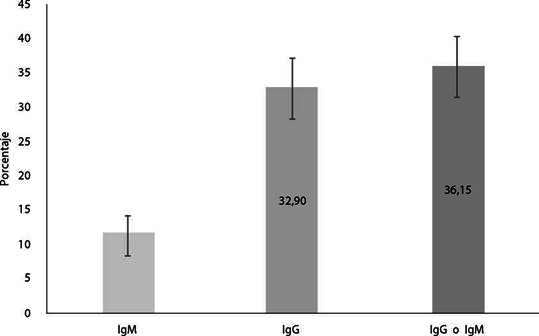
Results: The study enrolled 462 participants. IgM seroprevalence was 11.7% (95% CI 9.1-14.9), IgG seroprevalence was 32.9% (95% CI 28.8-37.3), and IgM or IgG seroprevalence was 36.1% (95% CI 31.9-40.6). Contact with a confirmed case of COVID-19 (PR:1.54; 95% CI 1.04-2.29) or suspected case (PR:1.56; 95% CI 1.13-2.16); living with six or more people (PR: 1.52; 95% CI 1.05-2.20); stay in Colombia > 2 years (PR:1.43; 95% CI 1.11-1.92), and presence of symptoms (PR:1.62; 95%CI 1.26-2.10) were some factors associated with higher IgG seroprevalence.
Discussion: In Bucaramanga, SARS-CoV-2 seroprevalence among migrants was similar to the seroprevalences of migrants in Kuwait but lower than migrants in Paris and Singapore.
Conclusions: The anti-SARS-CoV-2 seroprevalence among migrants with a vocation for permanence was similar to that reported among residents of Bucaramanga. Contact with suspected or confirmed COVID-19 cases and crowded conditions were some of the factors associated with seroprevalence.




 京公网安备 11010802042870号
京ICP备2023020795号-1
京公网安备 11010802042870号
京ICP备2023020795号-1

 分享
分享
 求助内容:
求助内容: 应助结果提醒方式:
 扫码关注我们
