{"title":"Smart nanomaterials to support quantum-sensing electronics","authors":"Vibhas Chugh , Adreeja Basu , Nagendra Kumar Kaushik , Ajeet Kaushik , Yogendra Kumar Mishra , Aviru Kumar Basu","doi":"10.1016/j.mtelec.2023.100067","DOIUrl":null,"url":null,"abstract":"<div><p>Quantum sensing electronic sensing is opening up new cutting-edge possibilities to take advantage of complex quantum mechanical variables to make incredibly sensitive assessments of an array of parameters. Concurrently, there are new prospects for quantum sensing electronics to be used to enhance the processes involved in creating, distributing, and utilizing energy. To use this technology efficiently, it is necessary to handle issues related to sensing material such as stability and operation, reliable monitoring, and precision in sensing and assessment. In this direction, the present is an overview of existing and new quantum sensing materials and methods, along with the related sensing frameworks that have been created to support their advanced translational applications. Regarding next-generation sensing technologies specifically, the realization of a previously unheard degree of sensitivity is made possible using quantum methods and materials. More specifically, this article addresses how quantum sensing materials may lead to greater efficiency while highlighting established and developing quantum sensing methods, materials, and sensing platforms. The discussion of potential chances to implement quantum technologies follows a summary of the remaining obstacles and difficulties for quantum sensor deployment.</p></div>","PeriodicalId":100893,"journal":{"name":"Materials Today Electronics","volume":"6 ","pages":"Article 100067"},"PeriodicalIF":7.4000,"publicationDate":"2023-10-01","publicationTypes":"Journal Article","fieldsOfStudy":null,"isOpenAccess":false,"openAccessPdf":"","citationCount":"1","resultStr":null,"platform":"Semanticscholar","paperid":null,"PeriodicalName":"Materials Today Electronics","FirstCategoryId":"1085","ListUrlMain":"https://www.sciencedirect.com/science/article/pii/S2772949423000438","RegionNum":0,"RegionCategory":null,"ArticlePicture":[],"TitleCN":null,"AbstractTextCN":null,"PMCID":null,"EPubDate":"","PubModel":"","JCR":"","JCRName":"","Score":null,"Total":0}
引用次数: 1
Abstract
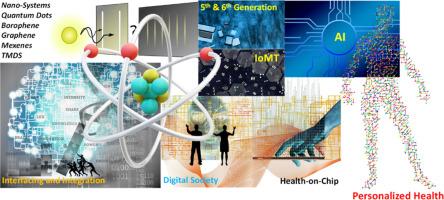
Quantum sensing electronic sensing is opening up new cutting-edge possibilities to take advantage of complex quantum mechanical variables to make incredibly sensitive assessments of an array of parameters. Concurrently, there are new prospects for quantum sensing electronics to be used to enhance the processes involved in creating, distributing, and utilizing energy. To use this technology efficiently, it is necessary to handle issues related to sensing material such as stability and operation, reliable monitoring, and precision in sensing and assessment. In this direction, the present is an overview of existing and new quantum sensing materials and methods, along with the related sensing frameworks that have been created to support their advanced translational applications. Regarding next-generation sensing technologies specifically, the realization of a previously unheard degree of sensitivity is made possible using quantum methods and materials. More specifically, this article addresses how quantum sensing materials may lead to greater efficiency while highlighting established and developing quantum sensing methods, materials, and sensing platforms. The discussion of potential chances to implement quantum technologies follows a summary of the remaining obstacles and difficulties for quantum sensor deployment.



 京公网安备 11010802042870号
京ICP备2023020795号-1
京公网安备 11010802042870号
京ICP备2023020795号-1

 分享
分享

 求助内容:
求助内容: 应助结果提醒方式:
 扫码关注我们
