Comparative effectiveness and cost-effectiveness of cardioprotective glucose-lowering therapies for type 2 diabetes in Brazil: a Bayesian network model.
Ana Claudia Cavalcante Nogueira, Joaquim Barreto, Filipe A Moura, Beatriz Luchiari, Abrão Abuhab, Isabella Bonilha, Wilson Nadruz, J Michael Gaziano, Thomas Gaziano, Luiz Sergio F de Carvalho, Andrei C Sposito
{"title":"Comparative effectiveness and cost-effectiveness of cardioprotective glucose-lowering therapies for type 2 diabetes in Brazil: a Bayesian network model.","authors":"Ana Claudia Cavalcante Nogueira, Joaquim Barreto, Filipe A Moura, Beatriz Luchiari, Abrão Abuhab, Isabella Bonilha, Wilson Nadruz, J Michael Gaziano, Thomas Gaziano, Luiz Sergio F de Carvalho, Andrei C Sposito","doi":"10.1186/s13561-023-00466-3","DOIUrl":null,"url":null,"abstract":"<p><strong>Background: </strong>The escalating prevalence of type 2 diabetes (T2DM) poses an unparalleled economic catastrophe to developing countries. Cardiovascular diseases remain the primary source of costs among individuals with T2DM, incurring expenses for medications, hospitalizations, and surgical interventions. Compelling evidence suggests that the risk of cardiovascular outcomes can be reduced by three classes of glucose-lowering therapies (GLT), including SGLT2i, GLP-1A, and pioglitazone. However, an evidence-based and cost-effective protocol is still unavailable for many countries. The objective of the current study is to compare the effectiveness and cost-effectiveness of GLT in individuals with T2DM in Brazil.</p><p><strong>Methods: </strong>We employed Bayesian Networks to calculate the incremental cost-effectiveness ratios (ICER), expressed in international dollars (Int$) per disease-adjusted life years [DALYs] averted. To determine the effectiveness of GLT, we conducted a systematic review with network meta-analysis (NMA) to provide insights for our model. Additionally, we obtained cardiovascular outcome incidence data from two real-world cohorts comprising 851 and 1337 patients in primary and secondary prevention, respectively. Our cost analysis took into account the perspective of the Brazilian public health system, and all values were converted to Int$.</p><p><strong>Results: </strong>In the NMA, SGLT2i [HR: 0.81 (95% CI 0.69-0.96)], GLP-1A [HR: 0.79 (95% CI 0.67-0.94)], and pioglitazone [HR: 0.73 (95% CI 0.59-0.91)] demonstrated reduced relative risks of non-fatal cardiovascular events. In the context of primary prevention, pioglitazone yielded 0.2339 DALYs averted, with an ICER of Int$7,082 (95% CI 4,521-10,770) per DALY averted when compared to standard care. SGLT2i and GLP-1A also increased effectiveness, resulting in 0.261 and 0.259 DALYs averted, respectively, but with higher ICERs of Int$12,061 (95% CI: 7,227-18,121) and Int$29,119 (95% CI: 23,811-35,367) per DALY averted. In the secondary prevention scenario, all three classes of treatments were deemed cost-effective at a maximum willingness-to-pay threshold of Int$26,700. Notably, pioglitazone consistently exhibited the highest probability of being cost-effective in both scenarios.</p><p><strong>Conclusions: </strong>In Brazil, pioglitazone presented a higher probability of being cost-effective both in primary and secondary prevention, followed by SGLT2i and GLP-1A. Our findings support the use of cost-effectiveness models to build optimized and hierarchical therapeutic strategy in the management of T2DM.</p><p><strong>Trial registration: </strong>CRD42020194415.</p>","PeriodicalId":46936,"journal":{"name":"Health Economics Review","volume":"13 1","pages":"50"},"PeriodicalIF":3.3000,"publicationDate":"2023-10-25","publicationTypes":"Journal Article","fieldsOfStudy":null,"isOpenAccess":false,"openAccessPdf":"https://www.ncbi.nlm.nih.gov/pmc/articles/PMC10599033/pdf/","citationCount":"0","resultStr":null,"platform":"Semanticscholar","paperid":null,"PeriodicalName":"Health Economics Review","FirstCategoryId":"96","ListUrlMain":"https://doi.org/10.1186/s13561-023-00466-3","RegionNum":3,"RegionCategory":"经济学","ArticlePicture":[],"TitleCN":null,"AbstractTextCN":null,"PMCID":null,"EPubDate":"","PubModel":"","JCR":"Q1","JCRName":"ECONOMICS","Score":null,"Total":0}
引用次数: 0
Abstract
Background: The escalating prevalence of type 2 diabetes (T2DM) poses an unparalleled economic catastrophe to developing countries. Cardiovascular diseases remain the primary source of costs among individuals with T2DM, incurring expenses for medications, hospitalizations, and surgical interventions. Compelling evidence suggests that the risk of cardiovascular outcomes can be reduced by three classes of glucose-lowering therapies (GLT), including SGLT2i, GLP-1A, and pioglitazone. However, an evidence-based and cost-effective protocol is still unavailable for many countries. The objective of the current study is to compare the effectiveness and cost-effectiveness of GLT in individuals with T2DM in Brazil.
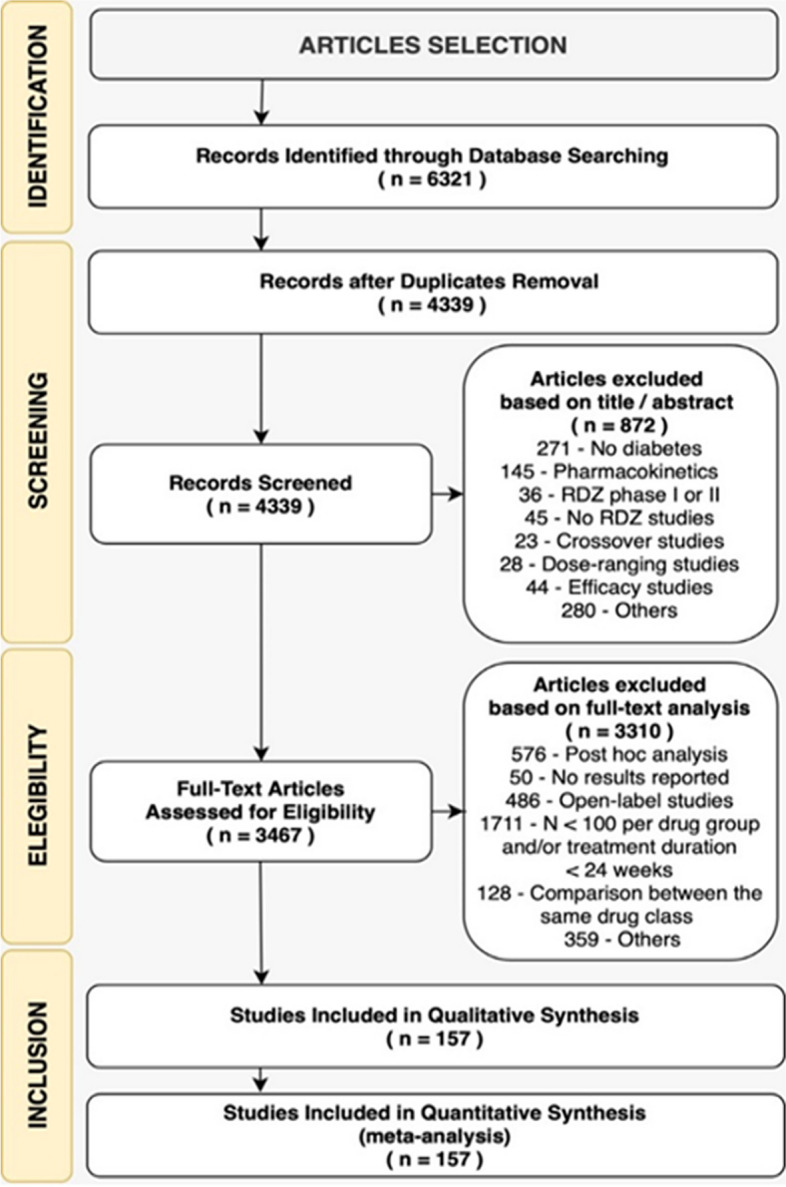
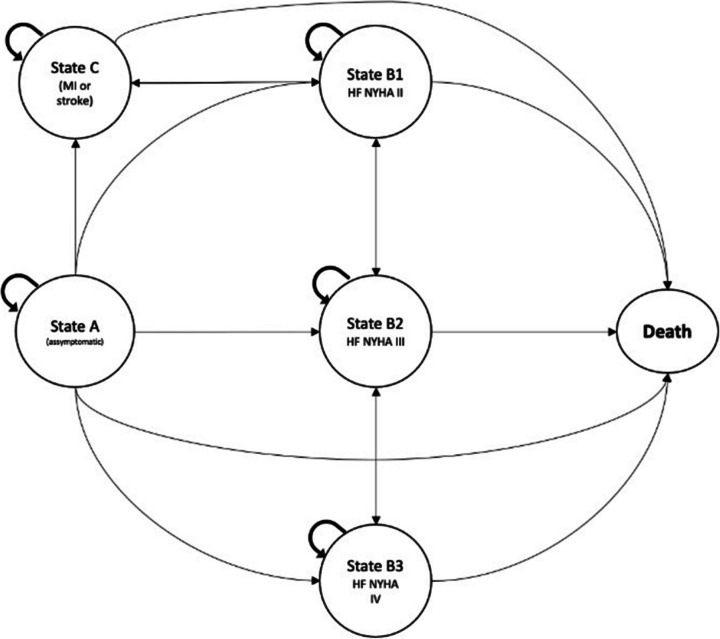
Methods: We employed Bayesian Networks to calculate the incremental cost-effectiveness ratios (ICER), expressed in international dollars (Int$) per disease-adjusted life years [DALYs] averted. To determine the effectiveness of GLT, we conducted a systematic review with network meta-analysis (NMA) to provide insights for our model. Additionally, we obtained cardiovascular outcome incidence data from two real-world cohorts comprising 851 and 1337 patients in primary and secondary prevention, respectively. Our cost analysis took into account the perspective of the Brazilian public health system, and all values were converted to Int$.
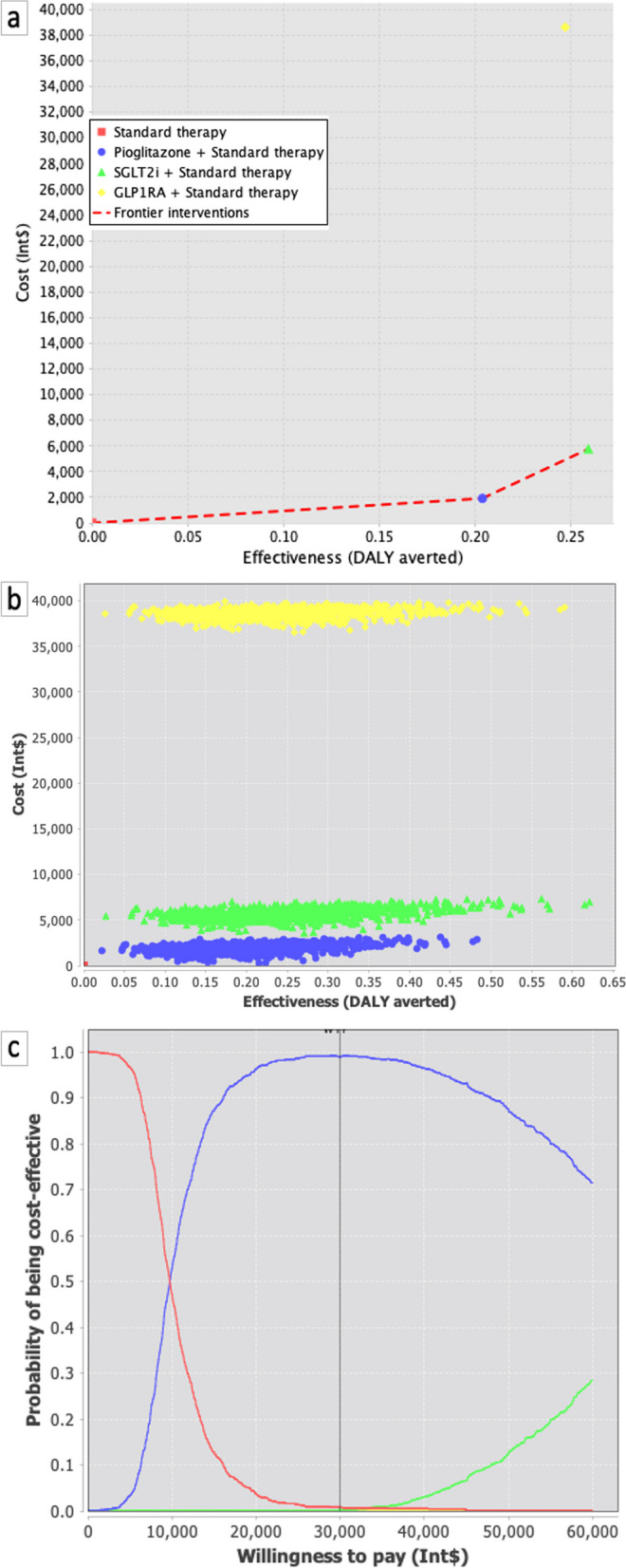
Results: In the NMA, SGLT2i [HR: 0.81 (95% CI 0.69-0.96)], GLP-1A [HR: 0.79 (95% CI 0.67-0.94)], and pioglitazone [HR: 0.73 (95% CI 0.59-0.91)] demonstrated reduced relative risks of non-fatal cardiovascular events. In the context of primary prevention, pioglitazone yielded 0.2339 DALYs averted, with an ICER of Int$7,082 (95% CI 4,521-10,770) per DALY averted when compared to standard care. SGLT2i and GLP-1A also increased effectiveness, resulting in 0.261 and 0.259 DALYs averted, respectively, but with higher ICERs of Int$12,061 (95% CI: 7,227-18,121) and Int$29,119 (95% CI: 23,811-35,367) per DALY averted. In the secondary prevention scenario, all three classes of treatments were deemed cost-effective at a maximum willingness-to-pay threshold of Int$26,700. Notably, pioglitazone consistently exhibited the highest probability of being cost-effective in both scenarios.
Conclusions: In Brazil, pioglitazone presented a higher probability of being cost-effective both in primary and secondary prevention, followed by SGLT2i and GLP-1A. Our findings support the use of cost-effectiveness models to build optimized and hierarchical therapeutic strategy in the management of T2DM.
期刊介绍:
Health Economics Review is an international high-quality journal covering all fields of Health Economics. A broad range of theoretical contributions, empirical studies and analyses of health policy with a health economic focus will be considered for publication. Its scope includes macro- and microeconomics of health care financing, health insurance and reimbursement as well as health economic evaluation, health services research and health policy analysis. Further research topics are the individual and institutional aspects of health care management and the growing importance of health care in developing countries.



 京公网安备 11010802042870号
京ICP备2023020795号-1
京公网安备 11010802042870号
京ICP备2023020795号-1

 分享
分享
 求助内容:
求助内容: 应助结果提醒方式:
 扫码关注我们
