Insights into the coordination chemistry of antineoplastic doxorubicin with 3d-transition metal ions Zn2+, Cu2+, and VO2+: a study using well-calibrated thermodynamic cycles and chemical interaction quantum chemistry models
Julieta Reyna-Luna, Luis Soriano-Agueda, Christiaan Jardinez Vera, Marco Franco-Pérez
{"title":"Insights into the coordination chemistry of antineoplastic doxorubicin with 3d-transition metal ions Zn2+, Cu2+, and VO2+: a study using well-calibrated thermodynamic cycles and chemical interaction quantum chemistry models","authors":"Julieta Reyna-Luna, Luis Soriano-Agueda, Christiaan Jardinez Vera, Marco Franco-Pérez","doi":"10.1007/s10822-023-00506-4","DOIUrl":null,"url":null,"abstract":"<div><p>We present a computational strategy based on thermodynamic cycles to predict and describe the chemical equilibrium between the 3<i>d</i>-transition metal ions Zn<sup>2+</sup>, Cu<sup>2+</sup>, and VO<sup>2+</sup> and the widely used antineoplastic drug doxorubicin. Our method involves benchmarking a theoretical protocol to compute gas-phase quantities using DLPNO Coupled-Cluster calculations as reference, followed by estimating solvation contributions to the reaction Gibbs free energies using both explicit partial (micro)solvation steps for charged solutes and neutral coordination complexes, as well as a continuum solvation procedure for all solutes involved in the complexation process. We rationalized the stability of these doxorubicin-metal complexes by inspecting quantities obtained from the topology of their electron densities, particularly the bond critical points and non-covalent interaction index. Our approach allowed us to identify representative species in solution phase, infer the most likely complexation process for each case, and identify key intramolecular interactions involved in the stability of these compounds. To the best of our knowledge, this is the first study reporting thermodynamic constants for the complexation of doxorubicin with transition metal ions. Unlike other methods, our procedure is computationally affordable for medium-sized systems and provides valuable insights even with limited experimental data. Furthermore, it can be extended to describe the complexation process between 3<i>d-</i>transition metal ions and other bioactive ligands.\n</p></div>","PeriodicalId":621,"journal":{"name":"Journal of Computer-Aided Molecular Design","volume":"37 7","pages":"279 - 299"},"PeriodicalIF":3.1000,"publicationDate":"2023-05-28","publicationTypes":"Journal Article","fieldsOfStudy":null,"isOpenAccess":false,"openAccessPdf":"","citationCount":"0","resultStr":null,"platform":"Semanticscholar","paperid":null,"PeriodicalName":"Journal of Computer-Aided Molecular Design","FirstCategoryId":"99","ListUrlMain":"https://link.springer.com/article/10.1007/s10822-023-00506-4","RegionNum":3,"RegionCategory":"生物学","ArticlePicture":[],"TitleCN":null,"AbstractTextCN":null,"PMCID":null,"EPubDate":"","PubModel":"","JCR":"Q3","JCRName":"BIOCHEMISTRY & MOLECULAR BIOLOGY","Score":null,"Total":0}
引用次数: 0
Abstract
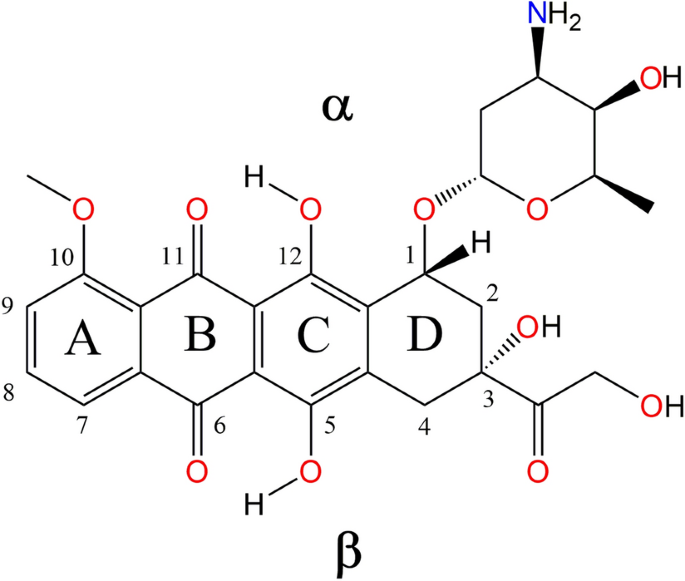
We present a computational strategy based on thermodynamic cycles to predict and describe the chemical equilibrium between the 3d-transition metal ions Zn2+, Cu2+, and VO2+ and the widely used antineoplastic drug doxorubicin. Our method involves benchmarking a theoretical protocol to compute gas-phase quantities using DLPNO Coupled-Cluster calculations as reference, followed by estimating solvation contributions to the reaction Gibbs free energies using both explicit partial (micro)solvation steps for charged solutes and neutral coordination complexes, as well as a continuum solvation procedure for all solutes involved in the complexation process. We rationalized the stability of these doxorubicin-metal complexes by inspecting quantities obtained from the topology of their electron densities, particularly the bond critical points and non-covalent interaction index. Our approach allowed us to identify representative species in solution phase, infer the most likely complexation process for each case, and identify key intramolecular interactions involved in the stability of these compounds. To the best of our knowledge, this is the first study reporting thermodynamic constants for the complexation of doxorubicin with transition metal ions. Unlike other methods, our procedure is computationally affordable for medium-sized systems and provides valuable insights even with limited experimental data. Furthermore, it can be extended to describe the complexation process between 3d-transition metal ions and other bioactive ligands.
期刊介绍:
The Journal of Computer-Aided Molecular Design provides a form for disseminating information on both the theory and the application of computer-based methods in the analysis and design of molecules. The scope of the journal encompasses papers which report new and original research and applications in the following areas:
- theoretical chemistry;
- computational chemistry;
- computer and molecular graphics;
- molecular modeling;
- protein engineering;
- drug design;
- expert systems;
- general structure-property relationships;
- molecular dynamics;
- chemical database development and usage.




 京公网安备 11010802042870号
京ICP备2023020795号-1
京公网安备 11010802042870号
京ICP备2023020795号-1

 分享
分享
 求助内容:
求助内容: 应助结果提醒方式:
 扫码关注我们
